
Last updated September 20, 2026
Level 1 sweep and inspection to the NFPA 211 annual standard - flue, crown, cap, and flashing checked and photographed
Chimney sweep logs do not sweep chimneys. They loosen some creosote - which then falls where a brush and vacuum still have to collect it.
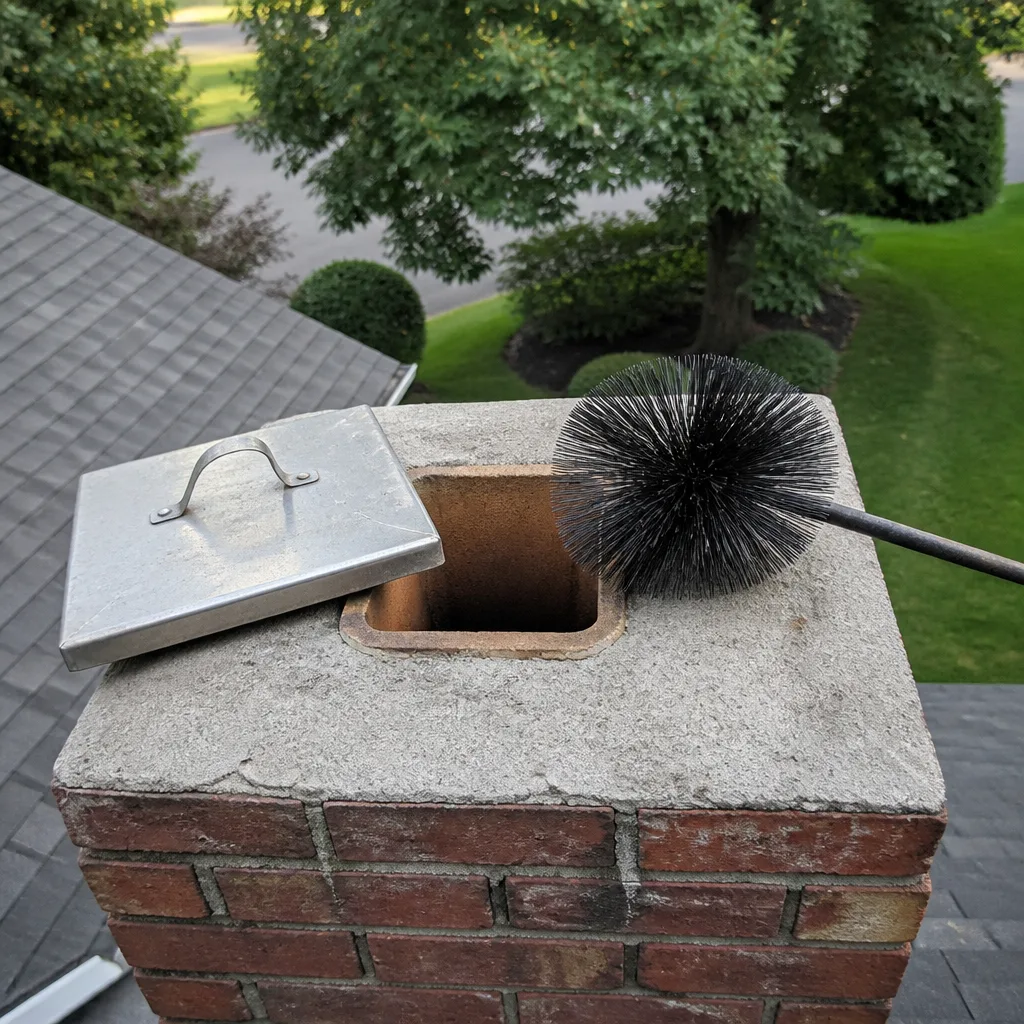
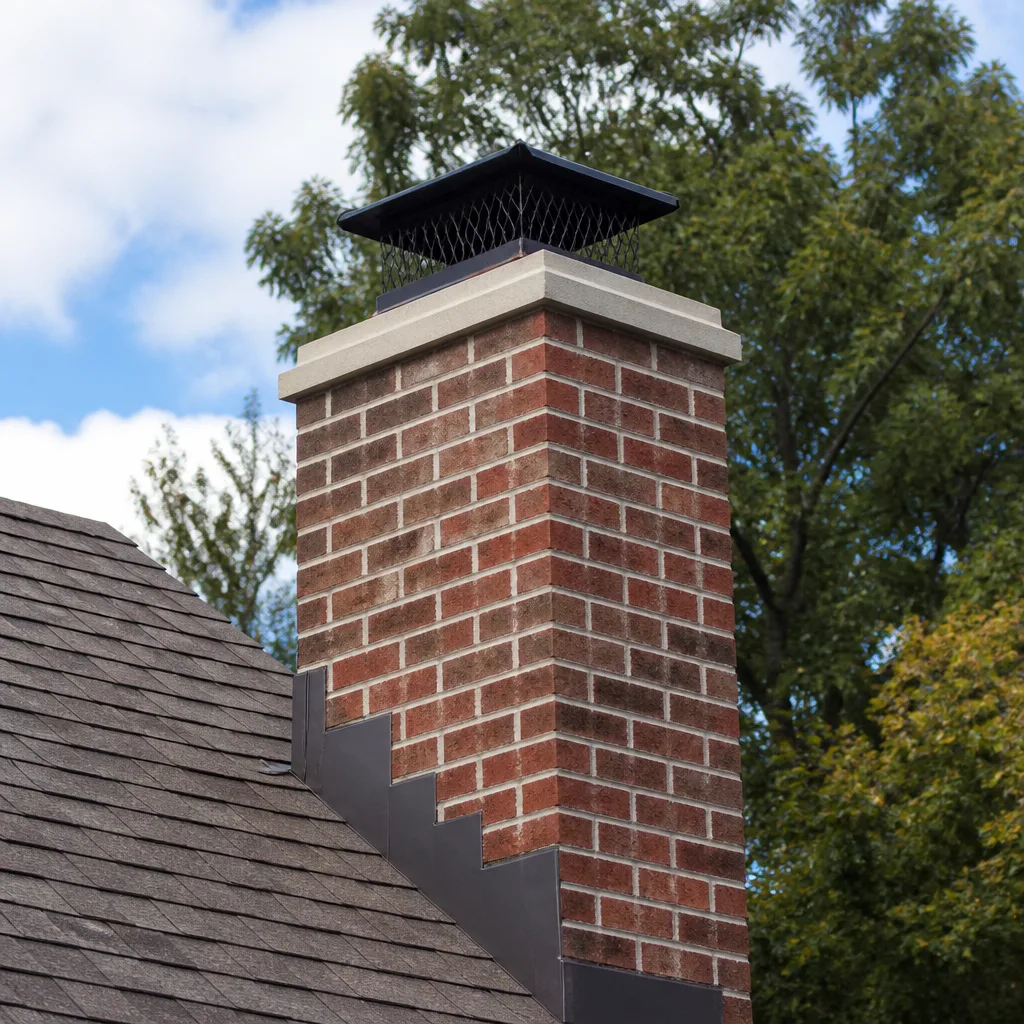
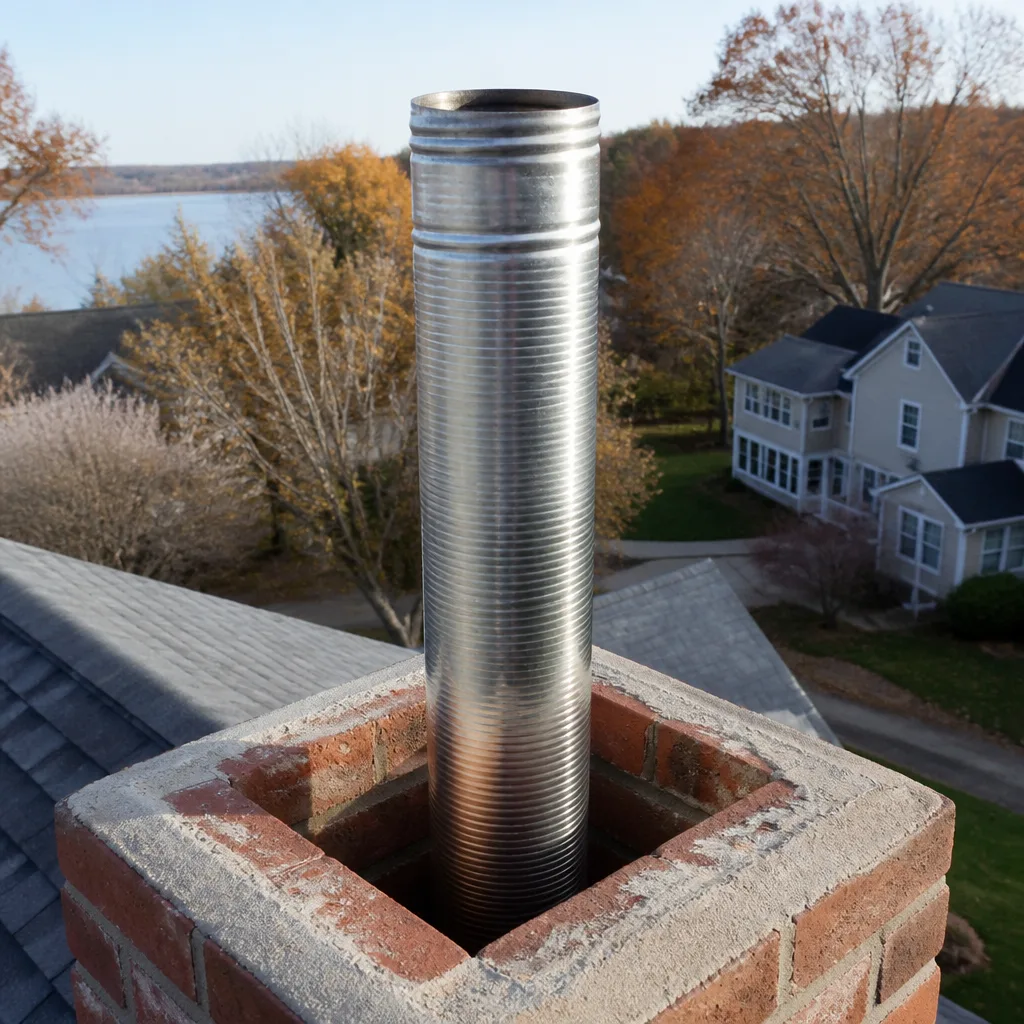
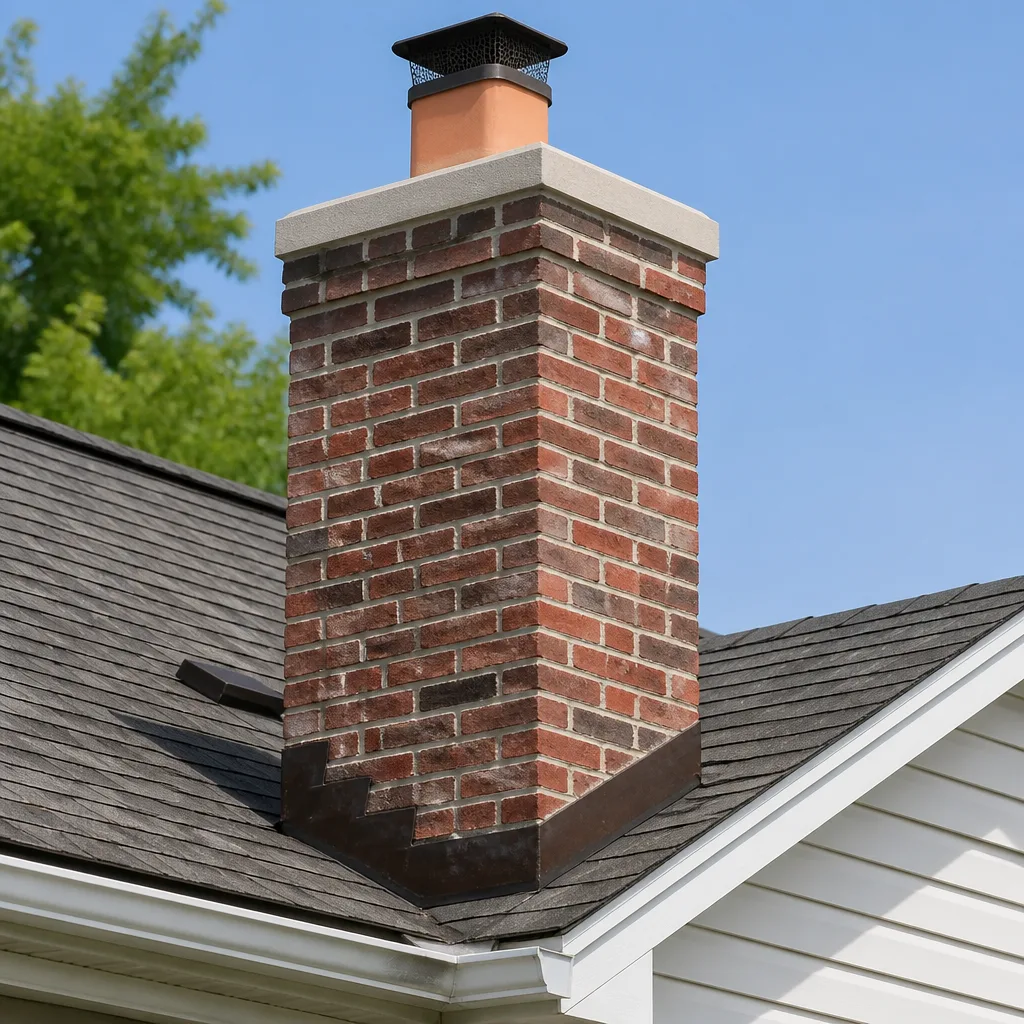
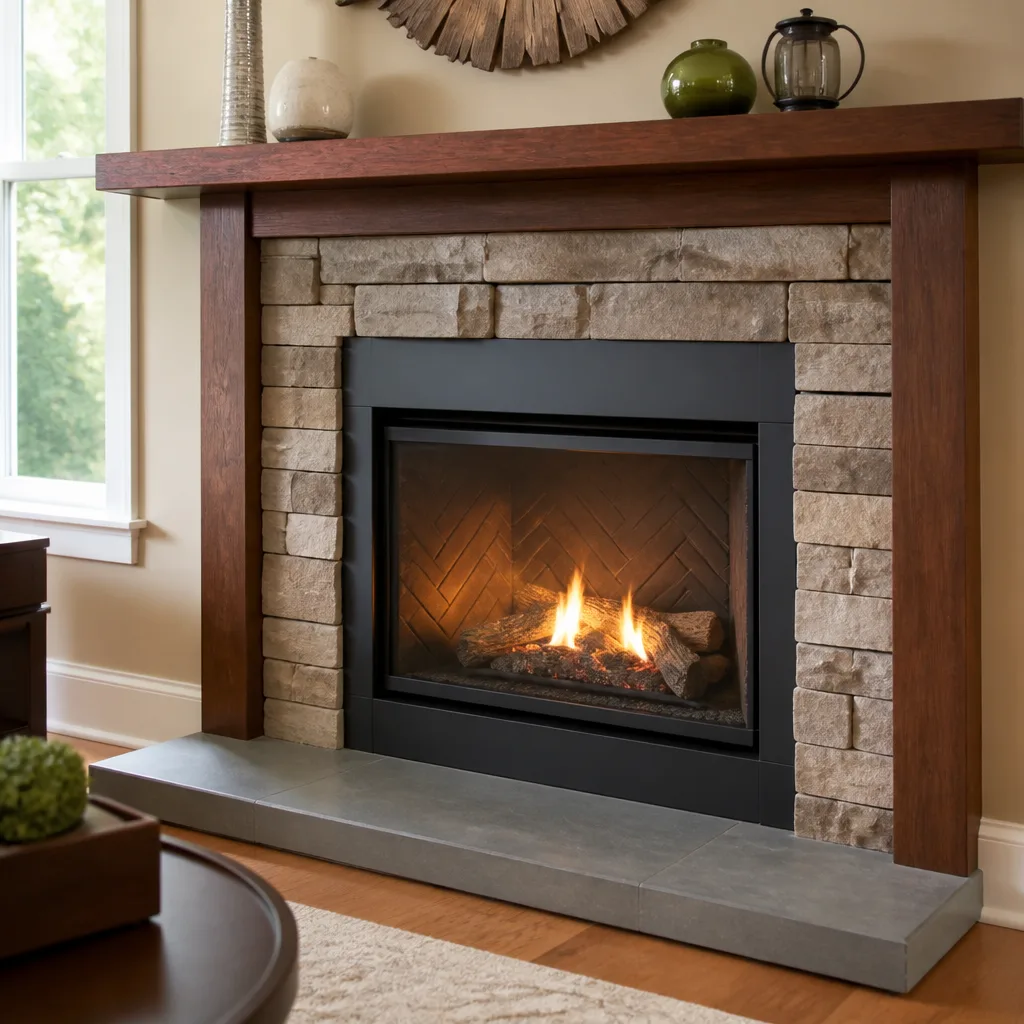
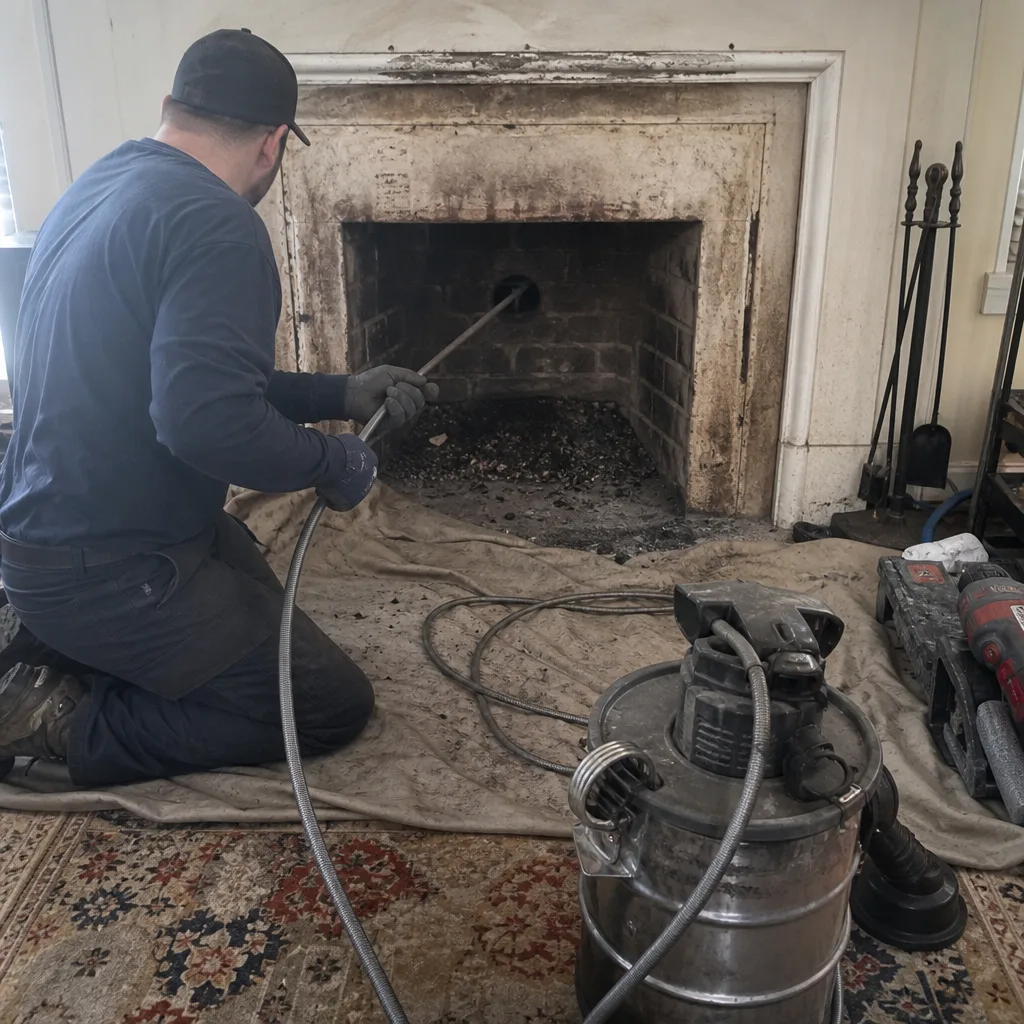 Before
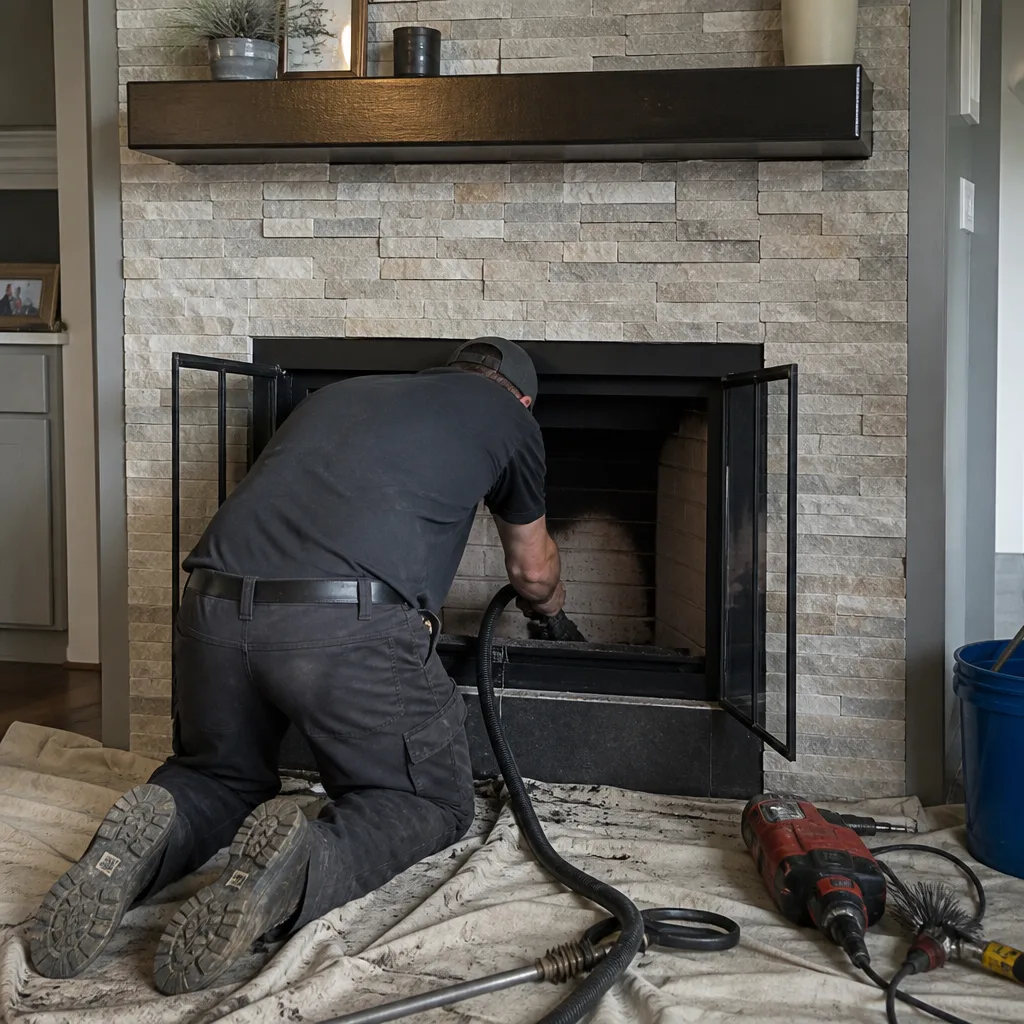 After
After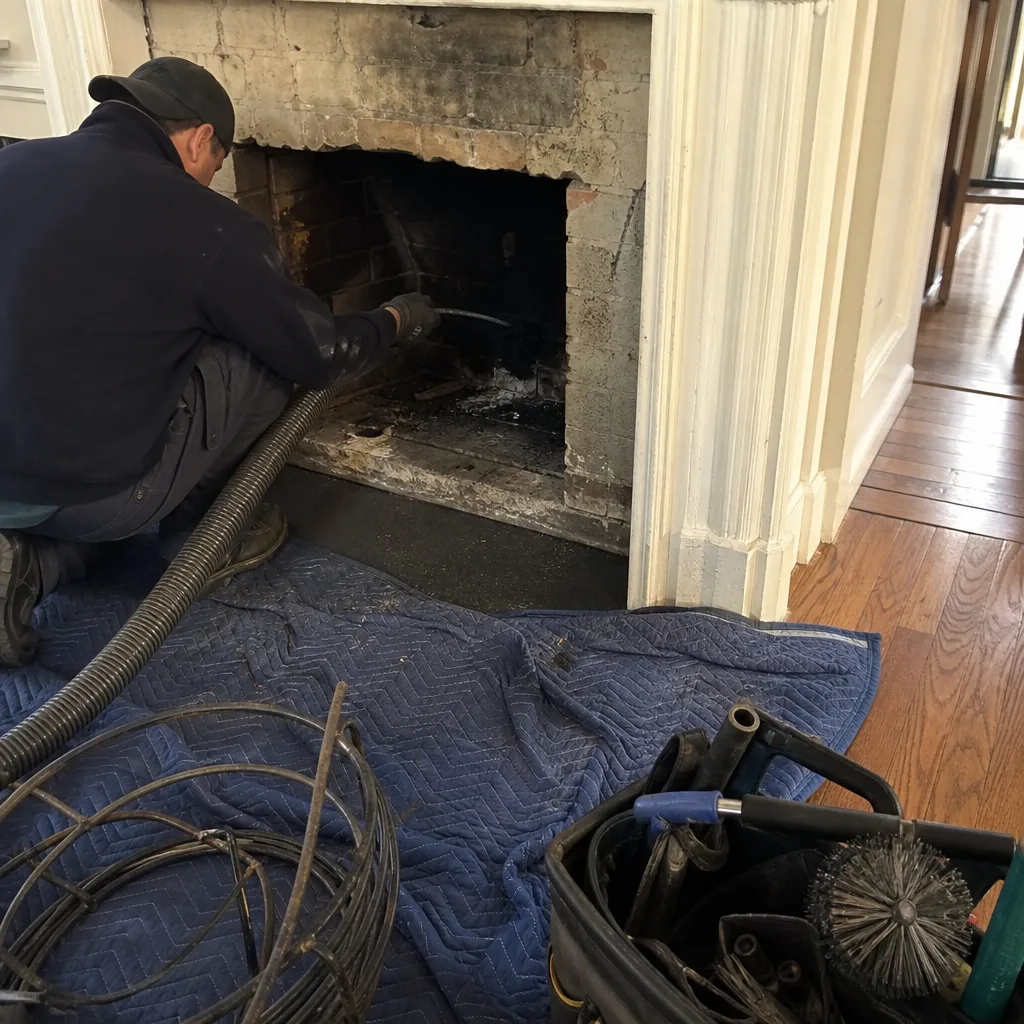 Before
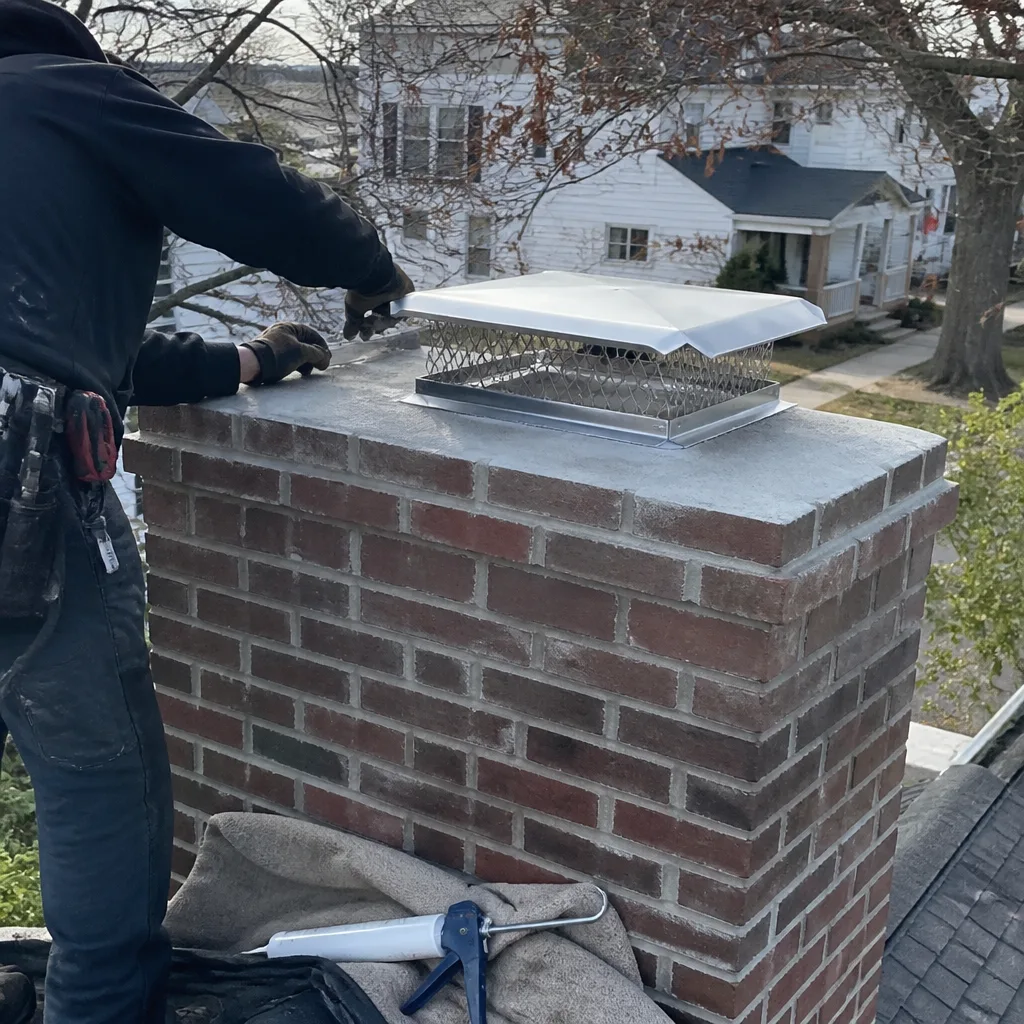 After
After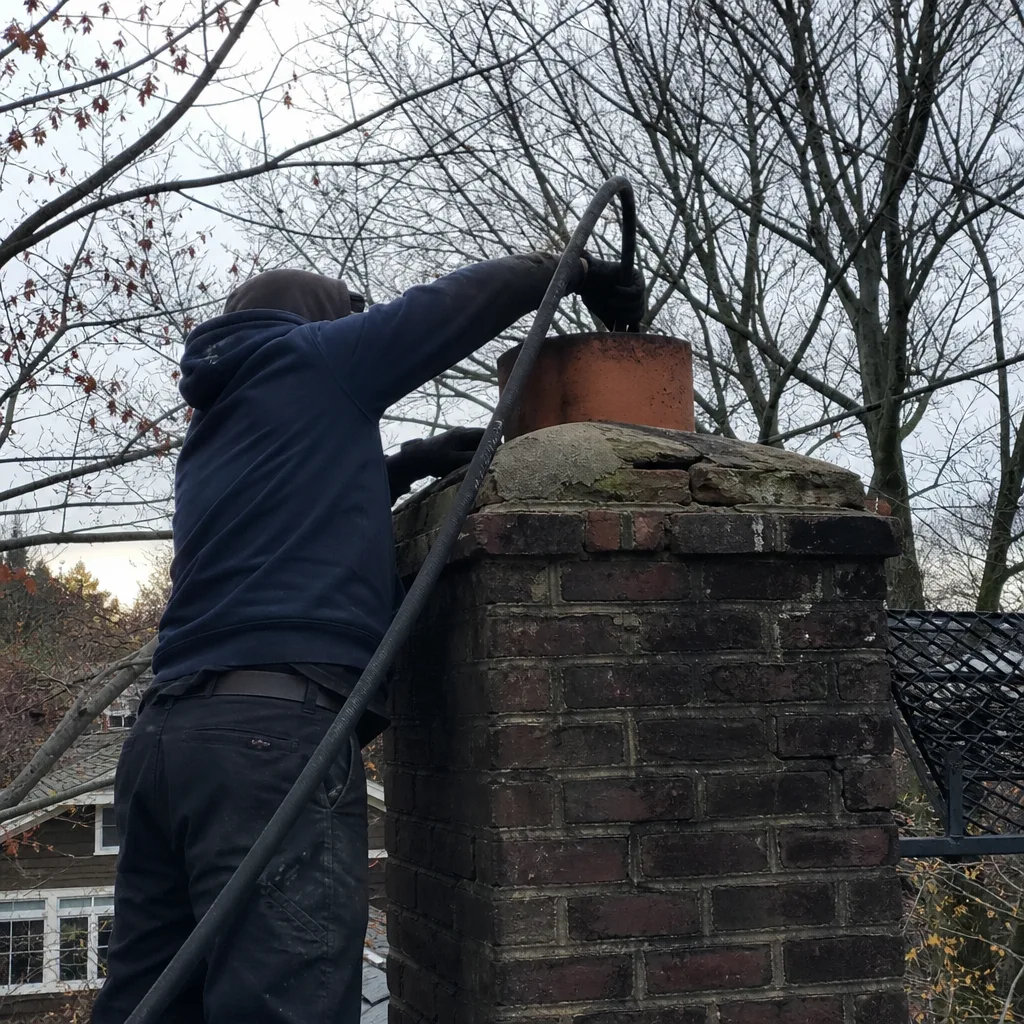 Before
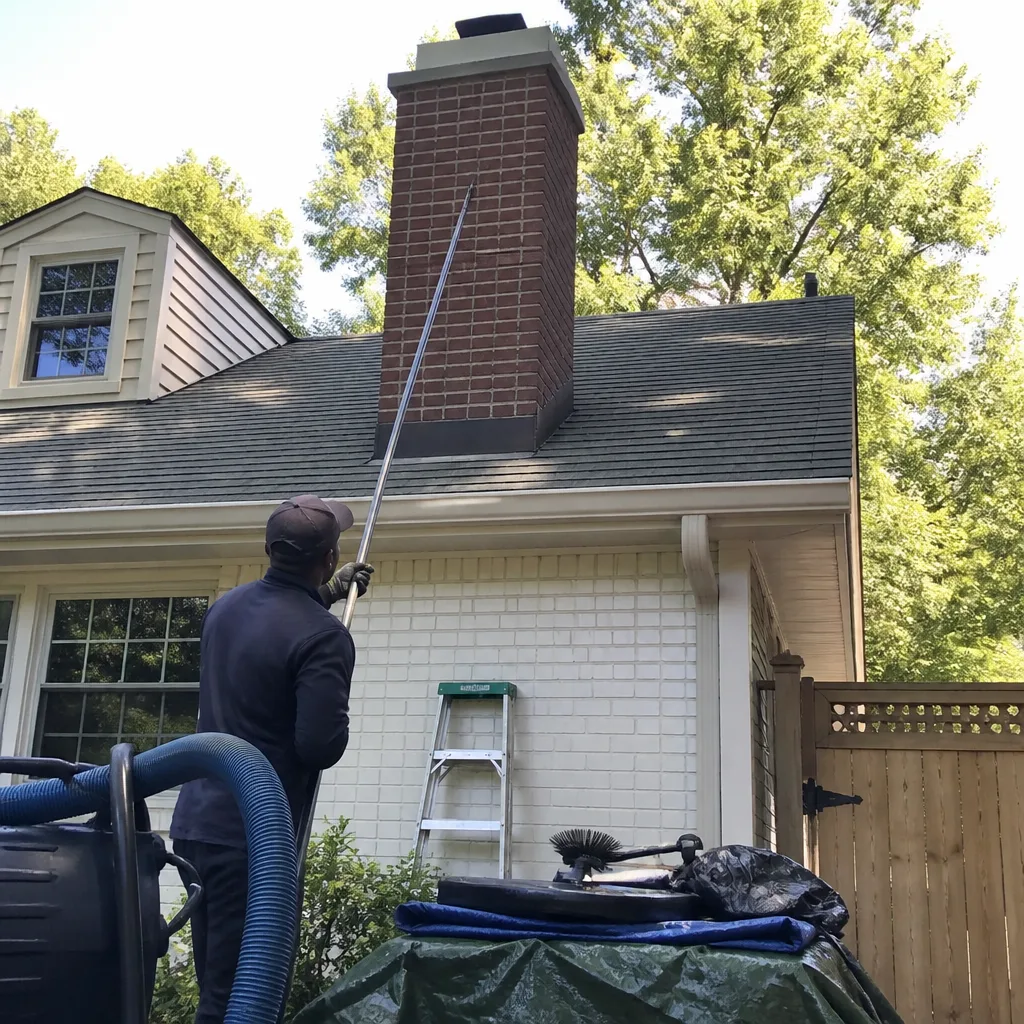 After
AfterThe Complete Guide to Chimney Cleaning in Washington
The NFPA reports that 27% of home heating fires involve chimneys, fireplaces, or solid-fuel appliances. What most Washington homeowners never learn is that the majority of those fires trace back to components a standard visual inspection never reaches. The flue system behind your brick or stone facade is a five-part assembly: firebox, smoke chamber, damper, liner, and crown. Each has its own failure mode, its own cleaning interval, and its own documented standard. This guide maps every component, explains what a camera scan actually shows versus what a flashlight misses, and tells you what cleaning should cost in Washington, DC. For year-round seasonal care tips, see our dedicated resource.
Quick Answer
Chimney cleaning in Washington, DC typically costs between $189 and $349 for a standard sweep on a single-flue fireplace, with Level 2 camera-scan inspections adding $99 to $199 depending on flue height and access. A complete clean-and-inspect visit, including the written photo record, usually runs $288 to $548 and takes 60 to 90 minutes. Washington’s pre-1940 rowhouses often need additional work, because unlined terra cotta flues and decades of deferred maintenance are common in Capitol Hill, Georgetown, and Petworth housing stock.
Table of Contents
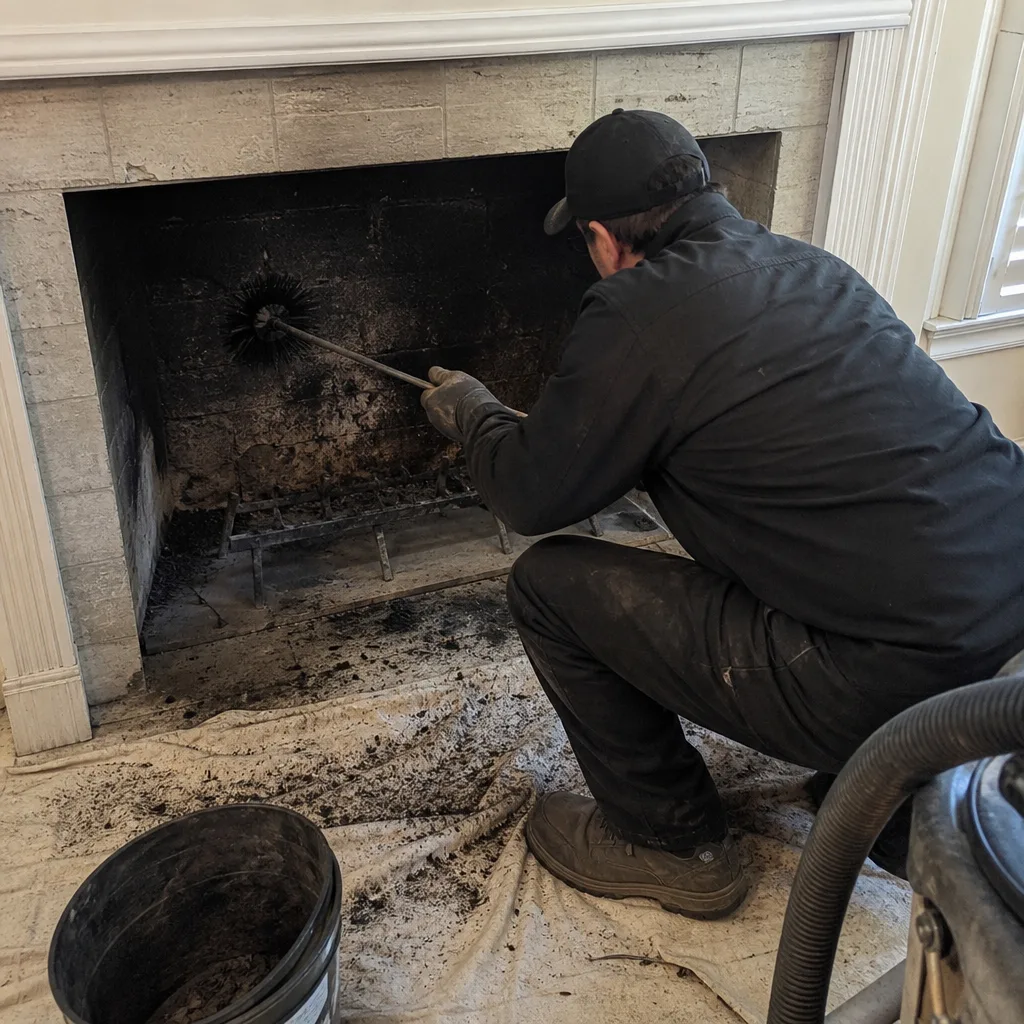
- The Five Components of a Chimney System (And What Actually Gets Cleaned)
- Level 1 vs. Level 2: What NFPA 211 Requires and What It Costs
- Creosote Stage 1, 2, and 3: Why Stage 3 Changes Everything
- Washington’s Older Housing Stock: Unlined Flues and Terra Cotta Problems
- What a Written, Timestamped Post-Service Record Contains
- What Chimney Cleaning Costs in Washington: A Line-Item Breakdown
- How Often Should You Clean Your Chimney in Washington?
- Common Mistakes to Avoid
BeforeAfterThe Five Components of a Chimney System (And What Actually Gets Cleaned)
When a homeowner says “clean the chimney,” most assume it means one thing: sweep the soot out of the pipe. A chimney is a system, not a pipe. Five distinct components sit between your fire and the air above your roof, and four of the five directly affect how safely your fireplace operates. Understanding these components matters because it tells you what you’re paying for and what a tech is actually doing when they’re in your home for an hour.
1. The Firebox
The firebox is the chamber where the fire burns. It’s lined with firebrick and refractory mortar designed to withstand direct flame contact. Cleaning the firebox means removing ash, checking for cracked firebrick, and inspecting mortar joints for erosion. Ash buildup isn’t a safety hazard by itself, but cracked firebrick is: gaps in the firebox allow heat to reach combustible framing behind the masonry. In Washington’s older rowhouses, we regularly see fireboxes that were re-pointed with standard Type N mortar, which isn’t rated for direct flame contact and spalls, meaning it crumbles, within a few seasons. The firebox needs refractory mortar, period. A flashlight check shows ash and obvious cracks. A camera scan from the firebox up through the throat shows whether the damper housing is intact and whether heat has begun migrating into the smoke chamber.
2. The Smoke Chamber
The smoke chamber sits above the firebox and below the flue liner. It’s the transition zone where smoke compresses and accelerates before entering the liner, and it’s the most overlooked chamber in residential chimneys. Smoke chambers in Washington homes built before 1940 are often unparged, meaning the brick is exposed and covered in corbeled, or stepped, ledges rather than smooth refractory coating. Those ledges collect creosote and soot that a standard brush never reaches. The NFPA 211 standard requires that smoke chambers be parged smooth, but thousands of DC rowhomes predate that requirement. When we clean a smoke chamber, we’re removing the creosote from those ledges, then documenting with a camera whether the parging is intact. If it isn’t, it’s a repair item, not a cleaning item. But you need to know it’s there, and that’s exactly what a Level 2 camera inspection shows: the difference between a clean flue and a safe one.
3. The Damper
The damper is the metal or cast-iron door that seals the fireplace when it’s not in use. It’s the component most likely to rust, warp, or seize in Washington’s humid summers, and it’s the reason so many DC homes have draft problems in January. Cleaning the damper means removing creosote from its frame and verifying the seal closes completely. A damper that doesn’t fully close allows conditioned air to escape up the flue year-round, which is a heating and cooling cost issue, not a fire-safety issue. But a damper that doesn’t fully open restricts draft while burning, forcing smoke back into the house. We check both positions on every visit with a top-down camera.
4. The Flue Liner
The liner is the vertical channel that carries smoke and combustion gases from the firebox to the exterior. It’s usually clay tile, stainless steel, or poured-in-place ceramic. This is the component that actually gets swept when someone says “chimney sweep” - a brush sized to the liner’s diameter travels the flue’s length, dislodging creosote and soot. But liner cleaning isn’t just about the brush pass. It’s about identifying what the brush reveals: cracked flue tiles, gaps at tile joints, and creosote accumulation stage. Washington’s pre-1940 housing stock frequently has unlined chimneys, meaning the flue is bare brick with no tile or metal liner at all. Brick was never meant to carry flue gases; it’s porous and erodes under years of acidic creosote contact. If your flue is unlined, cleaning is still possible, but it requires a gentler approach and, usually, a conversation about a liner installation.
5. The Crown
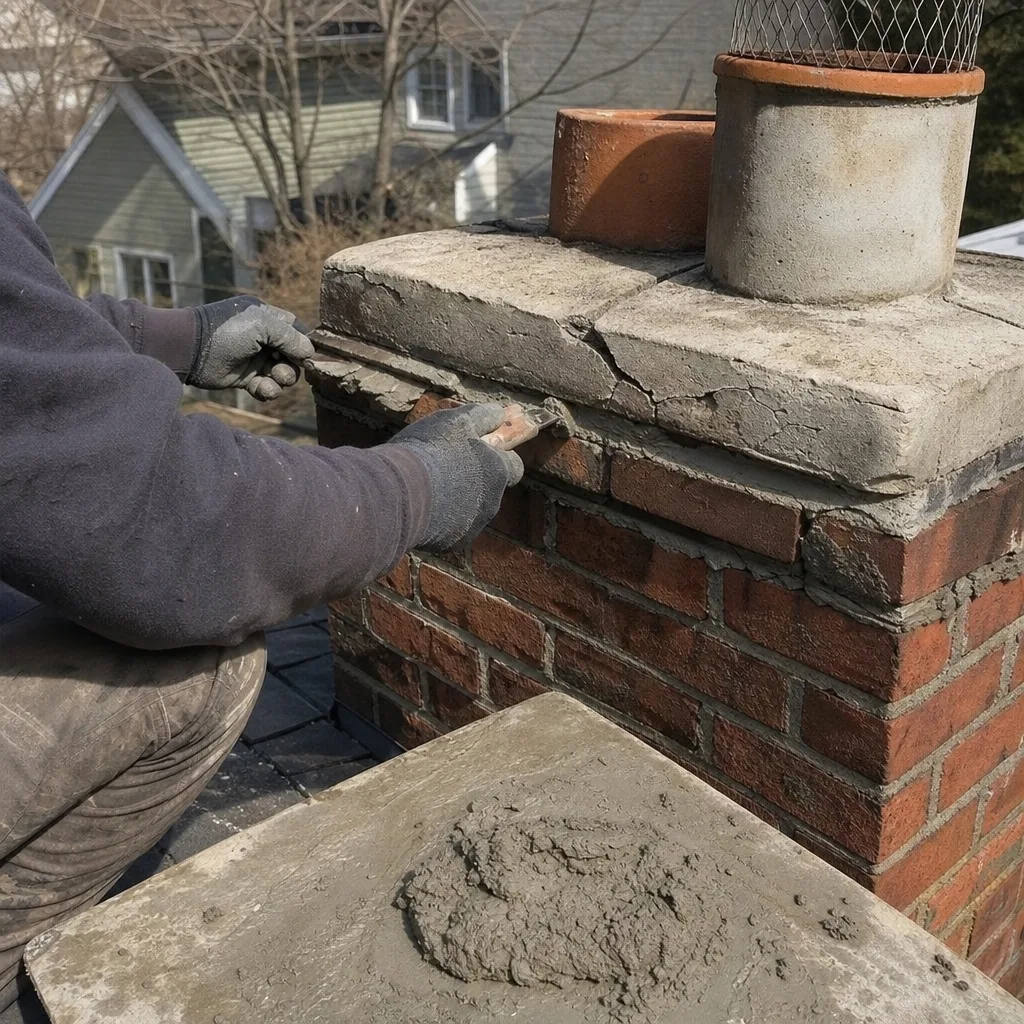
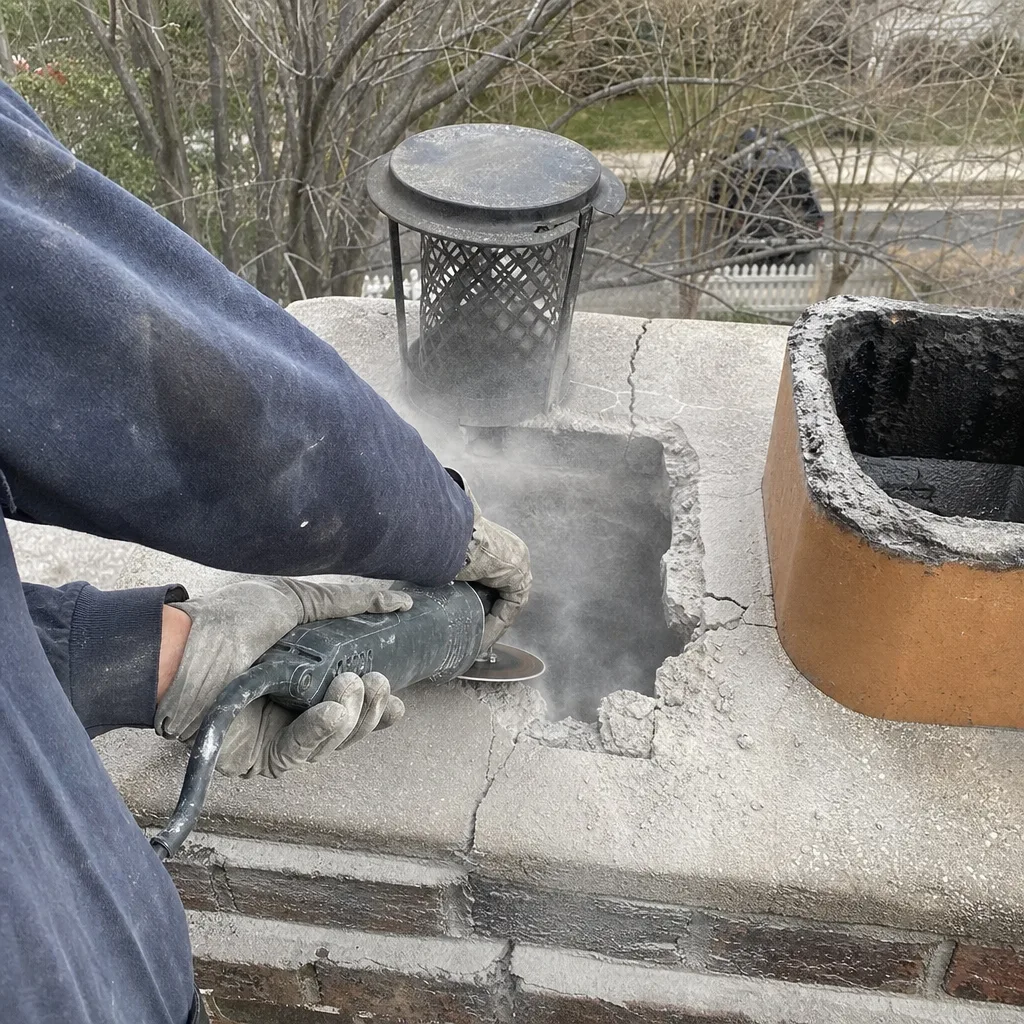
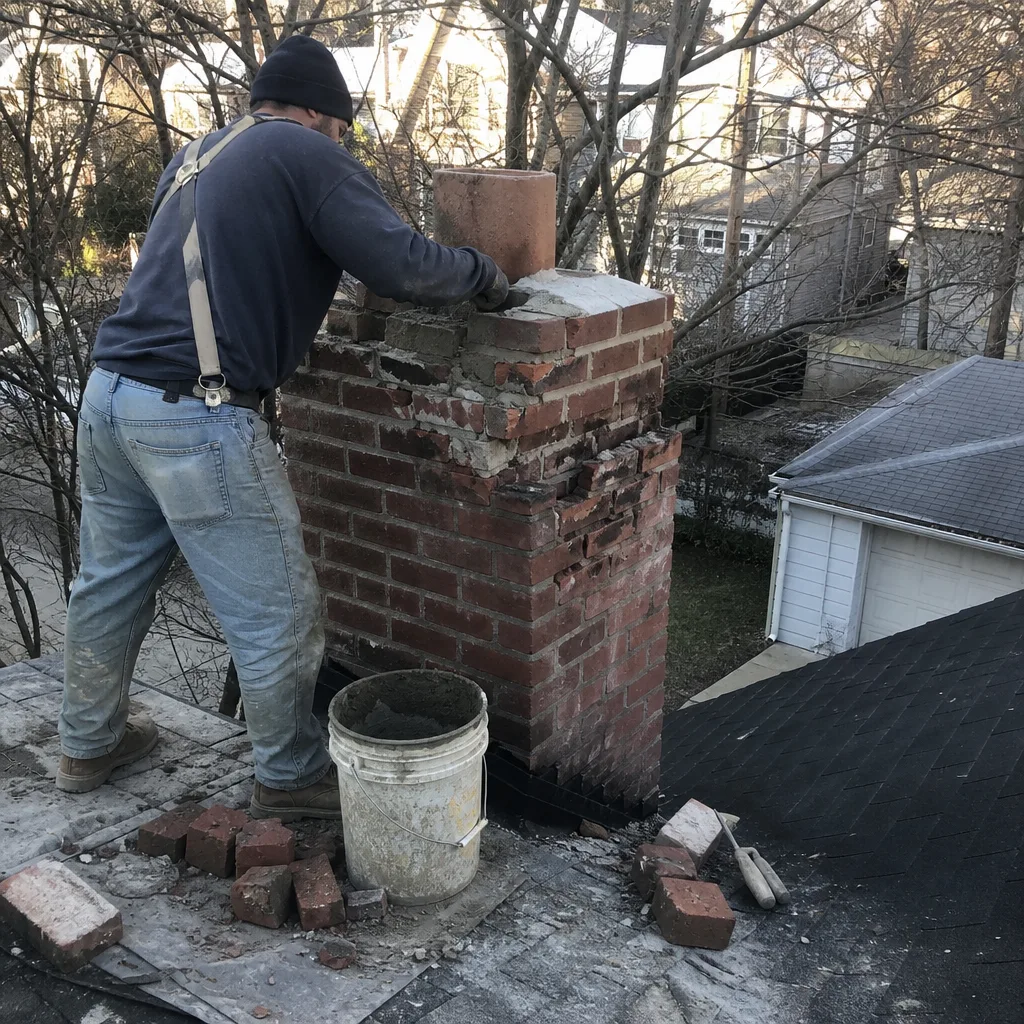
The crown is the concrete or mortar cap at the top of the chimney that sheds water away from the flue. It’s the exterior component most exposed to Washington weather, and it’s the one most likely to fail silently. A cracked crown allows water into the masonry, and water is the enemy of every chimney component. Freeze-thaw cycles in DC winters expand those cracks. Cleaning the crown means clearing debris and inspecting for hairline fractures. Repair means sealing with a flexible crown coat or, if the crown has pulled away from the flue tile, rebuilding it. Most Washington homeowners have never looked at their crown, because it requires roof access. Our technicians document crown condition from the top down on every visit, and the photo record includes exactly what they saw.
Level 1 vs. Level 2: What NFPA 211 Requires and What It Costs
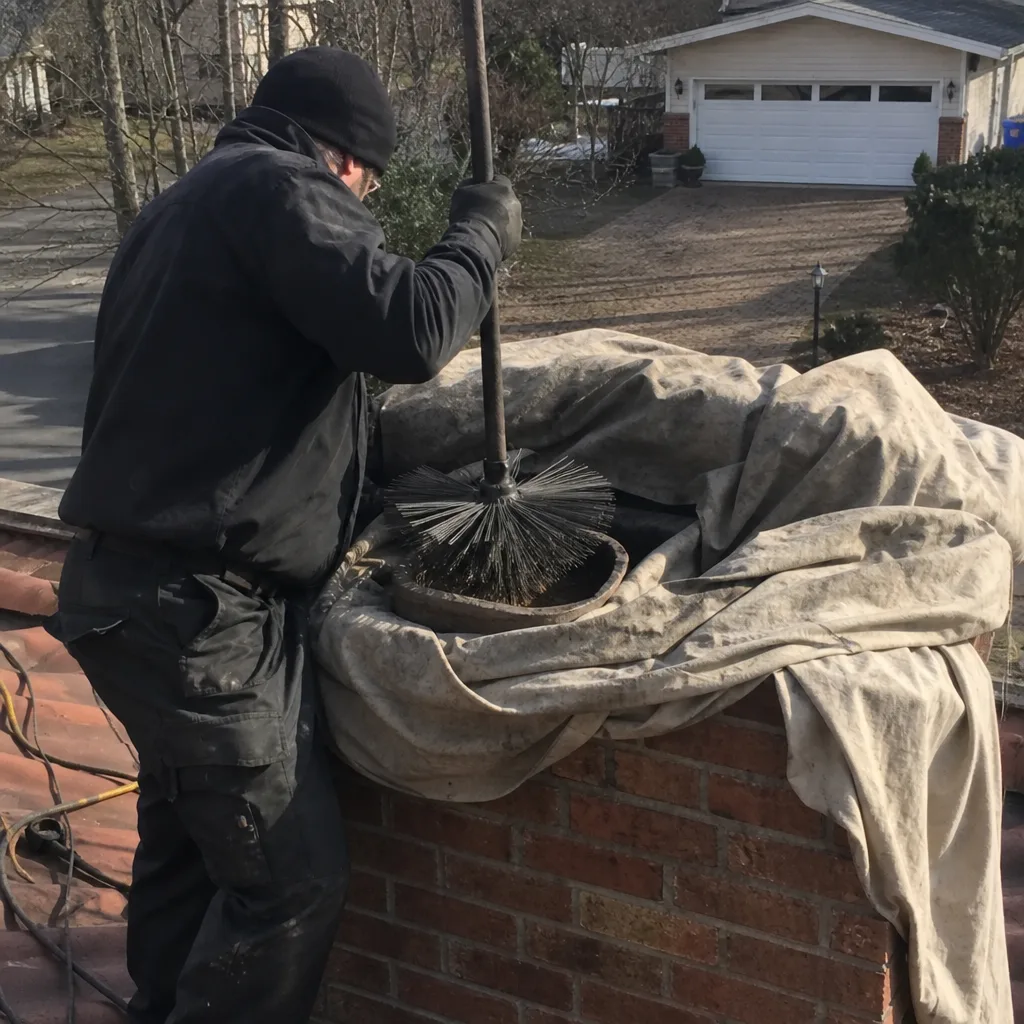
NFPA 211 is the National Fire Protection Association standard that governs chimneys, fireplaces, and vents. It defines three levels of inspection, and the difference between Level 1 and Level 2 is the difference between looking at a chimney and looking inside it. Most “chimney cleaning” advertised at $99 is a Level 1 inspection with a brush pass. A Level 2 is a documented camera scan of the entire flue system.
Here’s the breakdown in plain terms:
- Level 1: A visual check of the readily accessible portions of the chimney. The tech looks at the firebox, checks the damper operation, runs a brush up the flue, and calls it done. No camera. No top-down verification of the liner. No smoke chamber inspection. This is appropriate when nothing about the system has changed and you’re on a regular maintenance schedule.
- Level 2: Everything in Level 1, plus a closed-circuit camera scan of the entire flue from top to bottom, inspection of the smoke chamber, and verification of the crown condition from the roof. NFPA 211 requires a Level 2 inspection when you’re buying or selling a home, after a chimney fire, after a weather event, or when you’ve changed the appliance or fuel type. We made camera-scan documentation the default on every visit in 2009, under Clause 4 of the Haven Standard, years before regulators or insurers routinely asked for it.
- Level 3: An invasive inspection that requires removing components to reach concealed areas. Only required when a Level 2 reveals a condition that demands it, such as suspected structural damage inside a wall cavity.
What does the Level 2 cost in Washington? Expect to pay $99 to $199 for the camera scan on top of the cleaning charge, depending on flue height and roof access. The additional time is real: a proper Level 2 inspection takes 20 to 30 minutes beyond the cleaning itself, because the tech is on the roof documenting the crown and scanning from the top down after the sweep. If a company quotes you $99 for a full cleaning and Level 2 inspection, they’re either skipping the camera or padding the invoice after arrival. Washington homeowners who bought their homes between 2015 and 2025 should insist on a Level 2 at least once at purchase and again if they’ve never had one, because the condition of the flue interior is the one thing a home inspection report almost never shows. Home inspectors don’t run chimney cameras; chimney techs do. That gap is where chimney cleaning and sweep services in Washington become a documentation tool, not just a maintenance routine.
Creosote Stage 1, 2, and 3: Why Stage 3 Changes Everything
Creosote is the byproduct of incomplete wood combustion: a tarry, sticky, highly flammable substance that condenses on the cooler walls of the flue as smoke rises. It forms in three recognized stages, and the stage determines not just how often you need cleaning but how the cleaning is done and what it costs.
Stage 1 creosote is loose, dusty, and brown or gray. It’s what accumulates during a normal season of burning seasoned hardwood. A standard brush sweep removes it easily, and if you’re at Stage 1 when we arrive, your cleaning is straightforward and your price is at the low end of the range. Stage 1 is what you want to catch, and it’s why an annual cleaning is the right cadence for most Washington wood-burning households.
Stage 2 creosote is crusty, flaky, and darker. It forms when flue temperatures stay consistently in the range that allows creosote to condense but not fully ignite, common in exterior chimneys on DC rowhouses that run along the party wall. Stage 2 requires more mechanical agitation, often with rotary loops instead of a simple brush, and it adds 20 to 40 minutes to the job. The price increases accordingly, typically $50 to $100 over a basic sweep.
Stage 3 creosote is a glaze: tar-like, shiny, and hardened to the flue wall. It’s concentrated fuel, and it’s the stage most likely to ignite in a chimney fire. Stage 3 can’t be removed with a brush alone. Removal typically requires chemical treatment, often with a product like Anti-Creo-Soot or a set of rotary chains, followed by a second visit to complete the removal. Stage 3 cleaning can run $500 to $800 or more depending on flue length and whether the glaze extends into the smoke chamber. In Washington’s older homes, Stage 3 creosote is frequently combined with an unlined flue or failed terra cotta liner, which is a repair conversation, not just a cleaning one.
Here’s the sequence we follow, and it’s the same sequence any reputable cleaning in Washington should follow:
- Pre-scan the flue to establish creosote stage and liner condition before the brush touches anything.
- Select the cleaning method: brush for Stage 1, rotary loops for Stage 2, chemical or mechanical glaze treatment for Stage 3.
- Sweep the full flue length from the top down, protecting the interior with drop cloths and a HEPA vacuum at the firebox.
- Post-scan the flue to verify the creosote is removed and document with the camera frame, date stamp, and reading.
- Clean the smoke chamber ledges and firebox, check the damper operation, and document the crown from the roof.
The reason the stage matters for price isn’t that companies are upselling. It’s that the method changes, and the method drives the time and the equipment. If a company quotes you $149 sight unseen and your flue has Stage 3 glaze, one of two things happens: the tech brushes what they can and leaves the rest, or they hit you with a change order after arriving. The way to avoid both is a written, on-page price before anyone starts, which is Haven Standard Clause 1: ‘Have it in Writing.’ Get the price, get the scope, get the warranty, all written, before the vacuum turns on.
Washington’s Older Housing Stock: Unlined Flues and Terra Cotta Problems
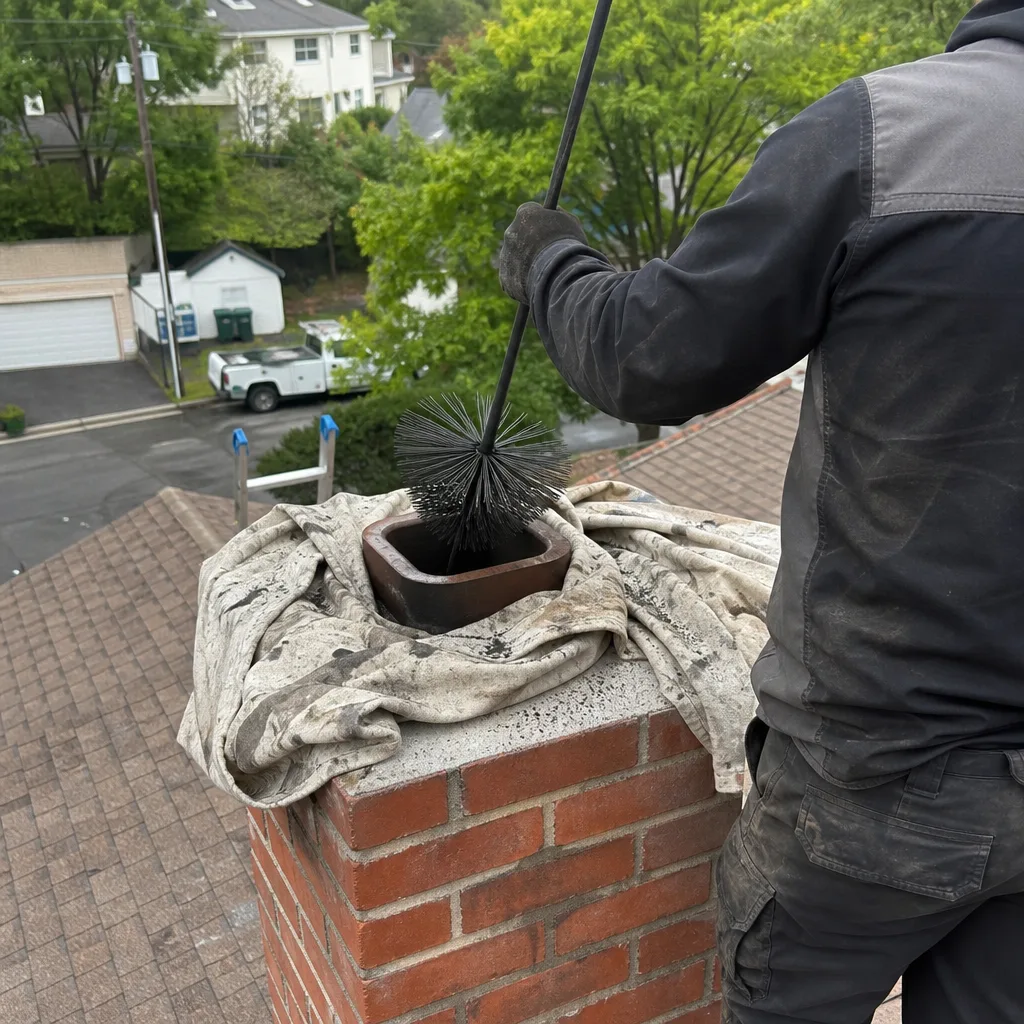
Washington, DC doesn’t age like most American cities. Walk through Capitol Hill, Georgetown, Shaw, or Bloomingdale, and you’re passing row upon row of houses built between 1880 and 1940. Those homes share a specific set of chimney characteristics that newer construction in Arlington or Bethesda doesn’t have. If you own one, your chimney cleaning in Washington is a different conversation than it is for a 1995 colonial in the suburbs.
The defining feature is terra cotta. Pre-1940 DC rowhouses were commonly built with terra cotta flue tiles, and many were built with no liner at all: just brick stacked into a flue. Terra cotta tiles are the original chimney liner, and they work reasonably well for decades. But they fail in predictable ways. The tiles crack under thermal stress, the mortar joints between them erode from creosote acid, and the entire liner assembly shifts as the house settles. Once a terra cotta tile cracks, the flue is no longer sealed. Heat and gases can reach the brick behind the tile, and that’s when a chimney becomes a liability.
The specific Washington hazard isn’t just age; it’s the combination of age and climate. DC has freeze-thaw cycles every winter, and water intrusion through a cracked crown or missing cap accelerates liner deterioration dramatically. A terra cotta liner that would last 50 years in a dry climate fails in 30 in the Mid-Atlantic’s humidity and freeze cycles. Add in decades of deferred maintenance common to rental-converted rowhouses, and the chimney on a $900,000 Capitol Hill home is often in worse shape than the chimney on a $400,000 suburban townhouse.
Unlined flues present a different issue. Bare brick flues erode, and the brick itself absorbs creosote over time. Once creosote is absorbed into masonry, no brush removes it. It’s a fire hazard that persists, and the only real fix is a liner installation. We’ve used stainless steel liners from Copperfield and DuraFlex in hundreds of Washington rowhouses for exactly this reason: they’re insulated, they’re rated for the flue gases, and they’re documented with a camera scan at installation and every cleaning after.
What does this mean for your cleaning? It means the pre-scan matters more in Washington than almost anywhere else. Our techs see flues in Bloomingdale that haven’t been cleaned since the Clinton administration, and the camera tells us in 30 seconds whether the liner is intact or whether the cleaning needs to become something else. If your rowhouse still has its original terra cotta liner and you’ve never had it scanned, a Level 2 camera inspection should be part of your next chimney repair assessment in Washington, because the condition of that liner determines whether cleaning alone is safe.
What a Written, Timestamped Post-Service Record Contains
The difference between a company that documents and a company that doesn’t is the difference between a maintenance record and a claimable asset. Insurers and home buyers increasingly ask for chimney documentation, and Washington’s real estate market is specific about it: the pre-sale inspection market here is dense, and a documented chimney record is a negotiation tool. Here’s what a proper post-service record from a cleaning in Washington should contain, and what we deliver on every visit under Haven Standard Clause 4.
The written record includes:
- Camera photographs: Pre-clean and post-clean images of the flue interior, smoke chamber, damper, and crown, each with a date and time stamp. This is not optional. If a company can’t show you a photo of your own flue after the cleaning, they didn’t look at it.
- Creosote stage reading: A plain-language note stating the creosote stage before cleaning and after, so you have a baseline for next year.
- Component conditions: Liner material and condition, smoke chamber parging status, damper operation, crown integrity, and cap presence. Each in plain terms: “Terra cotta liner intact, minor spalling at mortar joint, no repair needed this season” or “Smoke chamber unparged, creosote accumulation on ledges, recommend parging within 24 months.”
- Written scope of work: What was included in the price you agreed to, what was performed, and what, if anything, was declined or recommended for follow-up. This is your leverage if a home inspector or insurance adjuster later asks what was done.
- Written warranty: The workmanship warranty in writing, not verbally. If the company won’t warrant the cleaning in writing, they don’t stand behind it.
This record is what a home buyer asks for in a competitive DC sale, and it’s what insurers ask for after a chimney fire claim. A timestamped camera record shows that the flue was clean and the liner was intact on a specific date. That’s a document, not a memory. We’ve kept this archive since 2009 under Clause 4 of the Haven Standard, which requires a photo record on every job. If your current sweep company doesn’t provide one, ask why. The answer tells you everything.
What Chimney Cleaning Costs in Washington: A Line-Item Breakdown
Chimney cleaning prices in Washington vary, but not as much as the quote range suggests. The spread comes from what’s included, whether a camera scan is part of the visit, and whether the company uses the post-arrival upsell model. Here’s what you should expect to pay, line by line, for a standard single-flue fireplace cleaning in DC.
| Service Line Item | Typical Washington Range | What It Includes |
|---|---|---|
| Standard sweep (Stage 1 creosote, single flue) | $189 - $249 | Brush sweep full liner length, firebox cleanout, damper check, basic visual check |
| Level 2 camera scan add-on | $99 - $199 | Top-down and bottom-up flue scan, smoke chamber documentation, crown photos, written record |
| Stage 2 creosote upcharge | $50 - $100 | Rotary loop agitation, extended sweep time, post-scan verification |
| Stage 3 creosote treatment | $500 - $800 | Chemical or mechanical glaze removal, often requires two visits |
| Smoke chamber cleaning (parged chambers) | $75 - $150 | Creosote removal from corbeled ledges, camera verification |
| Crown inspection photo documentation | Included with Level 2 | Roof access, crown condition photos, written findings |
| Chimney cap replacement (if needed) | $150 - $400 installed | Stainless steel cap, often Famco or Olympia Chimney, sized to flue |
A complete clean-and-inspect in Washington, with the camera scan and written record, should run between $288 and $548 for a single-flue fireplace. Wood stoves and fireplace inserts add $50 to $150 depending on connector pipe length and accessibility. If you’re paying $129 for a “full cleaning,” you’re getting a brush pass and a wave goodbye, and the Stage 2 creosote in your smoke chamber will still be there when the tech leaves.
Upfront pricing matters here because the chimney industry’s ugliest pattern is the bait price. A homeowner books a $99 sweep, the tech finds “dangerous conditions” that require a liner replacement, and the final invoice is $4,200. The condition may be real; the price may not be. The way to cut through it is a written price before work starts, in writing, with the scope stated. That’s how Level Two Chimney Washington operates, and it’s also why we offer a Level Two Chimney Washington home standard: a free second opinion on any written estimate. Bring us a competitor’s written quote, and we’ll tell you what’s actually necessary and what’s not. For fireplace services in Washington, that second opinion matters, because the same fireplace can be quoted as safe by one company and hazardous by another. The written record is what separates them.
How Often Should You Clean Your Chimney in Washington?
The old rule is “once a year,” and that’s still the right starting point for most households. But the cadence depends on three variables: how much you burn, what you burn, and what kind of chimney you have. Washington’s burning season runs roughly November through March, with occasional shoulder-season fires in October and April. Here’s the practical breakdown.
Wood-burning, burned two or more fires per week during the season: clean once a year. Without exception. This is the household with Stage 1 creosote after a normal season, and an annual sweep keeps it there. If you’re burning unseasoned wood, you may need a mid-season check, because green wood produces dramatically more creosote than seasoned hardwood.
Occasional wood-burning, less than one fire per week: every 18 to 24 months is usually sufficient, provided the first cleaning established a clean baseline with a camera scan. The exception is if your first cleaning showed Stage 2 or higher; you need a second visit on the shorter interval until the baseline is confirmed.
Gas fireplaces: every 2 to 3 years, but don’t skip the camera. Gas fireplaces produce no creosote, but they produce water vapor, and water vapor corrodes liners over time. A gas fireplace’s chimney still needs inspection for liner integrity and cap condition.
New home purchase in Washington: clean and inspect immediately, before the first fire. You don’t know what the previous owner left in the flue, and the home inspection almost certainly didn’t include a camera scan. This is the most common moment we find Stage 3 creosote, unlined flues, and failed terra cotta liners.
The cadence question in Washington also has a regulatory note: DC building codes reference NFPA 211 for chimney and fireplace maintenance, and many home insurance policies in the District require annual professional cleaning as a condition of coverage for wood-burning fireplaces. Check your policy. If it requires annual service, your first chimney fire claim will be denied without documentation. The timestamped record from a proper cleaning is your proof.
Common Mistakes to Avoid
- Booking the $99 sweep and expecting a full cleaning. The $99 price covers a brush pass and a visual glance. It doesn’t include a camera scan, smoke chamber cleaning, or crown inspection. You’ll get what the price pays for, and in Washington’s older flues, what it pays for isn’t enough.
- Skipping the camera because “it’s just a cleaning.” The camera is the only tool that shows you the inside of your own flue. If you’ve never seen a photo of your liner, you’ve never actually known its condition. A cleaning without a scan is a guess.
- Burning unseasoned wood because it was cheap. Green wood burns cooler and produces exponentially more creosote. The savings on the wood pile disappear into a Stage 2 or Stage 3 cleaning bill, and the hazard increases with every fire.
- Ignoring the smoke chamber. It’s the most commonly missed component in residential cleaning. A flue can be spotless while the smoke chamber holds enough creosote to ignite a chimney fire. If your company doesn’t address the smoke chamber, they’re cleaning half the system.
- Assuming the previous owner took care of it. In Washington’s real estate market, homes bought between 2015 and 2025 frequently changed hands with flues untouched for a decade or more. Purchase is not proof of maintenance. The camera decides.
- Paying for an unlined flue cleaning without a liner conversation. If your rowhouse has an unlined flue and the tech brushes it and hands you a receipt, you’ve paid for temporary relief from a permanent condition. Ask the hard question: is this flue safe to burn, and what does the camera show behind the soot?
- Accepting a verbal warranty. If the warranty isn’t written, it doesn’t exist. A verbal promise to “stand behind the work” is worth nothing when the chimney fire claim is denied. Get it in writing.
When to Call a Professional
Call a professional when any of these applies: you’ve never had a camera-scan inspection, you’ve just bought your Washington home and don’t know the flue’s history, you’re seeing white or gray staining on the exterior brick, you smell smoke indoors after the fire is out, you hear animals in the flue, or it’s been more than two years since your last cleaning. All of these are conditions where the next fire is the test, and chimneys don’t fail gracefully; they fail during use. Level Two Chimney Washington offers free estimates in Washington. Call (240) 621-1264 and we’ll give you a written price before anyone starts, with the camera documentation included under Haven Standard Clause 4.
Frequently Asked Questions
A standard chimney cleaning in Washington, DC costs between $189 and $249 for a basic sweep, with a Level 2 camera-scan inspection adding $99 to $199. A complete clean-and-inspect visit with documentation runs $288 to $548 for a single-flue fireplace. Stage 2 or Stage 3 creosote adds $50 to $800 depending on severity, because the cleaning method changes. Call (240) 621-1264 for an exact written quote; estimates are free.
Wood-burning fireplaces used two or more times per week during DC’s November-to-March burning season should be swept once a year. Occasional burners can go 18 to 24 months if the first cleaning established a clean baseline with a camera scan. Gas fireplaces need cleaning every 2 to 3 years, but still need inspection for liner corrosion. New Washington home purchases should get a clean-and-inspect before the first fire regardless of when the last service occurred.
A Level 1 inspection is a visual check of the accessible chimney parts, while a Level 2 adds a closed-circuit camera scan of the entire flue, smoke chamber documentation, and crown inspection from the roof. Level 2 is required by NFPA 211 for home purchases, after chimney fires, and after weather events. In Washington’s older housing stock, Level 2 is the only inspection that shows terra cotta liner cracks and smoke chamber creosote that flashlights miss.
If your flue is unlined brick, yes: brick was never designed to carry flue gases, and creosote absorbed into masonry cannot be removed by any brush. Unlined flues are a fire hazard that persists through cleaning. A stainless steel liner from Copperfield or DuraFlex installed in an unlined Washington rowhouse flue gives you a cleanable, documentable, code-compliant system. The camera scan before installation tells you definitively whether the brick has already absorbed creosote.
Creosote accumulates, and the chimney fire risk increases with every fire. Stage 1 creosote becomes Stage 2, then Stage 3 glaze, which is concentrated fuel adhered to the flue wall. A chimney fire at Stage 3 can crack terra cotta liners, damage the masonry structure, and spread to the house. In Washington rowhouses with shared party walls, that risk extends to the neighbor’s home. A skipped cleaning also means a skipped inspection, and the liner crack or crown failure goes undocumented until it becomes a repair.
A proper post-service record includes camera photos of the flue interior before and after cleaning, the smoke chamber, damper, and crown, each with a date and time stamp; a written creosote stage reading; component condition notes in plain language; the written scope of work; and the written warranty. This is Haven Standard Clause 4, and it’s what insurers and home buyers request when chimney maintenance is in question. If your company can’t produce it, they didn’t do the full job.
The Bottom Line
Chimney cleaning in Washington isn’t one task; it’s five component checks wrapped in a brush pass, and the difference between a cheap sweep and a proper clean-and-inspect is the difference between guessing and knowing. Washington’s pre-1940 rowhouses carry terra cotta and unlined flues that newer construction doesn’t share, which means the camera scan matters more here. Creosote stage determines method and price, not just frequency. The written, timestamped record is your proof for insurers and home buyers. And the price on the page, in writing, before work starts, is the only honest way to buy a chimney service. If you’re in Washington and want a Level 2 camera-scan cleaning with a documented record and a written warranty, Level Two Chimney Washington offers free estimates. Call (240) 621-1264.
Written by Corrine Halstead, Owner at Level Two Chimney Washington, serving Washington since 2009. Explore more guides & resources on chimney care and home safety.