
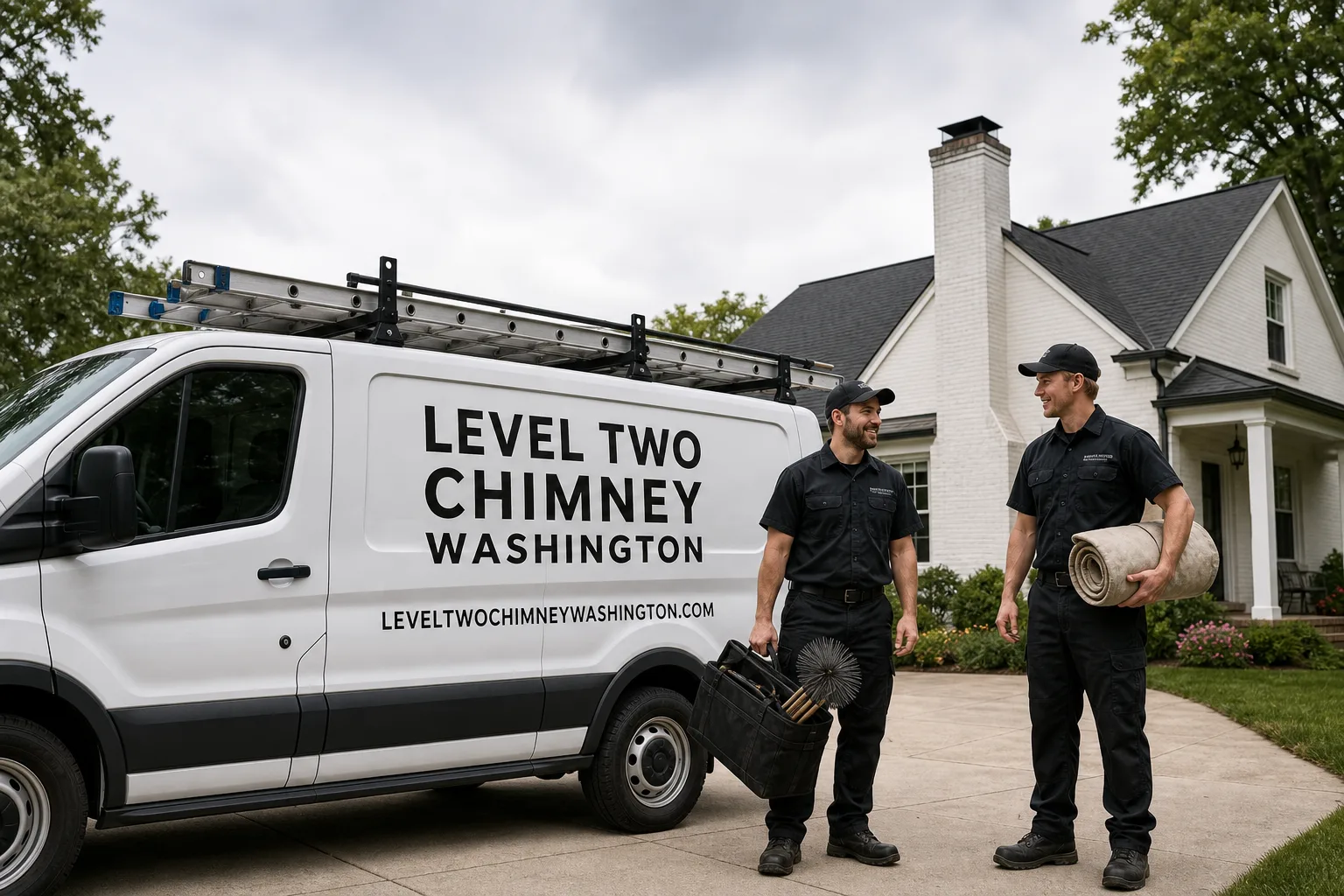
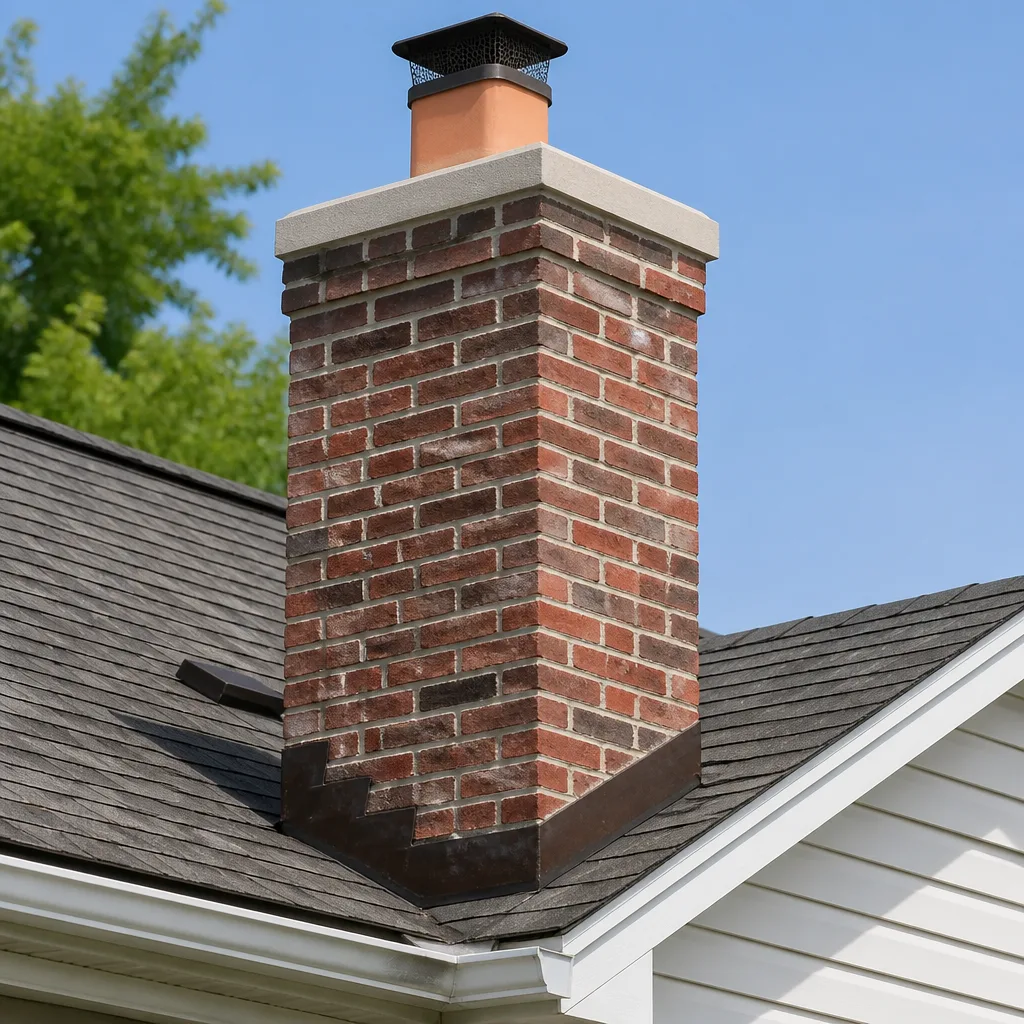
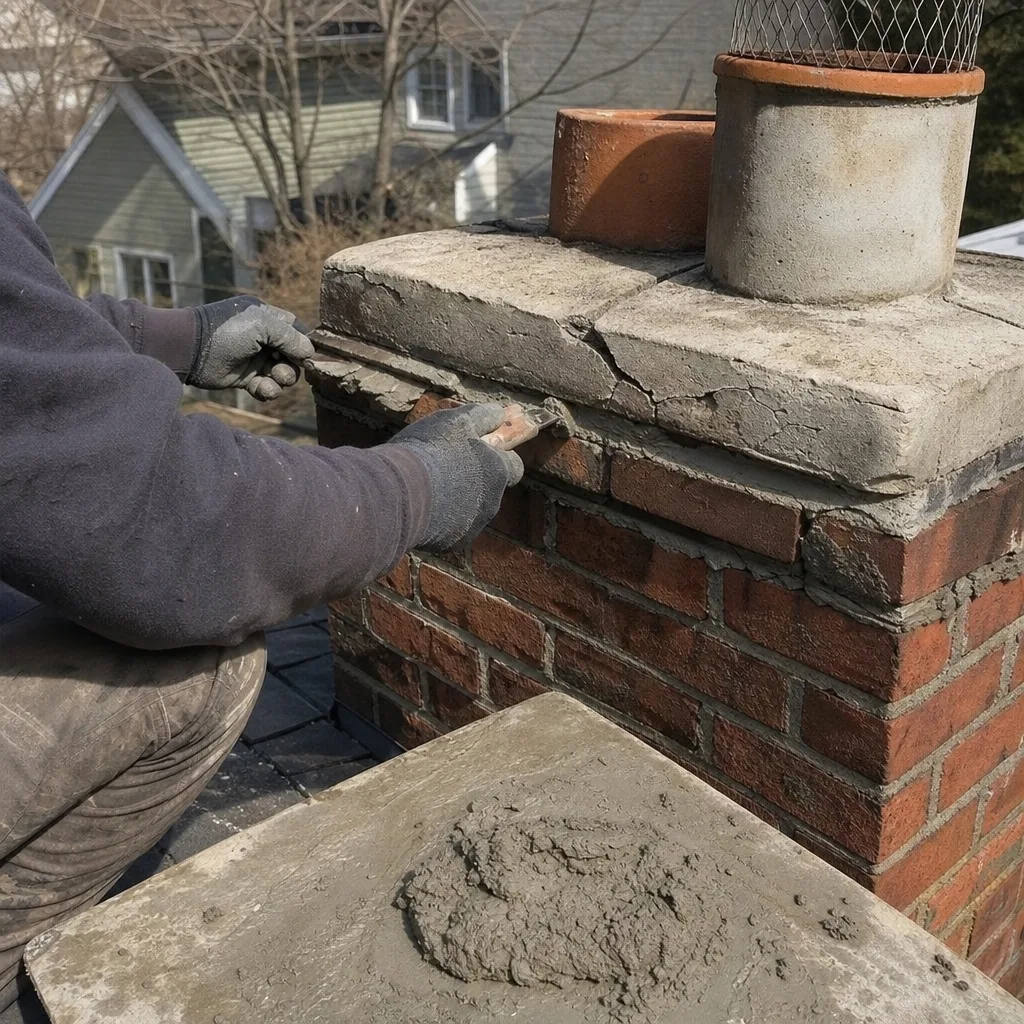
Level 1 sweep and inspection to the NFPA 211 annual standard - flue, crown, cap, and flashing checked and photographed
Chimney sweep logs do not sweep chimneys. They loosen some creosote - which then falls where a brush and vacuum still have to collect it.
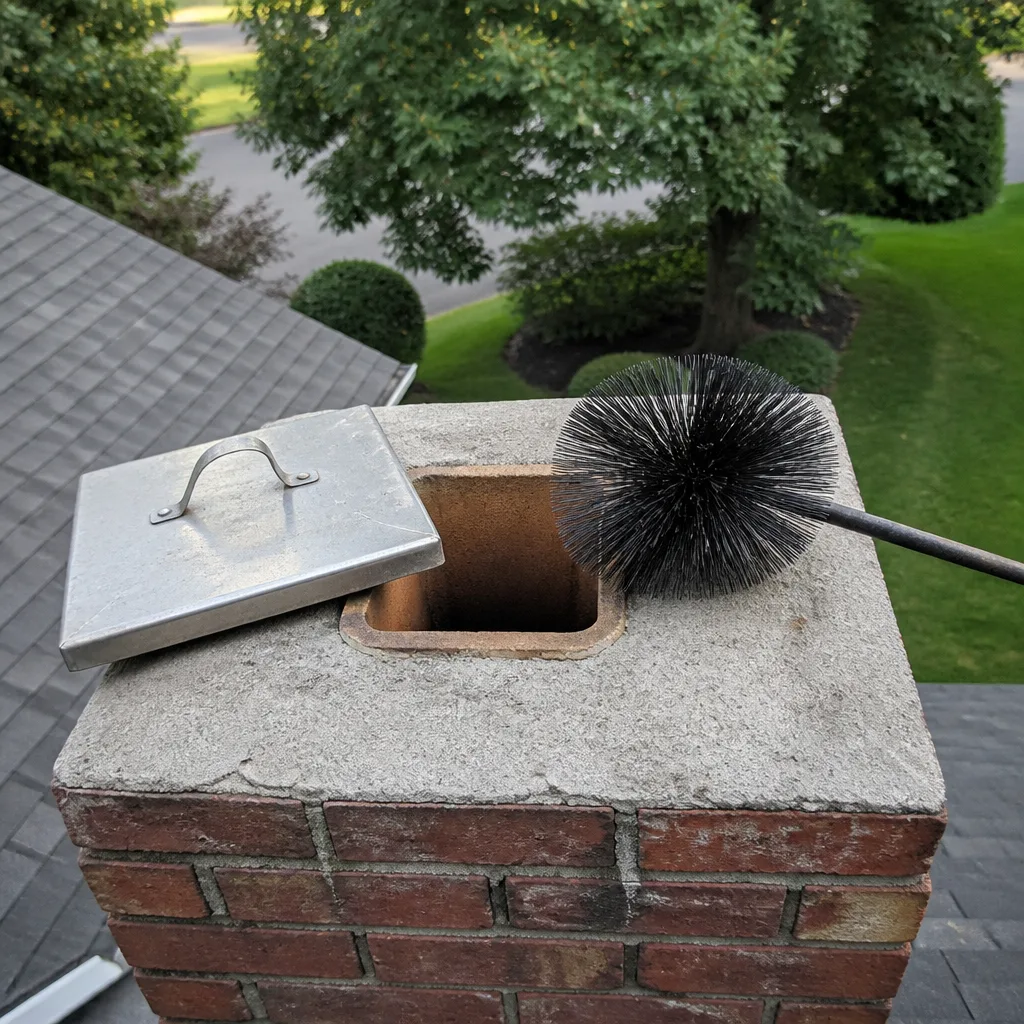
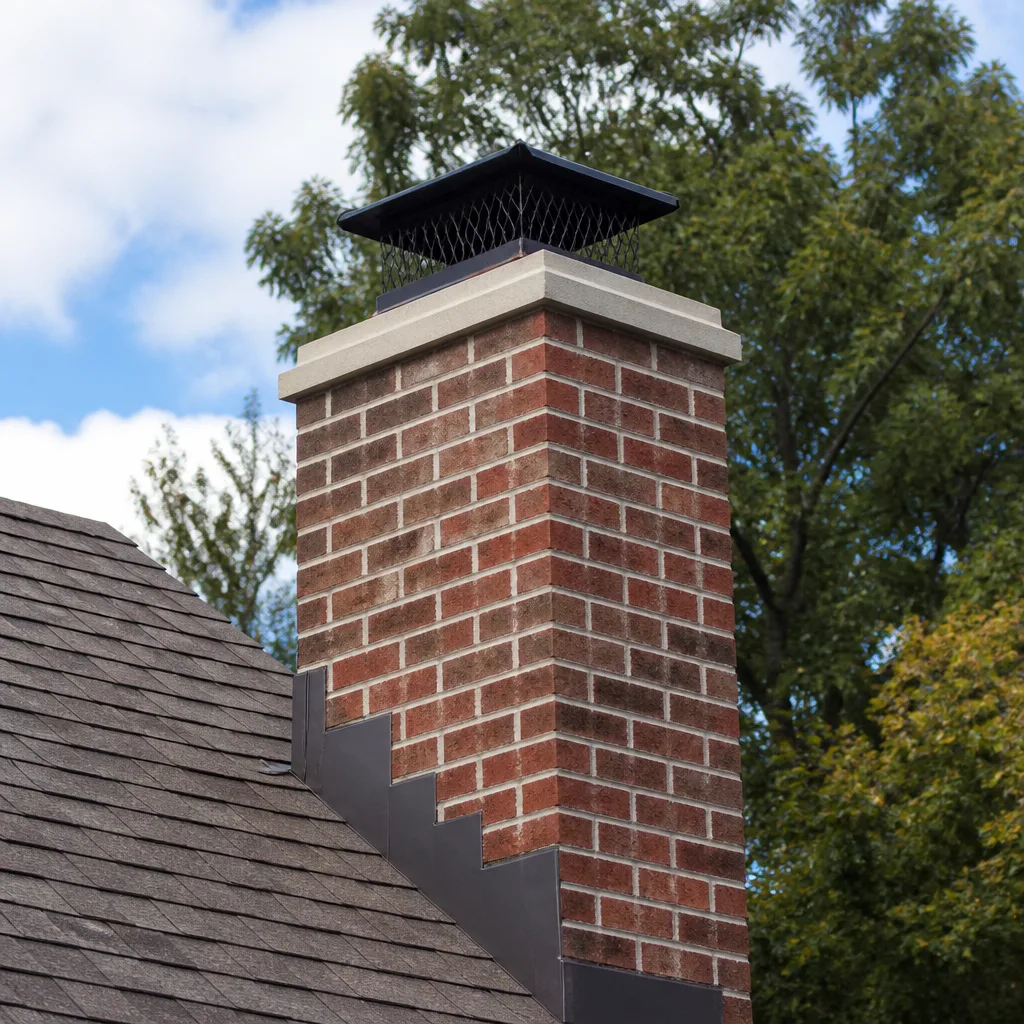
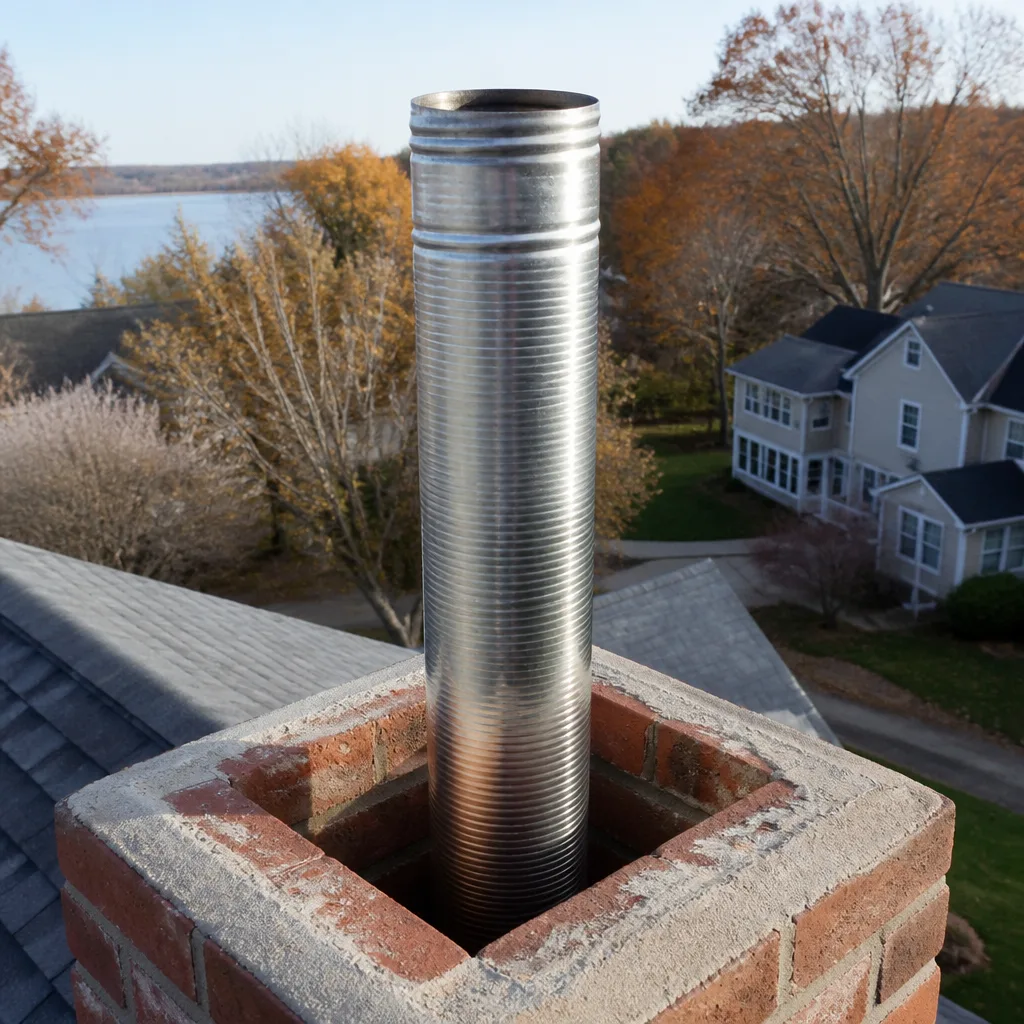
 Before
 After
After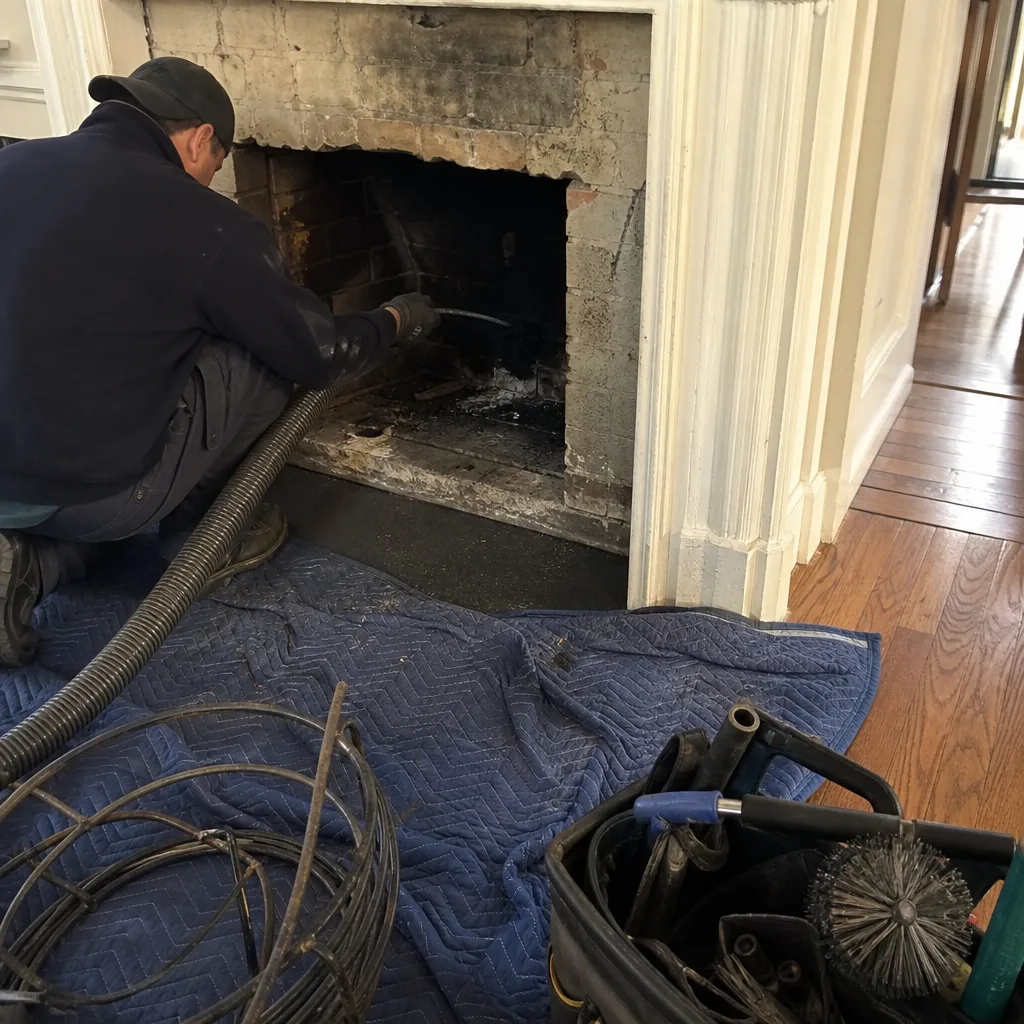 Before
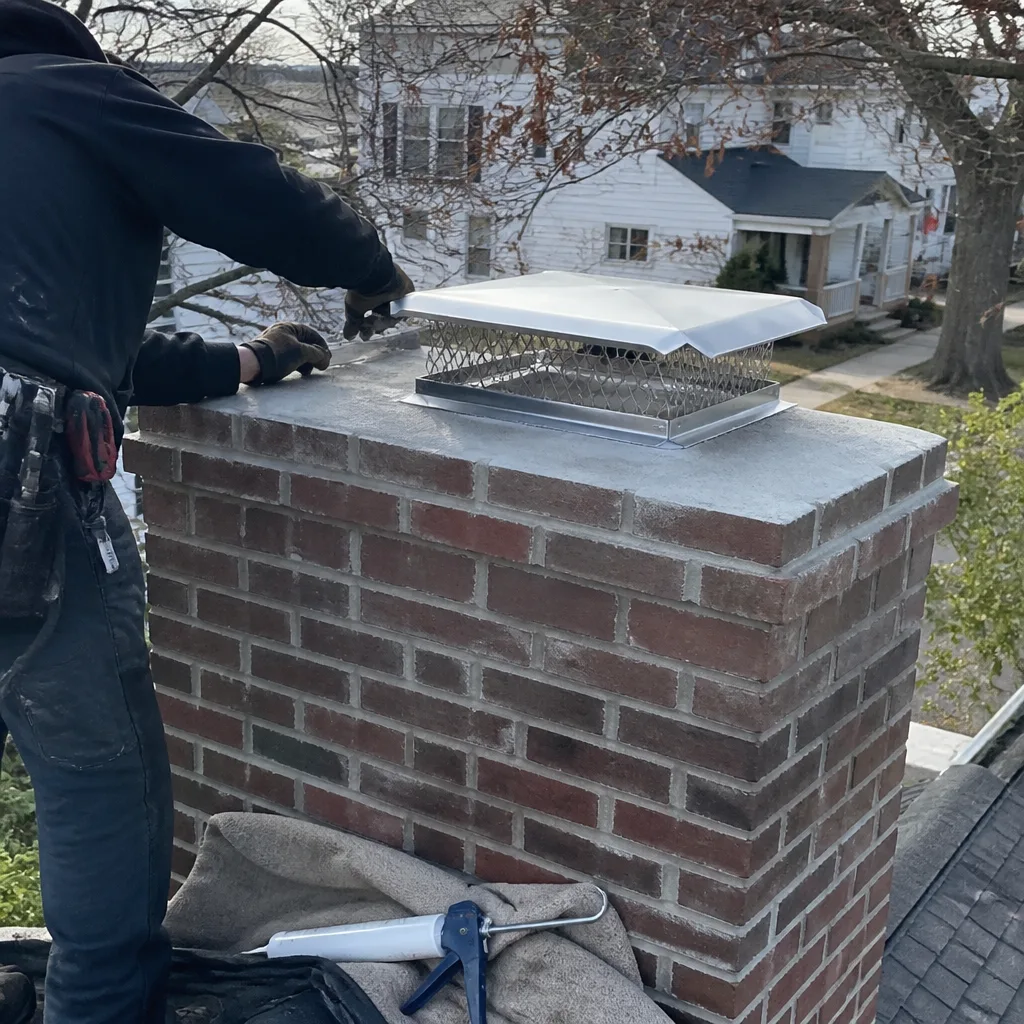 After
After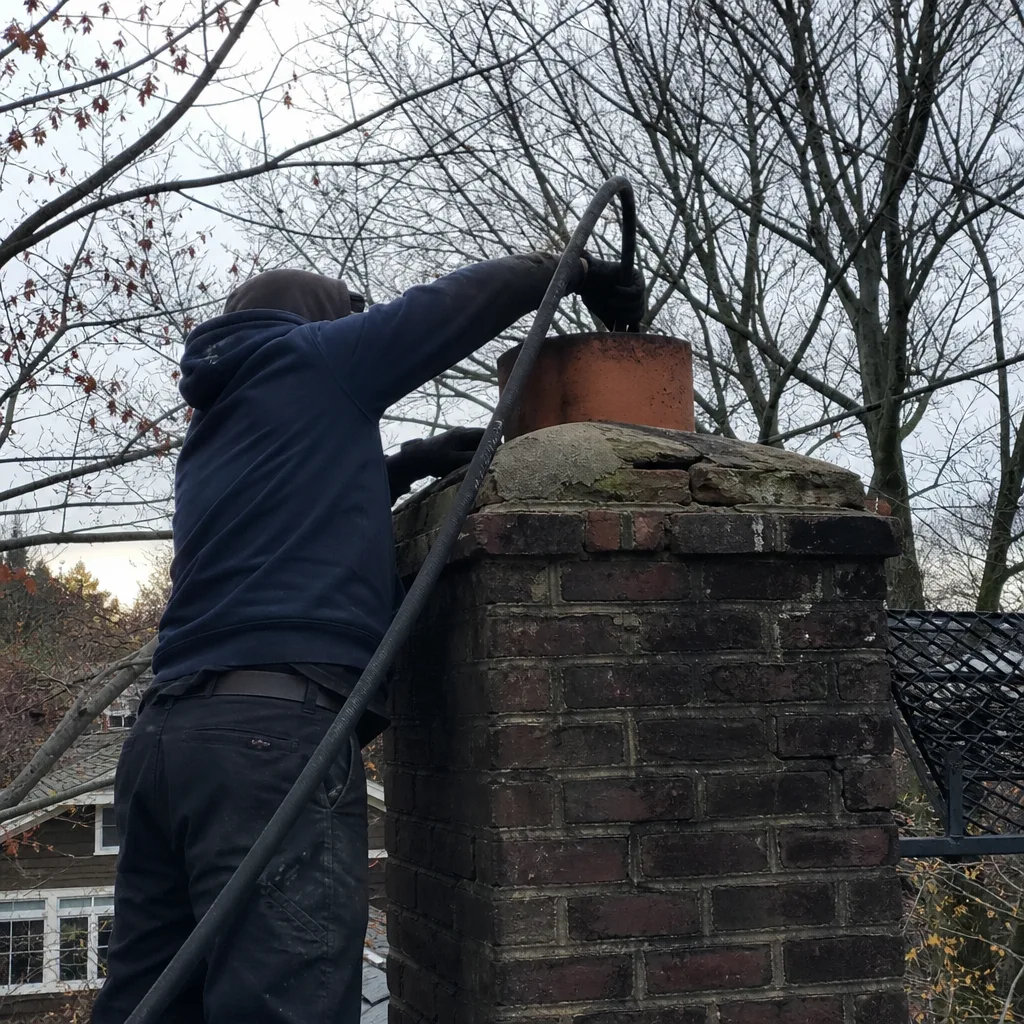 Before
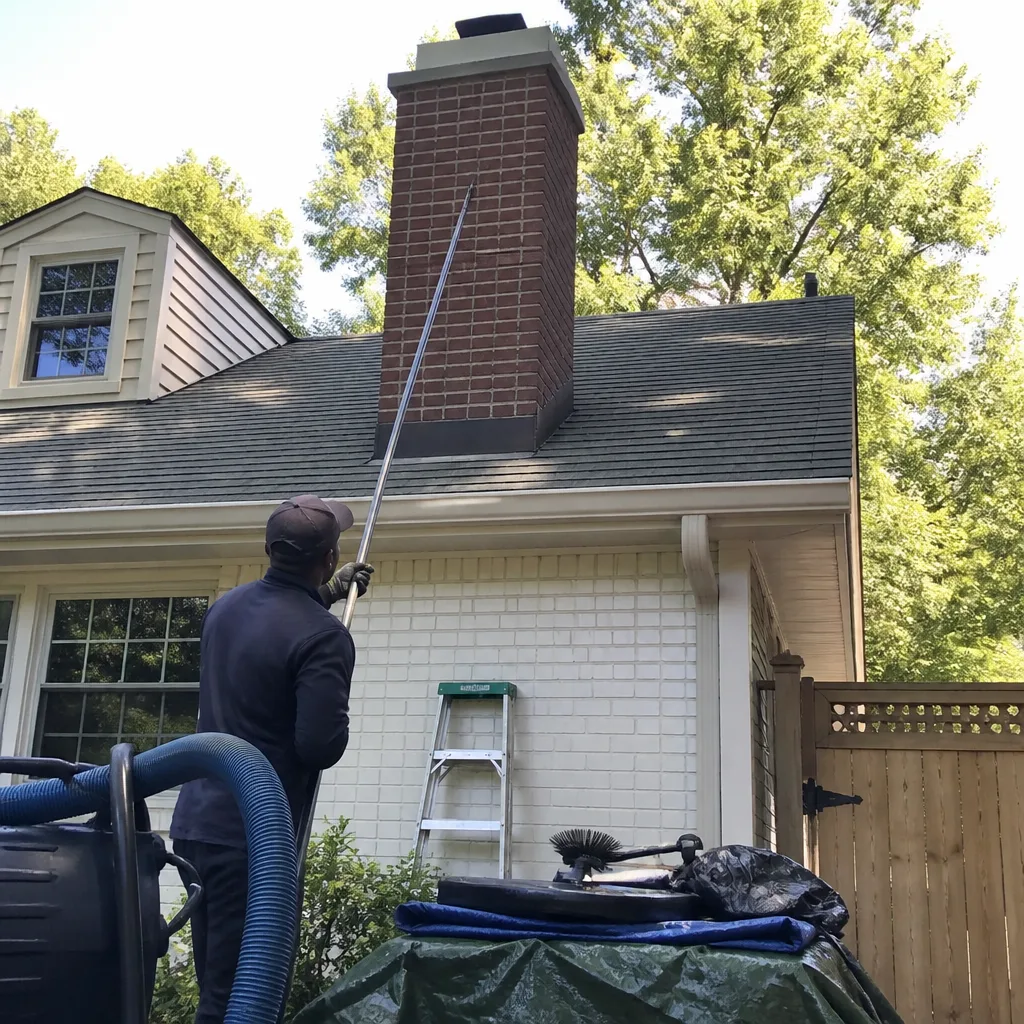 After
AfterTrusted Fireplace Services for Washington Homeowners
Fireplace service in Washington, DC typically costs $189-$420 for a standard inspection and cleaning, with repairs like damper replacement or firebox repointing running $350-$2,800 depending on what the camera finds. That’s the honest range, and you should have it in writing before anyone picks up a tool. Since 2009, Level Two Chimney Washington has completed more than 38,000 chimney inspections and cleanings across the District, and every single visit starts with a written price, a photo-documented scope, and a warranty you can hold us to. If your fireplace hasn’t been looked at since you bought your rowhouse in Petworth or your condo in Navy Yard, call (240) 621-1264 and we’ll tell you exactly what’s going on up there.
What happens when you call
- 1
A real person answersNo phone trees - you reach a local pro.
- 2
You get an upfront price rangeHonest numbers before anyone is dispatched.
- 3
A background-checked tech heads outLicensed & insured, dispatched right away.
- 4
You approve before work beginsNothing starts until you say go.
What Our Fireplace Services Service Includes
Gas Fireplace Service
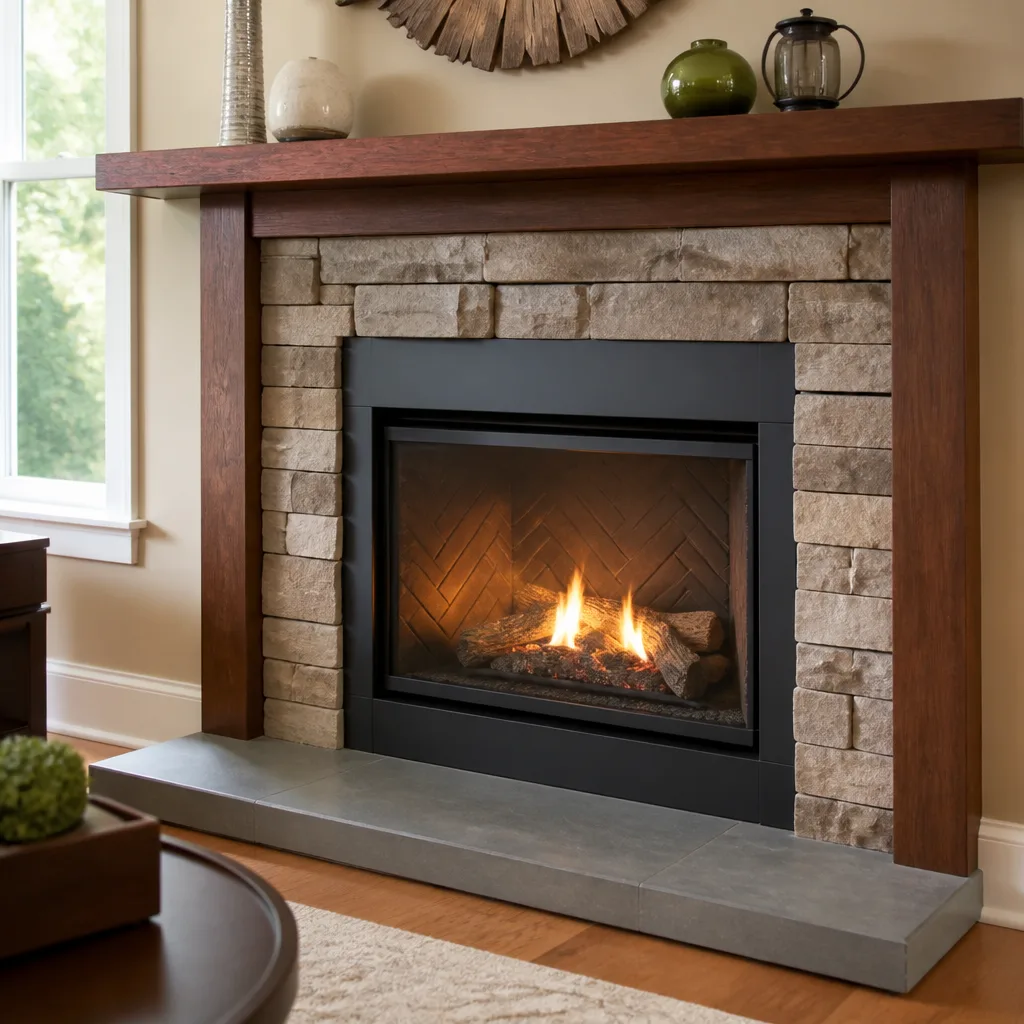
A gas fireplace that lights weakly, smells odd, or shuts off mid-burn usually has a thermocouple or thermopile problem, a dirty burner, or venting that’s not clearing combustion gases the way it should. We service gas units by pulling the glass, cleaning the burner and pilot assembly, checking gas pressure at the valve, and running a camera down the vent to confirm it’s drafting. Corrine Halstead and our Washington techs see a lot of direct-vent units in Capitol Hill basements that were never properly commissioned after install, and the fix is often a simple adjustment plus a documented combustion test.
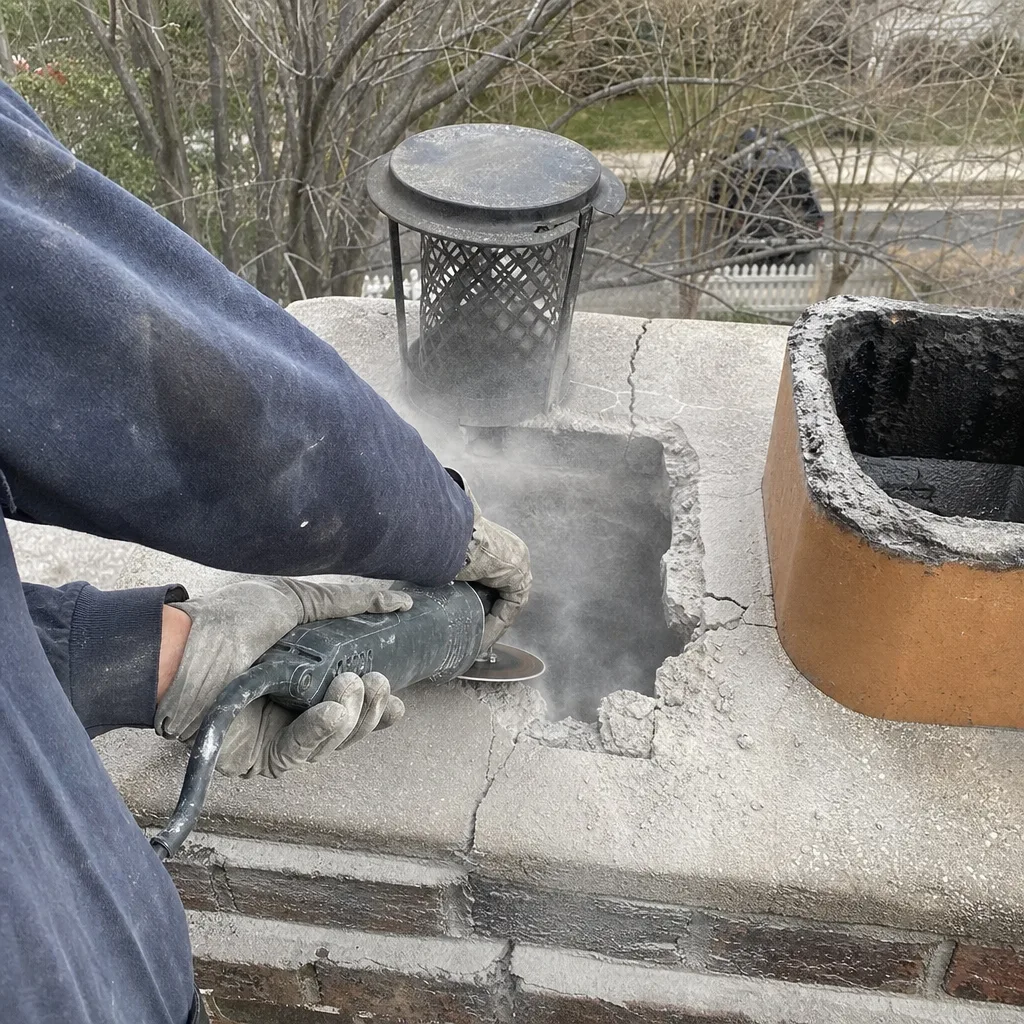
Wood Burning Fireplace
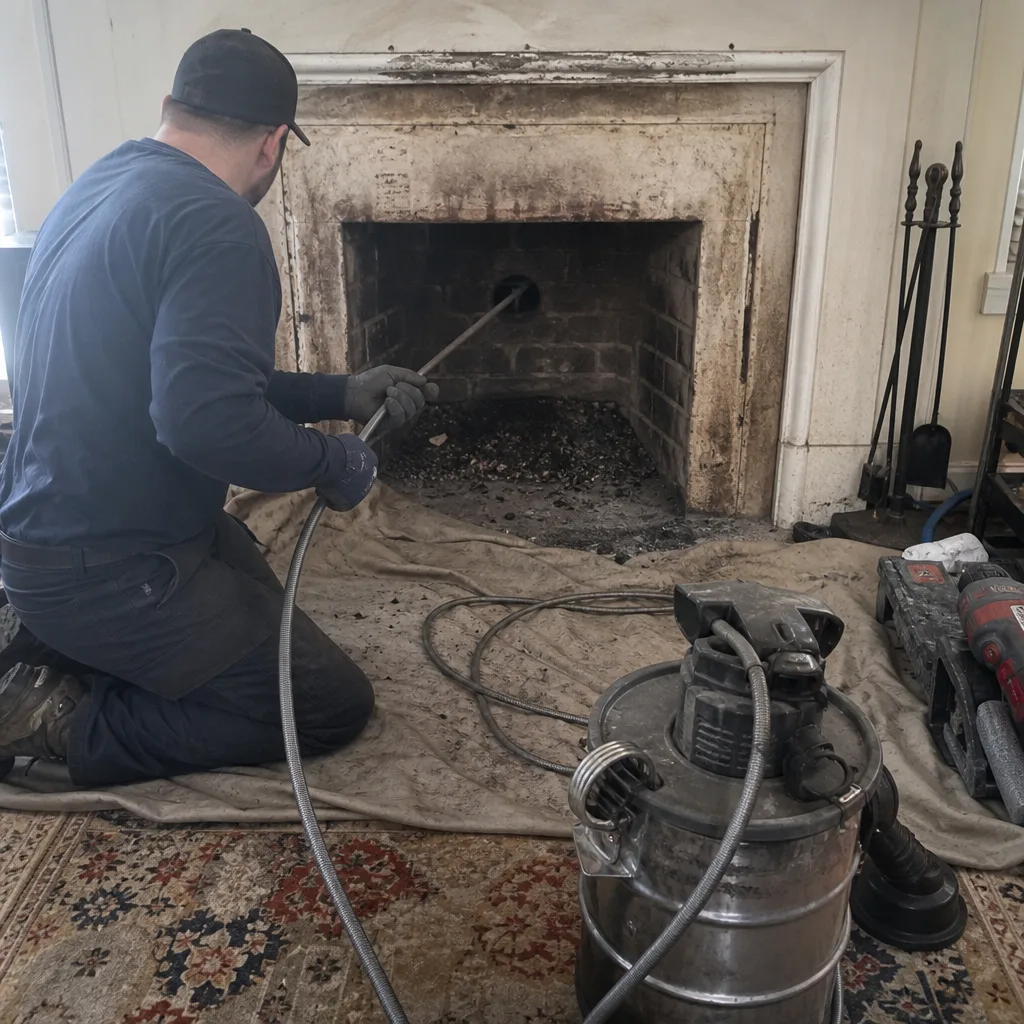
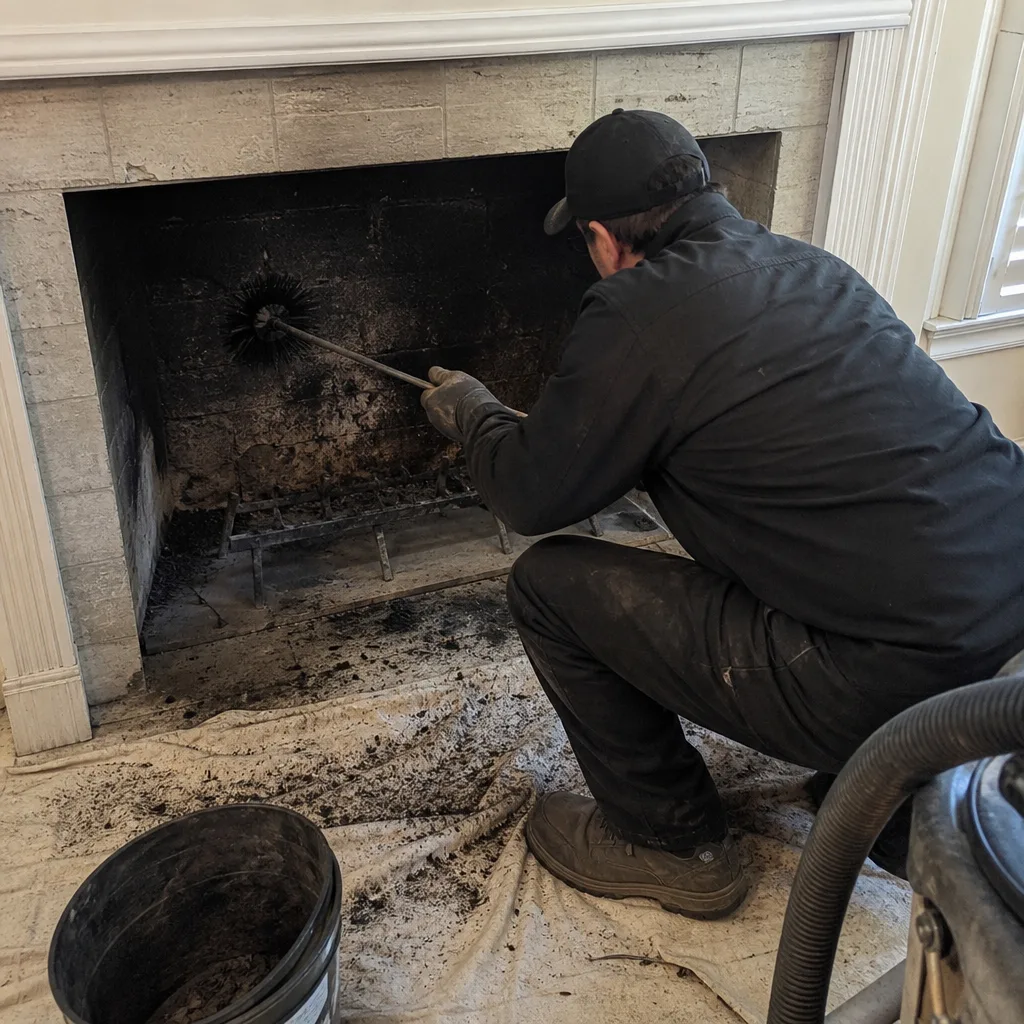
Wood burning fireplaces in Washington’s older housing stock, especially the 1920s brick rowhouses in Logan Circle and Georgetown, often have decades of creosote in the smoke chamber and a flue that hasn’t been swept since the last owner’s contractor “took a look.” We clean the firebox, smoke chamber, and flue liner, then capture a camera record of what was removed and what remains. If we find Class III creosote (the hard, shiny, tar-like buildup that’s a genuine fire hazard), we tell you in plain terms and show you the footage before recommending next steps.
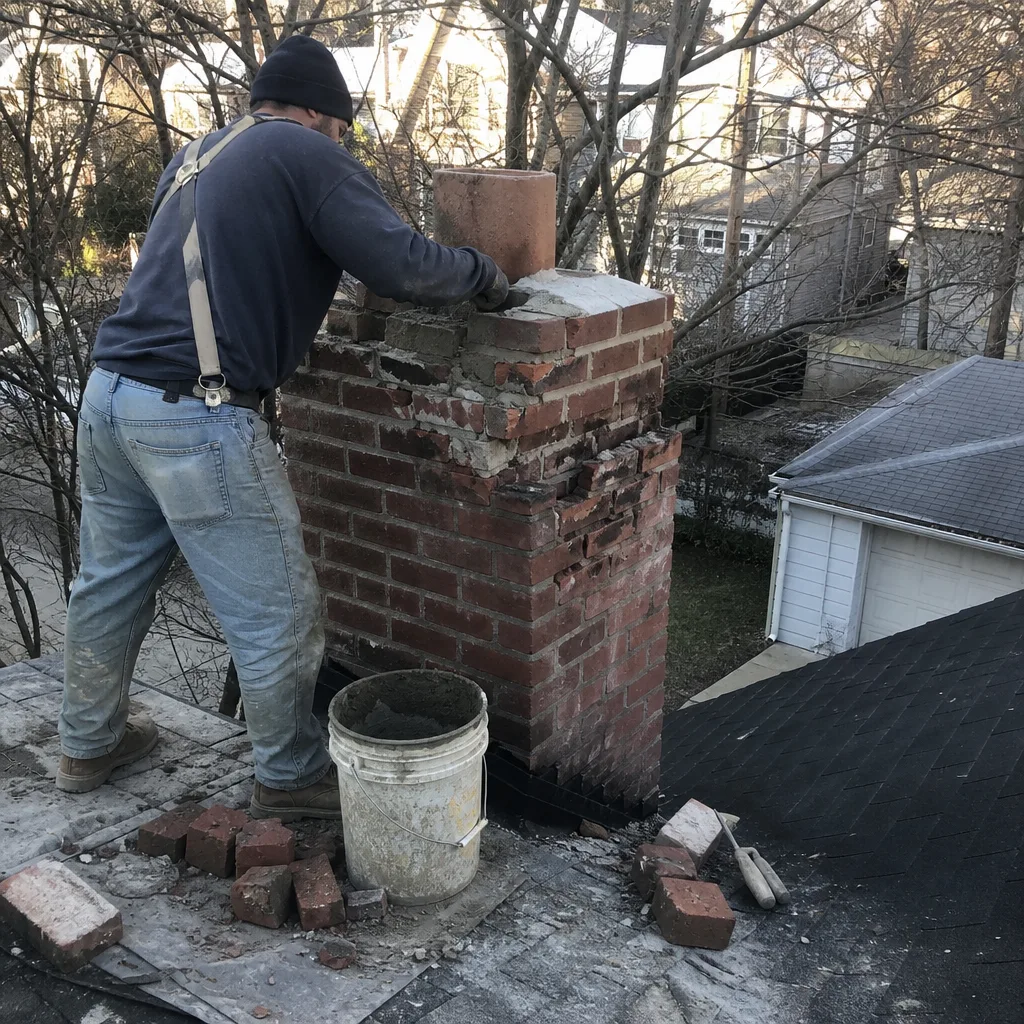
Fireplace Insert
An insert is a metal firebox that slides into an existing masonry fireplace to improve efficiency, and Washington homeowners in neighborhoods like Takoma and Brookland frequently inherit one that was installed without a proper chimney liner connection. We inspect the insert, its surround, the liner connection, and the chimney above it, then clean and service the unit so it actually heats the room rather than leaking smoke back into it. Whether it’s a wood insert or a gas insert, we quote the cleaning, repair, or replacement in writing before work starts, and we camera-scan the full length of the flue on every insert service.
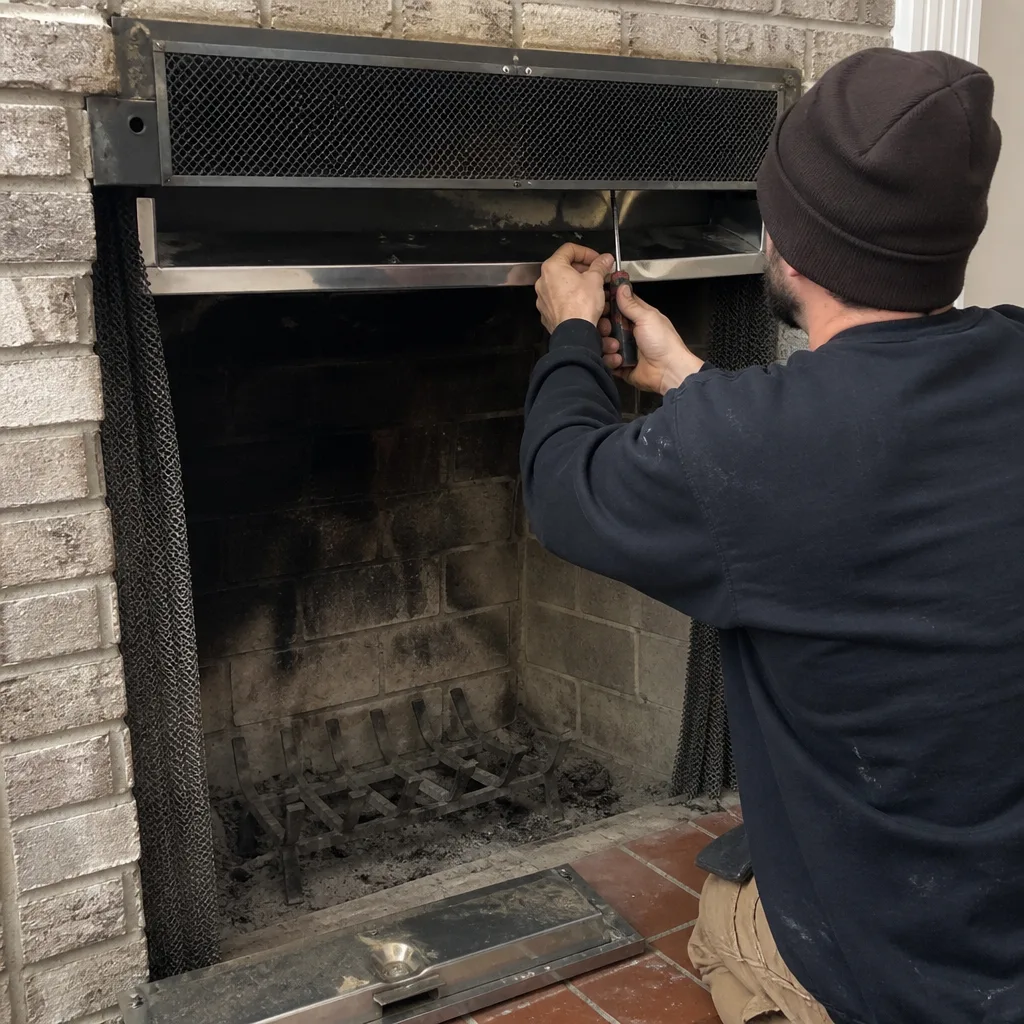
Damper Repair
A damper that’s rusted open lets heated air escape up the chimney all winter and invites cold drafts down into your living room; one that’s stuck shut makes every fire a smoky mess. We repair and replace throat dampers and top-sealing dampers, and in Washington’s humid summers we see a lot of cast-iron dampers corroded from years of disuse. The repair typically involves either cleaning and adjusting the existing mechanism or installing a new top-mount damper, and we’ll show you the condition of the old damper in the photo report before you decide.
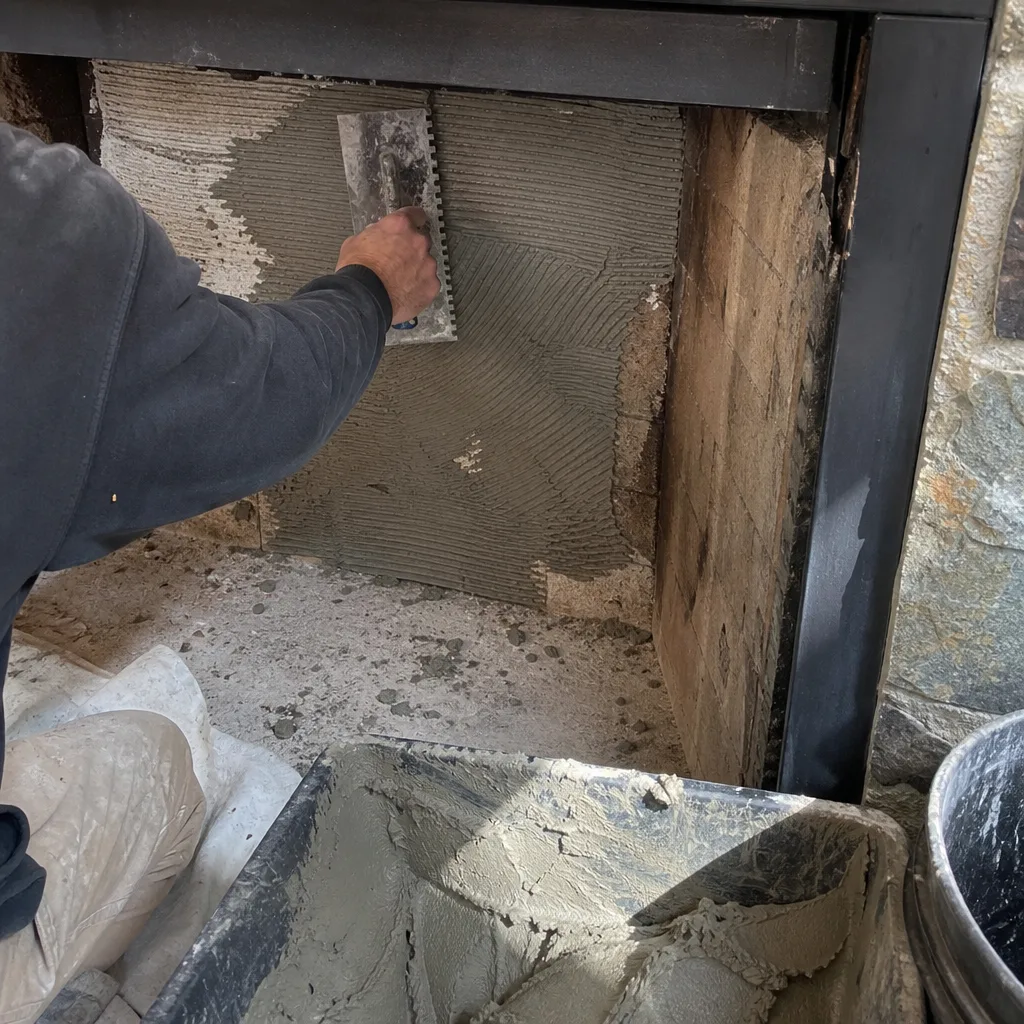
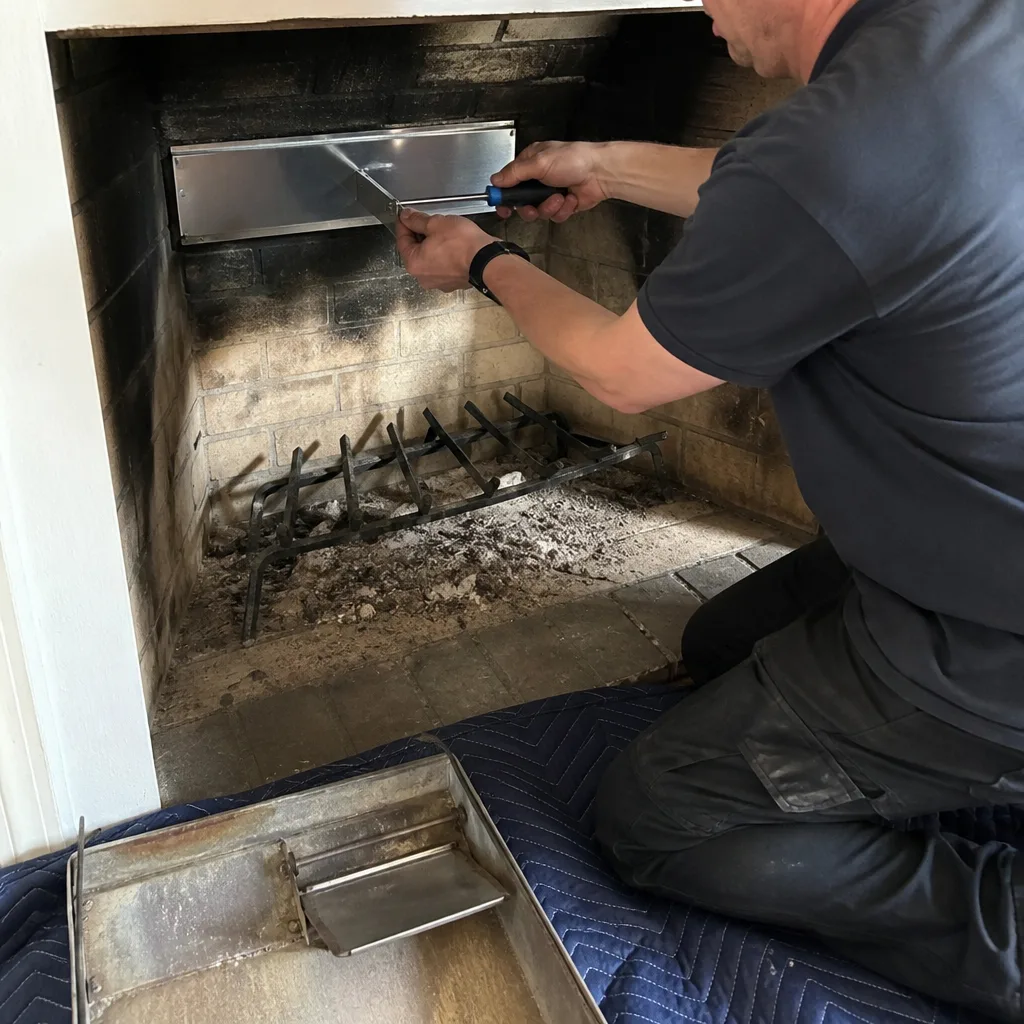
Firebox Repair
The firebox is the brick or refractory panel area where the fire actually burns, and when we see spalling (brick faces popping off from heat and moisture), cracked mortar joints, or a rusted-out metal firebox in a prefab unit, we document it and give you a repair scope in writing. In Washington, homes built between 1940 and 1970 in neighborhoods like Cleveland Park and Palisades often have fireboxes that haven’t been repointed since the Kennedy administration. Corrine Halstead’s crews rebuild fireboxes with refractory mortar and replace damaged firebrick, and we don’t recommend it unless the camera evidence shows it’s actually needed.
Fireplace Conversion
Converting a wood burning fireplace to gas or to a sealed direct-vent unit is common in Washington condos and co-ops where association rules or maintenance reality makes wood fires impractical. We handle the conversion planning, from evaluating the existing flue and firebox to installing the gas line, the insert or log set, and the proper venting, all quoted in writing before the first day of work. Materials we use depend on the job, but we’ve installed and serviced conversions with components from Copperfield and DuraFlex, and every conversion includes a documented photo record under Haven Standard Clause 4.
Brands We Service for Fireplace Services
We’ve worked on hundreds of Famco dampers and caps across the District, including the top-mount models that replace old throat dampers in Washington rowhouses. Famco’s stainless and cast products hold up well in our climate, and when a damper isn’t worth saving we usually reach for Famco because we can get parts fast and we know the install tolerances from years of field use.
For gas inserts and fireplaces, we regularly service and install equipment built with Copperfield and DuraFlex components, from direct-vent pipe to flexible liner systems. Copperfield’s chase covers and termination caps show up a lot in prefab installations in newer Washington construction, and DuraFlex liners are our go-to when a masonry chimney needs a new flue liner before a gas or wood insert can be installed safely. Whether you have one of these brands in place or something else entirely, we can service it, and we’ll tell you straight if a part is worth replacing or if the unit has hit the end of its useful life.
BeforeAfterSigns You Need Fireplace Services Right Now
- You smell smoke or gas when the fireplace isn’t in use. A smoke odor on a cold day usually means a failed damper or a negative pressure problem in the house. A gas odor means a valve or connection is leaking, and that’s a call you should make today, not after the weekend.
- The fire burns lazy, smoky, or won’t stay lit. In Washington’s older chimneys, a weak draft is often the result of a partially blocked flue, a cold chimney, or a house that’s too tightly sealed. We diagnose the cause with a draft test and a camera scan, not a guess.
- You see white staining or flaking brick on the chimney exterior. That’s spalling, and it means water is getting into the masonry. Left alone in Washington’s freeze-thaw winters, it spreads and eventually compromises the chimney structure. A crown inspection tells us how far it’s gone.
- There’s soot falling into the firebox or visible buildup inside the flue. Soot you can see means creosote you can’t, and creosote is what feeds chimney fires. A camera scan shows us the full thickness and class of the buildup so we can tell you exactly what needs to come out.
- You just bought the house and have no record of the last service. If the previous owner can’t produce a Chimney Safety Institute of America-style inspection report or a photo record, assume it hasn’t been done. Washington’s real estate market moves fast, and chimney inspections get skipped constantly. Our Level 2 camera inspection gives you the full picture in an hour.
Our Fireplace Services Process - Step by Step
We show up, we document, we explain, and you decide. That’s the whole shape of it.
Step 1: You book the visit and get a written price.
You call (240) 621-1264 and talk to a live person, day or night. We quote the service over the phone, send you a written price before the appointment, and assign a named tech to your job. When that tech is on the way, you get a text so you’re not sitting around waiting.
Step 2: We arrive, set up, and protect the work area.
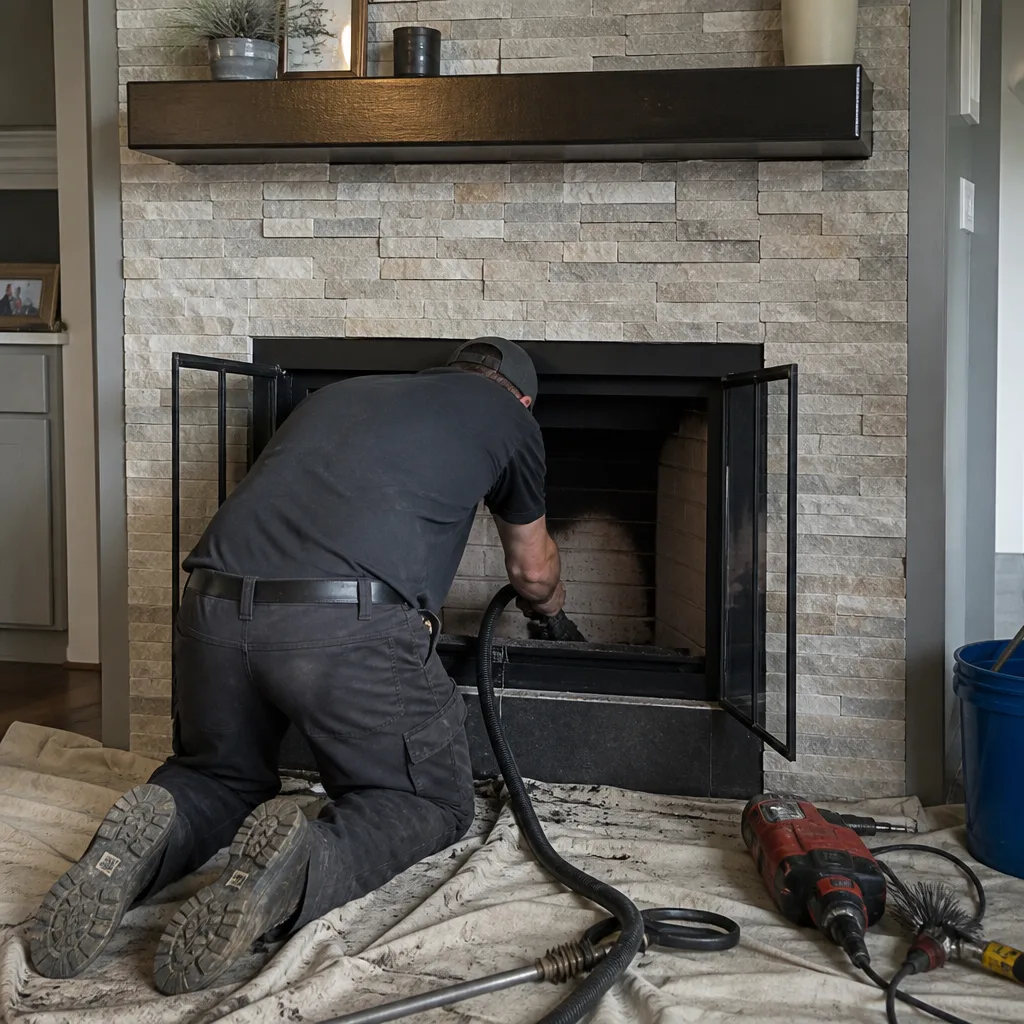
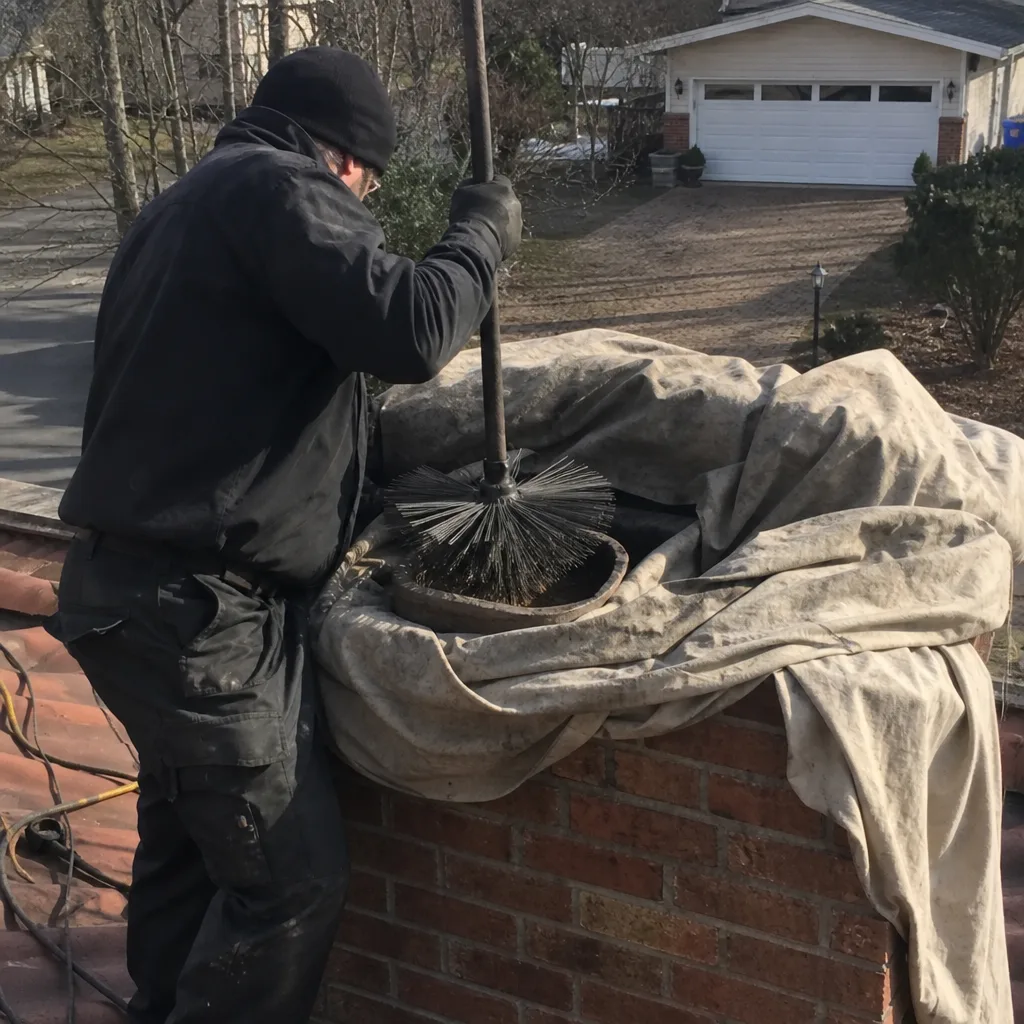
Our techs are background-checked, uniformed, and have their license information visible on the page and in the truck. We lay down drop cloths around the hearth, run a HEPA vacuum on the cold side, and set up the camera equipment before anything gets touched. Your floors and furniture stay clean, and you can watch the process if you want to.
Step 3: The camera goes down the flue.
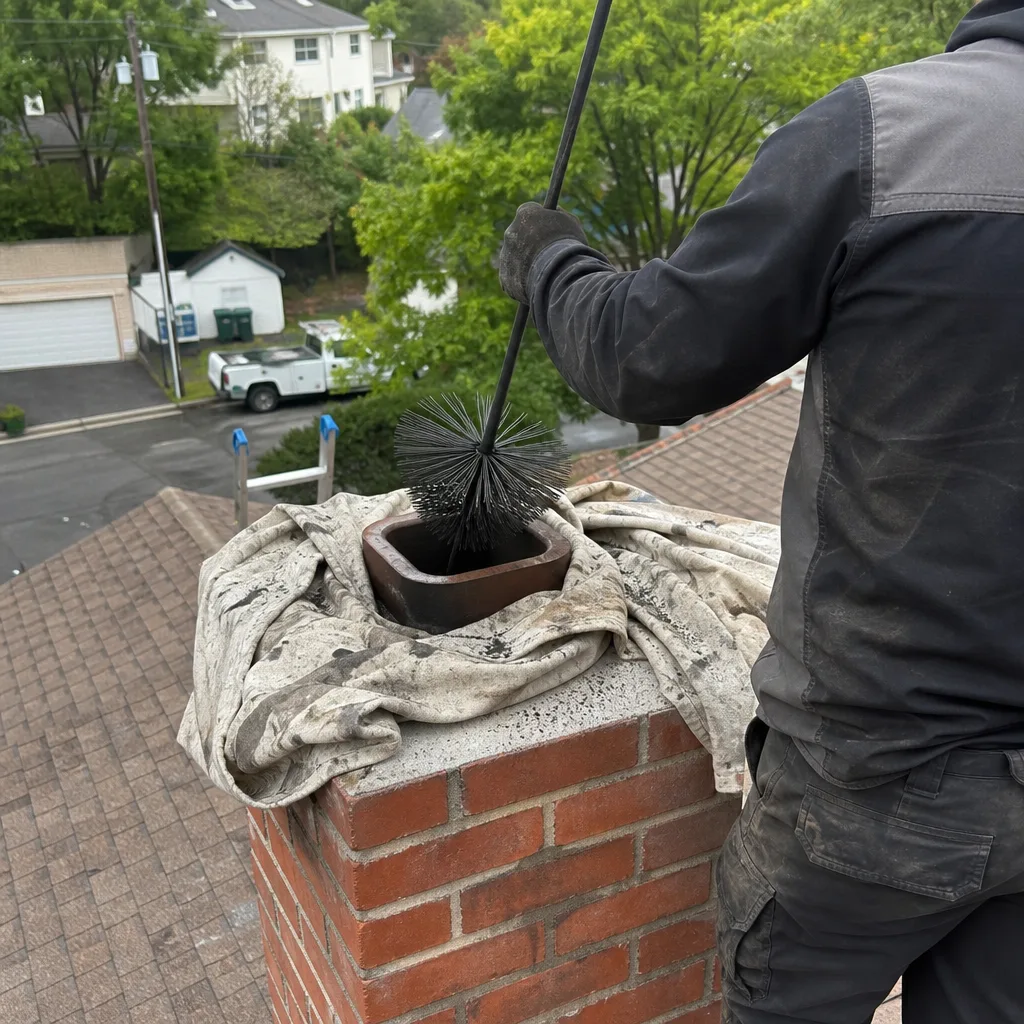
This is the part most Washington homeowners have never seen from any company. We run a camera from the firebox up through the flue liner and out the top, recording the whole run. What we find, creosote thickness, cracks in the liner, a missing rain cap, a rusted damper, gets explained to you in plain terms with the footage on screen. We don’t ask you to trust a verbal summary; we show you the wall of the flue with our own camera, and we store that footage in the record that’s yours when we leave.
Step 4: You get the scope and the price, before any repair work starts.
Once the inspection is done, we write out what the fireplace needs, what it doesn’t need, and what it costs. If the flue is clean and the damper works, we say so and we stop. If something needs repair, you get a line-item written price under Haven Standard Clause 1, and you decide whether to proceed that day or later. No one starts work you haven’t approved in writing.
Step 5: The work gets done and the record gets documented.
After the service or repair, we run the camera again and hand you the photo record, including before and after images and the written warranty on the work. That record belongs to you, and it’s the documentation your insurance company will actually want if anything ever comes up. It’s the same archive practice we’ve kept on every job since 2009, and it became Clause 4 of the Haven Standard because it’s non-negotiable for real accountability.
How Much Does Fireplace Services Cost in Washington?
A standard fireplace cleaning and Level 2 inspection in Washington typically runs $189-$289 for a gas or wood fireplace, depending on the height of the chimney and the access from the roof. See how much Fireplace Services costs for different repair types. Firebox repointing and partial rebuild work usually lands between $600 and $2,200, and a full chimney liner replacement using DuraFlex components can run $2,800-$5,500 on an older Washington rowhouse with a multi-story flue. Damper replacement, whether a new throat damper or a top-sealing unit, typically falls between $350 and $1,100 installed.
What moves the price is the condition of the flue liner, the height and accessibility of the chimney, and whether the firebox has structural damage versus cosmetic cracking. You avoid overpaying by getting a camera scan before committing to any liner work, which means you only pay for what the footage shows. Our written estimate includes the inspection, the cleaning, and the photo record. If you bring us a competitor’s written quote, we’ll give you a free second opinion, which is a standing offer, not a special.
Fireplace Services Near Washington - Our Service Area
We serve Washington homeowners across all eight wards, from Foggy Bottom to Deanwood, and we’re in Arlington and Silver Spring regularly for fireplace service calls. If you’re in Alexandria, Bethesda, Falls Church, McLean, or as far out as Rockville, Fairfax, Reston, Gaithersburg, or Waldorf, the drive time changes but the process doesn’t: written price, camera scan, photo record, done right. Most Washington appointments are scheduled within a few days, and Fireplace Services in Arlington and Fireplace Services in Silver Spring run on the same schedule priorities. See our home page for the full list of services, including chimney cleaning and liner work.
Serving Washington, DC - Our Local Coverage Area
We’re based in the Washington area and know this community well. Use the map below to see our service coverage - if you’re nearby, we can almost certainly help.
Frequently Asked Questions - Fireplace Services in Washington
A fireplace service is a professional inspection, cleaning, and condition assessment of your fireplace and chimney system, including the firebox, damper, smoke chamber, flue liner, and exterior crown. In Washington, where many homes were built before modern building codes, this is the only way to know whether your fireplace is safe to use. At Level Two Chimney Washington, every fireplace service includes a camera scan and a documented photo record, not a flashlight look from the roof.
A standard gas or wood fireplace service takes about 60 to 90 minutes on site, including setup, the camera inspection, cleaning, and the walkthrough of your photo report. If we’re doing a repair or a conversion the same day, expect additional time, which we’ll tell you before the work begins. The goal isn’t speed, it’s a complete record.
You should expect to pay between $189 and $420 for a standard fireplace service and inspection in Washington, with more complex repairs or liner work running from $600 up to $5,500 depending on what the camera finds. For homeowners in Northern Virginia, we also offer Fireplace Services in Arlington. We give you a written price before any work starts, and the inspection itself includes a full photo report you keep. Call (240) 621-1264 and we’ll quote your fireplace specifically, not a generic range.
We service masonry fireplaces, prefab wood units, gas inserts, and direct-vent systems, and we have extensive field experience with Famco, Copperfield, and DuraFlex components. If you have a brand we don’t stock parts for, we’ll tell you that on the estimate and source what’s needed before we schedule the repair. The camera doesn’t care what brand is on the door, and neither do we; we care whether it’s safe to burn.
Fireplace cleaning and inspection are considered maintenance and are typically not covered by a standard homeowners policy, though storm-related chimney damage like a fallen crown or a cracked flue from water intrusion may be. We document everything with photos and a written record, which is exactly what your adjuster will want to see. If a repair we’ve done falls under our 365-Day Done Right Promise, we make it right at no charge.
The National Fire Protection Association recommends a chimney inspection at least once a year for any fireplace you use, and a cleaning whenever there’s a quarter inch or more of soot or any visible creosote buildup. In Washington, we recommend at least an annual camera scan before burning season, even for gas units that see occasional use. It’s cheaper than a flue fire, and you’ll have the record.
Clear the area around the fireplace so our techs have about six feet of working space, and move any furniture or decor you don’t want dusted, though our HEPA setup keeps it minimal. If there’s an active gas supply, we’ll shut off the valve and verify it when we arrive. You don’t need to do anything to the firebox or the roof access; we bring everything, including the camera and the record-keeping.
Schedule Your Fireplace Services Service in Washington Today
You shouldn’t have to guess whether your fireplace is safe, and you don’t have to. Call (240) 621-1264 and we’ll put a written price in your hand before the tech even arrives. Every visit from Level Two Chimney Washington comes with a camera scan, a photo record, and the 365-Day Done Right Promise, no exceptions, no fine print. Book your fireplace service this week and know exactly what you’re burning in.
Written by Corrine Halstead, Owner at Level Two Chimney Washington, serving Washington, DC since 2009.