
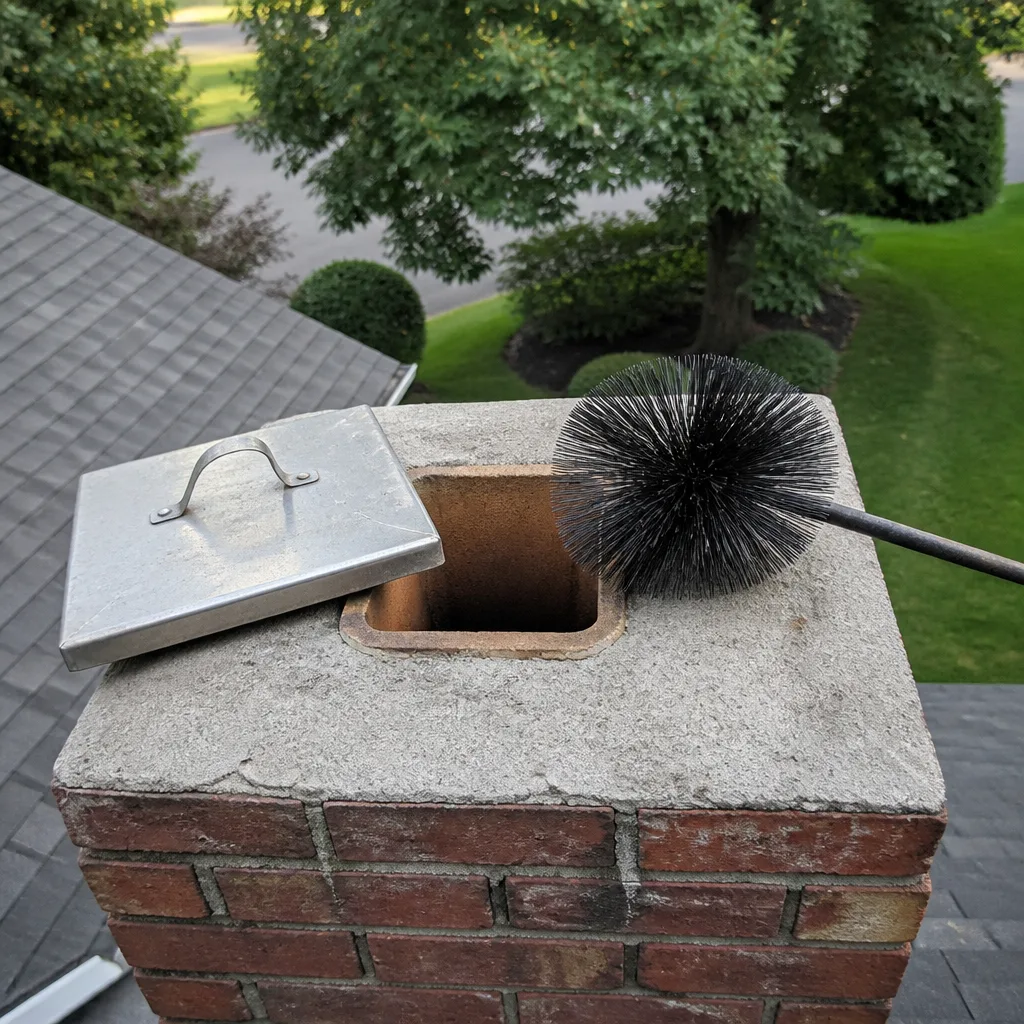
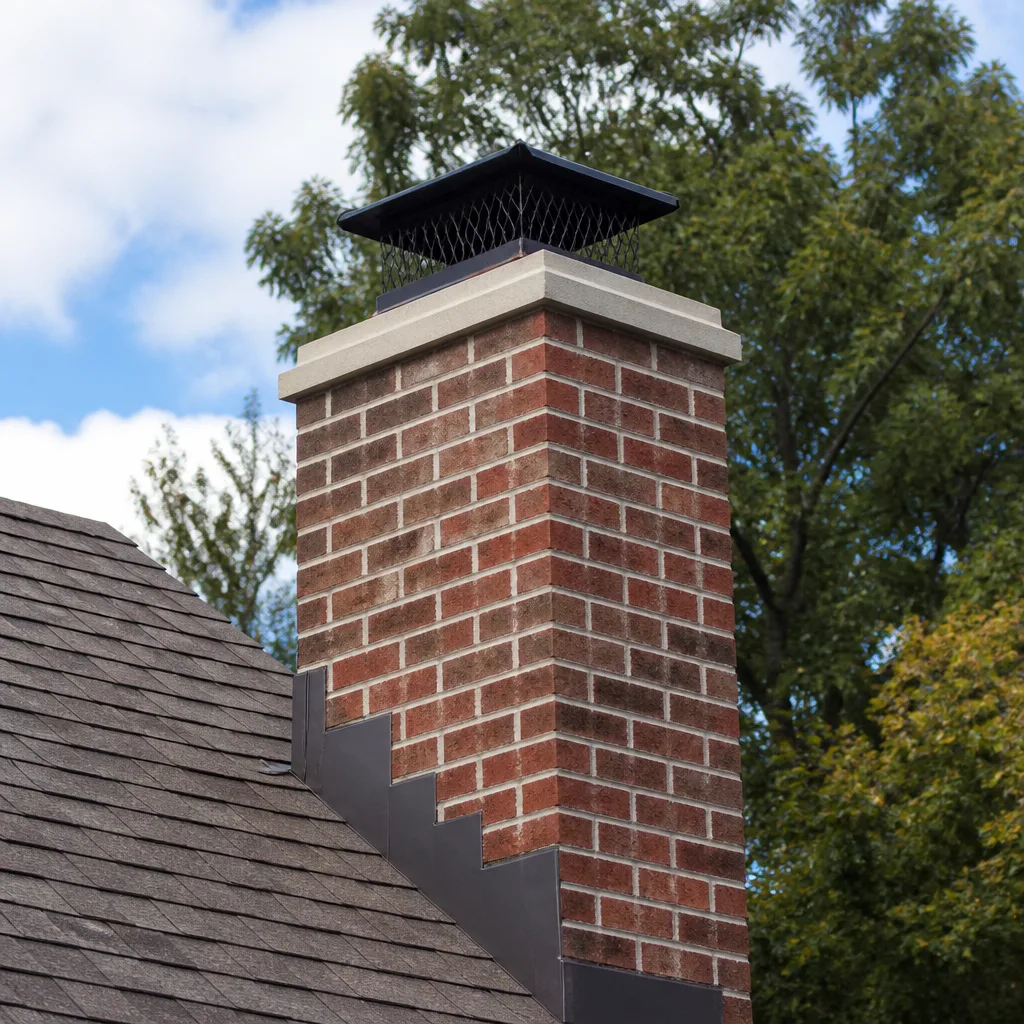
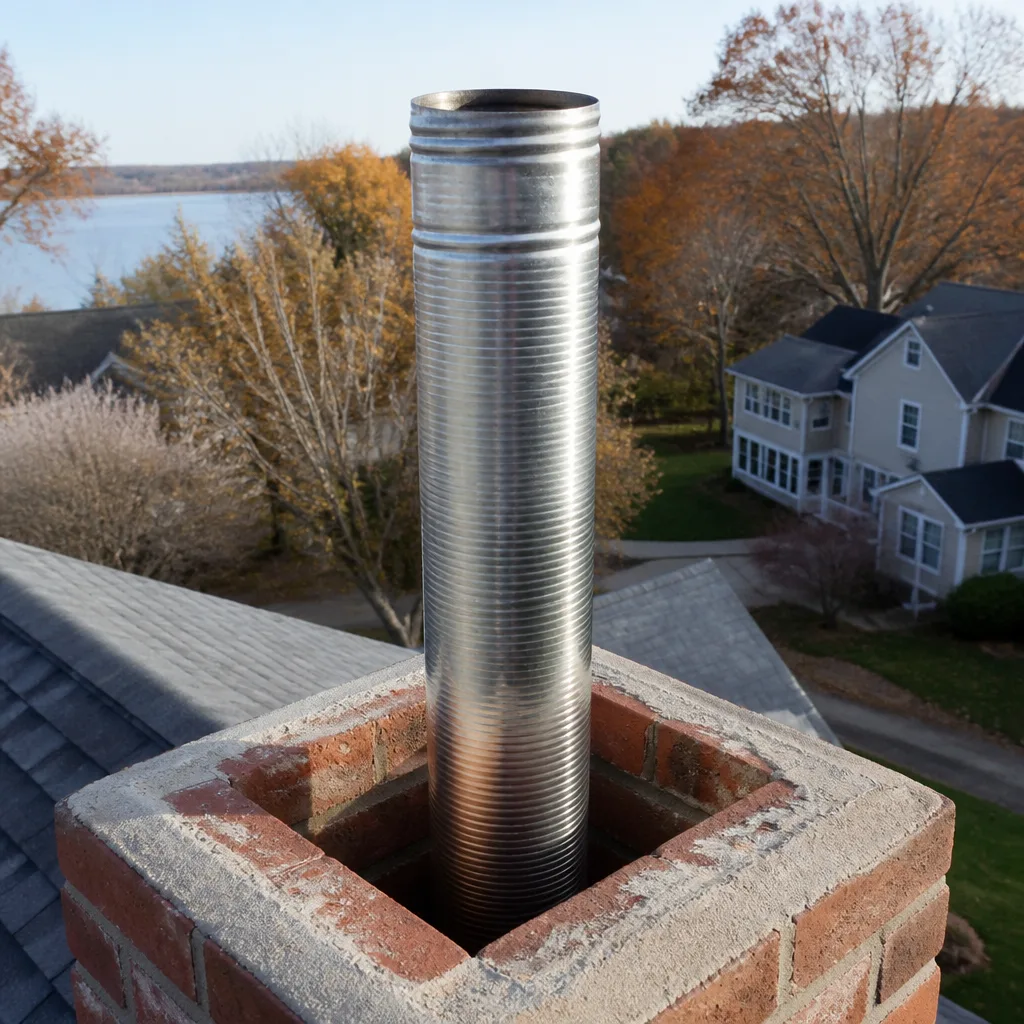
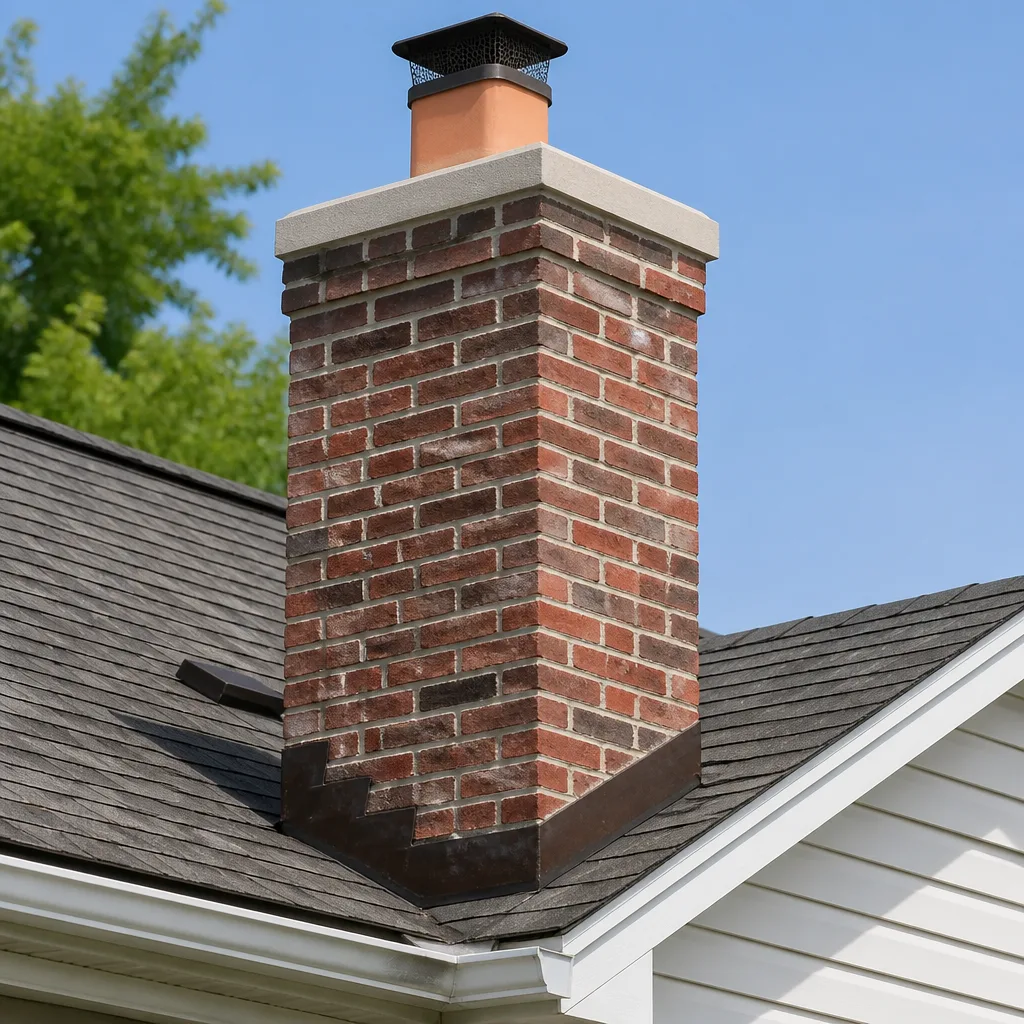
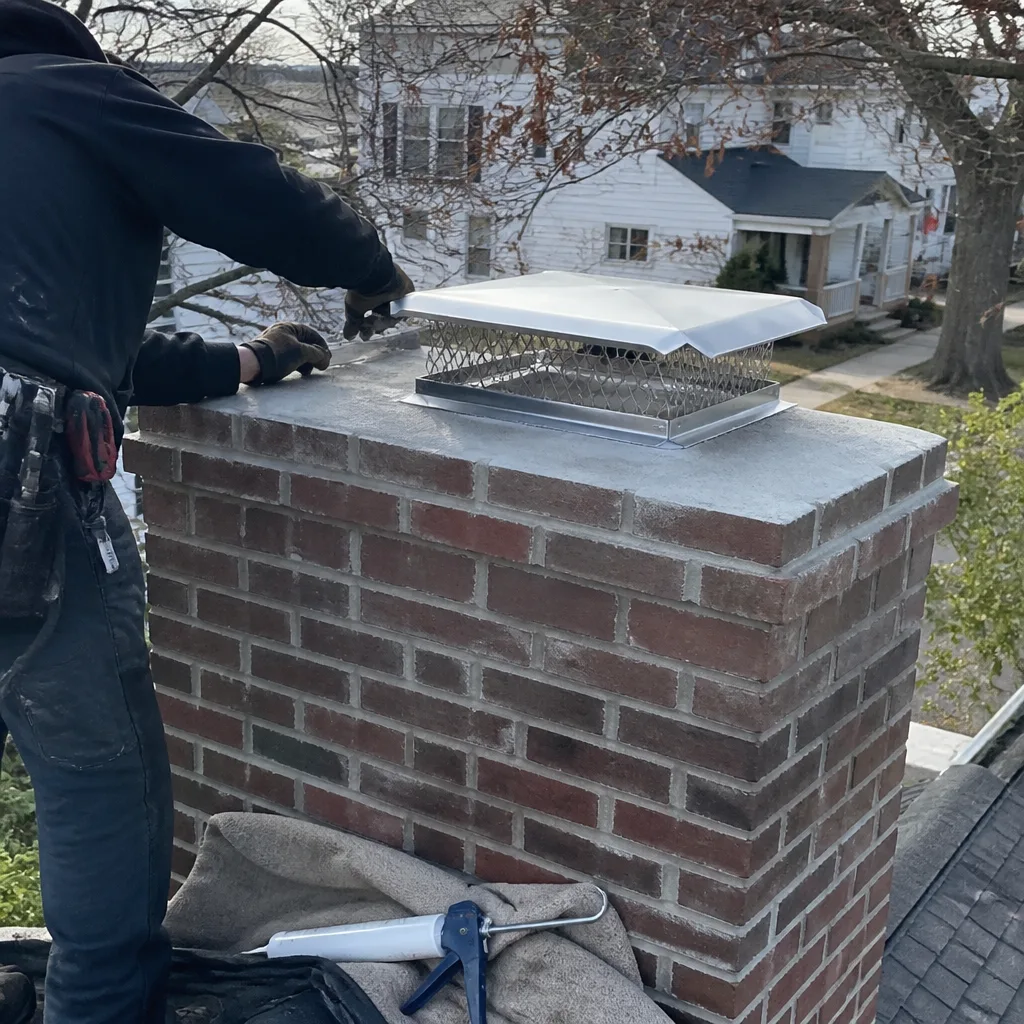
Level 1 sweep and inspection to the NFPA 211 annual standard - flue, crown, cap, and flashing checked and photographed
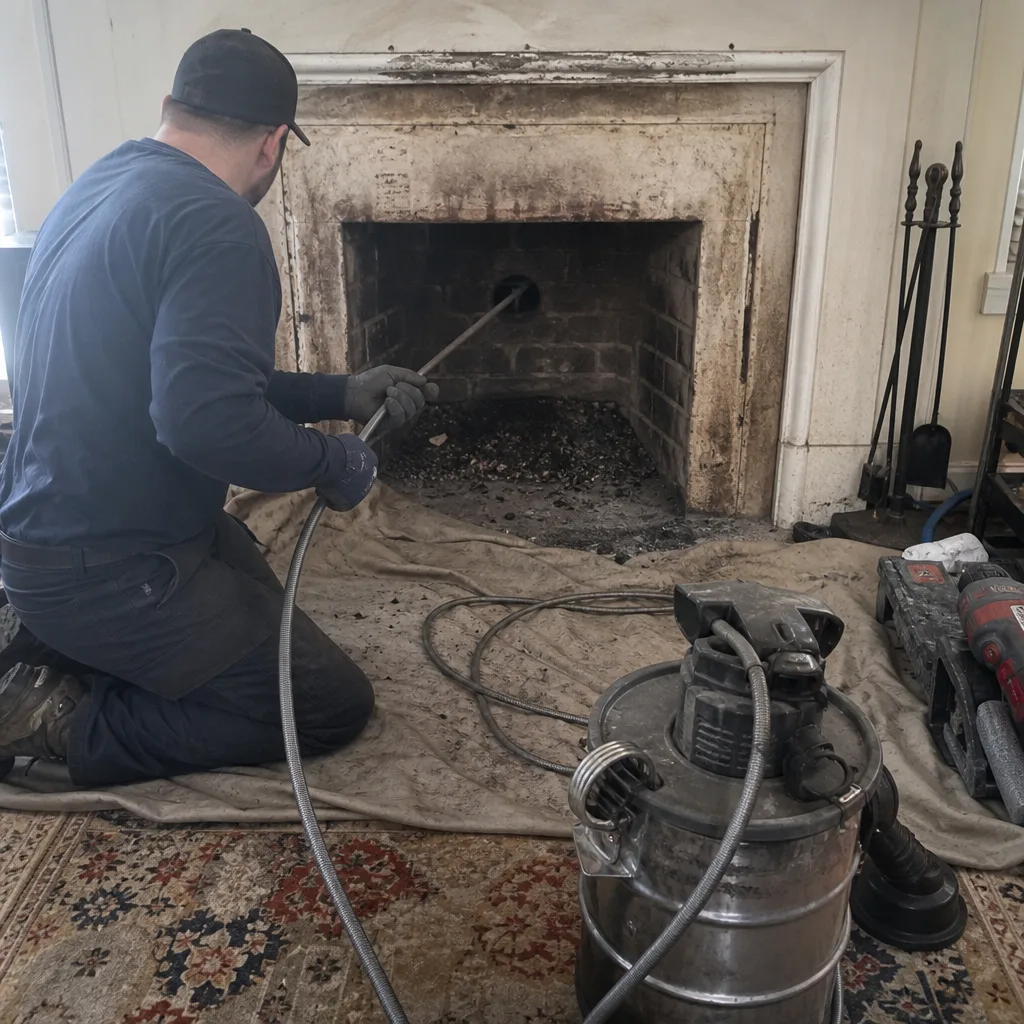
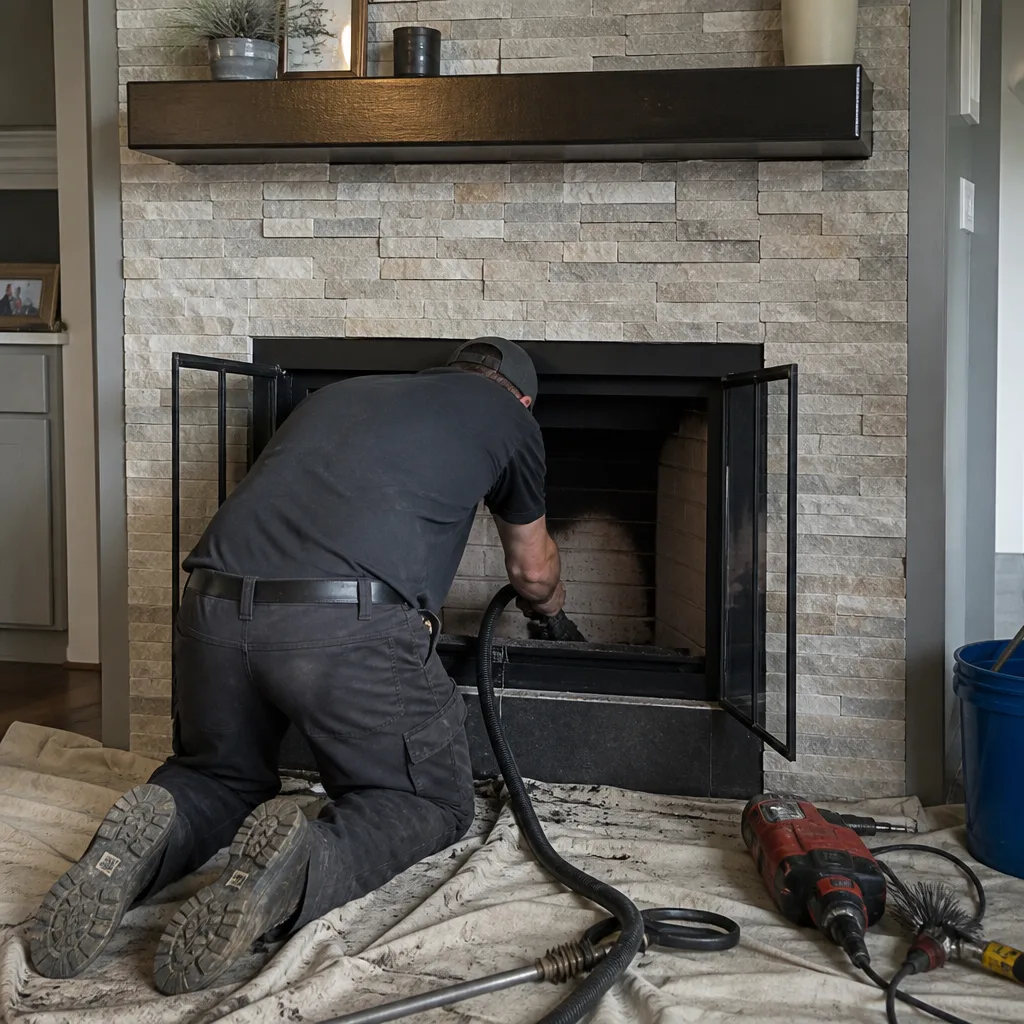
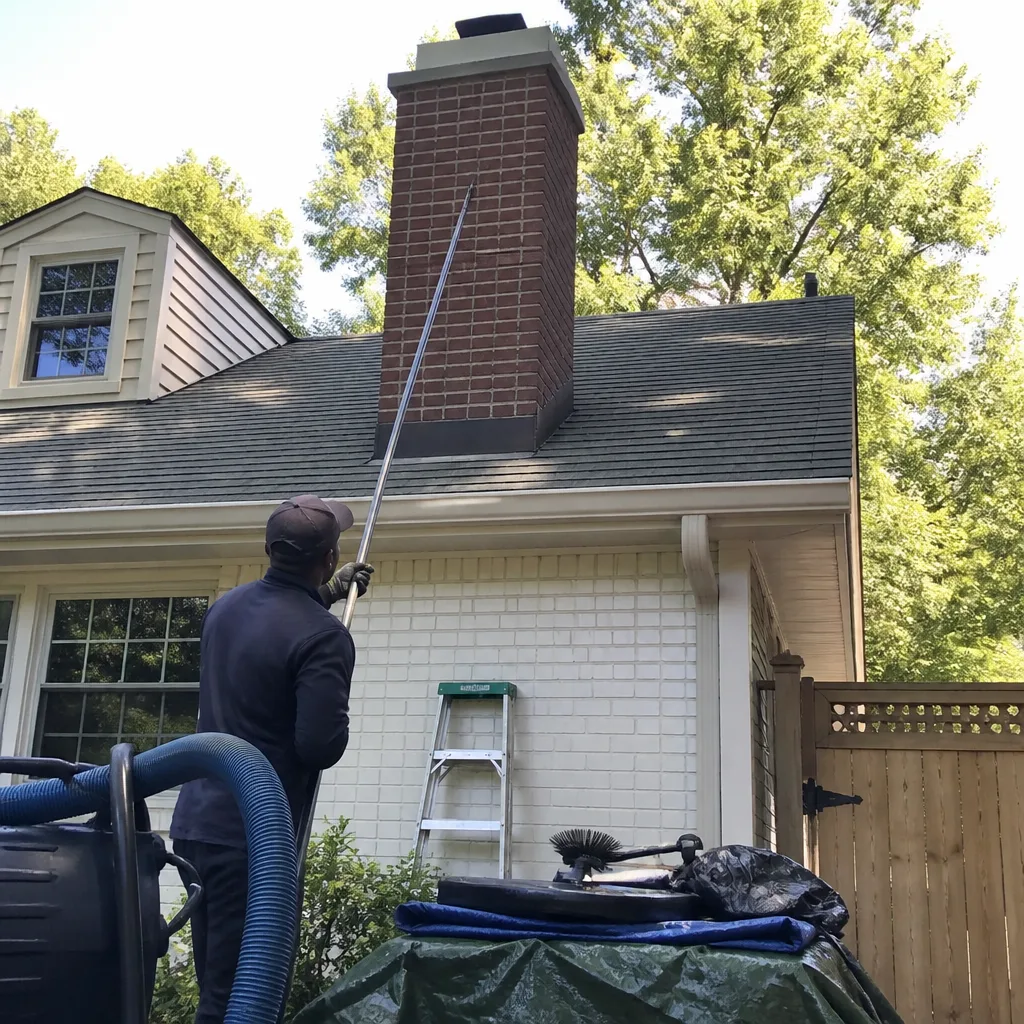
Chimney sweep logs do not sweep chimneys. They loosen some creosote - which then falls where a brush and vacuum still have to collect it.
 Before
 After
After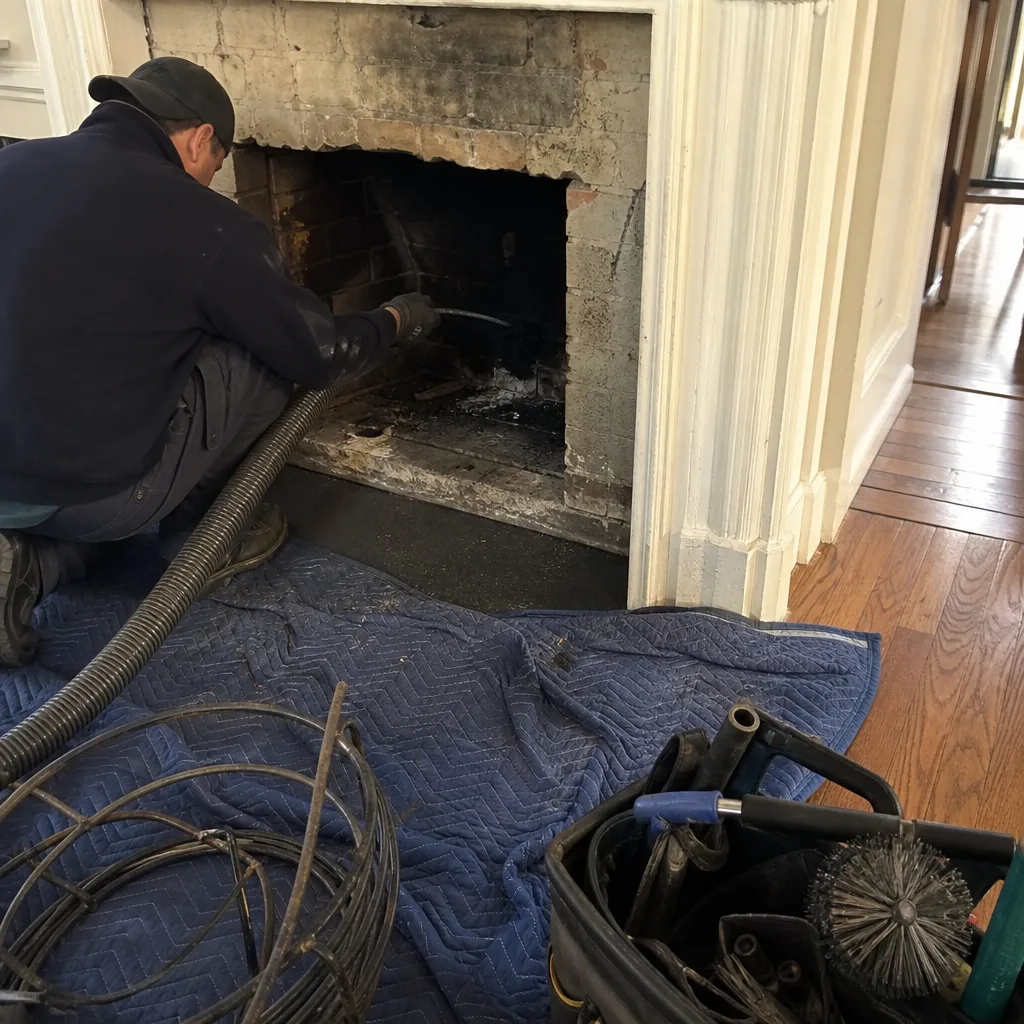 Before
 After
After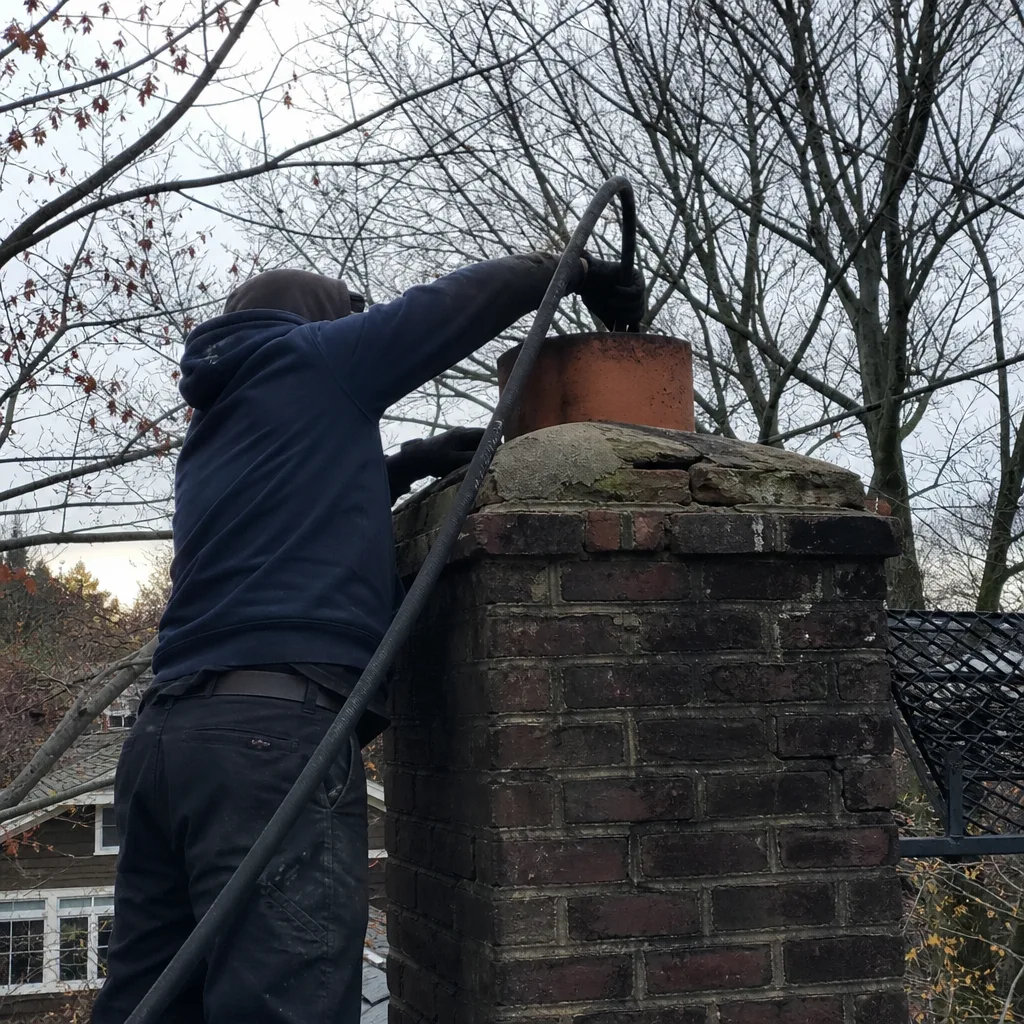 Before
 After
AfterLevel 2 Inspection in Washington, DC
A Level 2 chimney inspection in Washington, DC is a camera-scan examination of your entire flue system, smoke chamber, and accessible structure – conducted to the NFPA 211 Level 2 standard and documented with photographs before you decide on anything. Most homeowners in DC need one when they’re buying or selling a home, after a chimney fire or hard storm, or when switching fuel types. At Level Two Chimney Washington, this isn’t an optional upgrade: it’s the inspection standard we built the company around in 2009, and it’s included as the baseline on every visit we run.
The name on our truck isn’t accidental. Where most sweep companies hand you a flashlight-look and a verbal opinion, we run a camera down the flue, name what the footage shows in plain terms, and hand you a written price before any technician picks up a tool. That practice – camera documentation as the default, not the premium – has been part of how we work since we opened, and it became Clause 4 of the Haven Standard we operate under. If you’d like to talk through what a Level 2 inspection covers for your specific situation, call us at (240) 621-1264 – a live person answers around the clock.
This page is part of our broader Chimney Cleaning & Sweep in Washington service, which covers everything from annual sweeps to full creosote removal. The Level 2 inspection is where that process begins when the stakes are higher than routine maintenance.
When You Need a Level 2 Inspection in Washington, DC
NFPA 211 sets out three levels of chimney inspection, and Level 2 is triggered any time the risk profile of the system changes – not just when something looks wrong from the outside. In Washington, DC specifically, a few conditions come up more often than you’d expect.
- You’re buying or selling a home in DC. Real estate attorneys and home inspectors in the District regularly flag chimneys as a deferred-maintenance risk. A Level 2 inspection gives buyers a camera-verified record of liner condition and gives sellers documentation that removes the item from negotiation. In neighborhoods like Capitol Hill, Georgetown, and Petworth – where Federal-era and early-20th-century row houses with original clay-tile flues are common – lenders and title companies increasingly want this on file before closing.
- There’s been a chimney fire, even a small one. A lot of chimney fires in DC go undetected: a dense column of smoke, an unusual smell, a popping sound from the fireplace. After any suspected chimney fire, a Level 2 inspection with camera footage is the only way to know whether the liner cracked. A cracked flue liner – the clay or stainless steel channel that contains combustion gases – can vent carbon monoxide into the living space. This is the scenario that warrants a professional, not a DIY check.
- You’ve had storm damage or a tree strike. Washington’s summer derecho storms and the occasional ice event put real stress on chimney crowns, caps, and masonry joints. When the exterior shows obvious spalling (brick face fracturing from freeze-thaw cycles), or when a branch came down near the stack, a Level 2 inspection checks whether structural damage extended into the flue itself.
- You’re switching fuel types or installing a new appliance. Converting a wood-burning fireplace to a gas insert, or adding a wood stove to an existing flue, requires a Level 2 inspection under NFPA 211 before the new appliance goes in. The flue dimensions, liner material, and draft characteristics all have to match the new heat source.
- You haven’t had a documented inspection in more than three years. An annual sweep is standard practice, but “sweep” and “inspection” aren’t the same thing. If you don’t have a written record with camera footage from the last few years, you don’t actually know the current condition of your liner or smoke chamber.
- Your insurance company requested documentation. Homeowner insurance renewals in the DC metro increasingly include chimney-condition requirements. A Level 2 report with photographic documentation – timestamped and specific about liner condition – is what adjusters and underwriters want to see, not a general sweep receipt.
Our Level 2 Inspection Process in Washington, DC
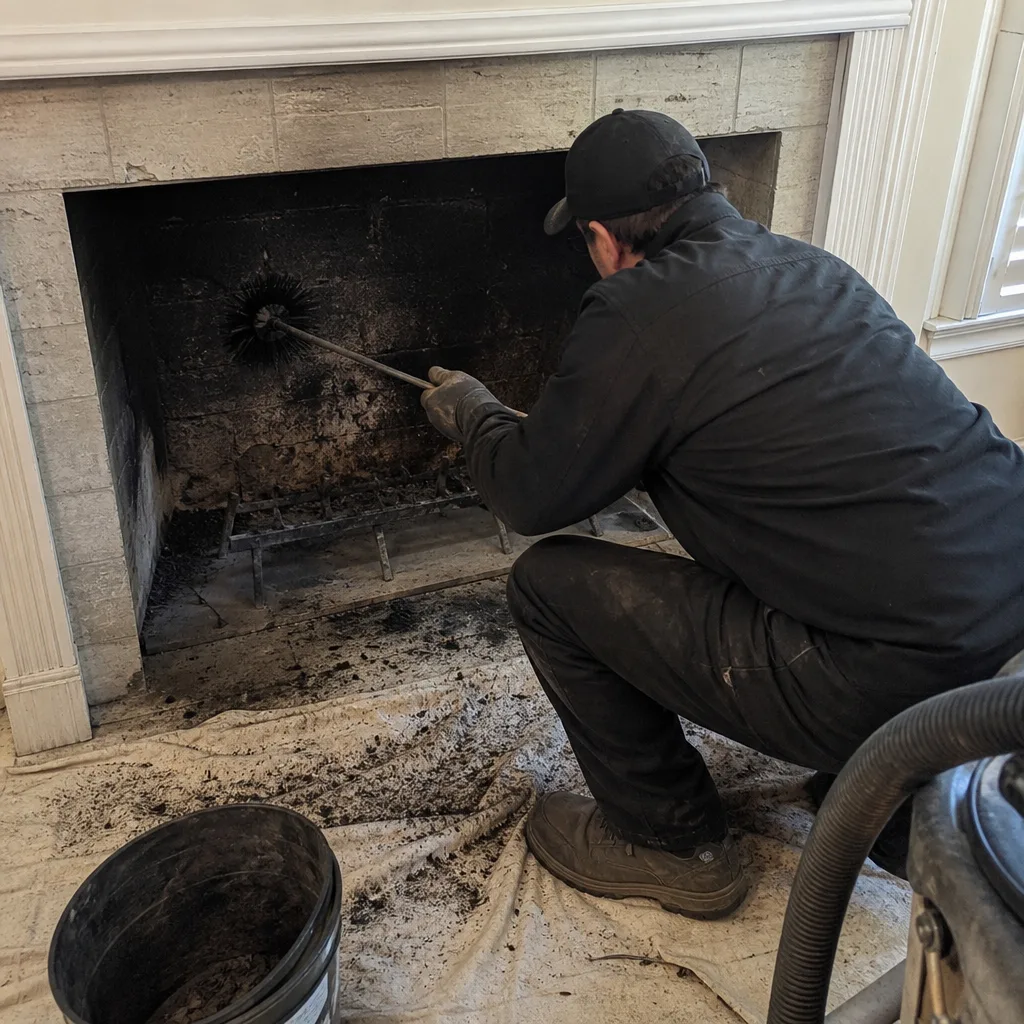
Here’s exactly what happens when we arrive for a Level 2 inspection. Nothing starts until you have a written price in hand – that’s Haven Standard Clause 1, and it doesn’t move.
- Written price before anything else. Our technician introduces themselves by name – you’ll have gotten a text when they were on the way – reviews the scope of the inspection with you, and hands you a written price. The scope and price are documented. You decide whether to proceed. There’s no pressure, no upsell on the doorstep.
- Exterior assessment: crown, cap, masonry, and flashing. We start on the outside. The chimney crown (the concrete or mortar slab at the top of the stack), cap, flashing at the roofline, and visible masonry are examined for cracking, spalling, mortar deterioration, and moisture intrusion. In older DC neighborhoods with common-wall rowhouses, we also check for any evidence of flue sharing or breach between units – a condition that comes up more often than people realize in early-20th-century construction.
- Camera scan of the full flue. This is the defining step of a Level 2 inspection and what distinguishes it from a Level 1 look-in. A camera is lowered the full length of the flue liner, capturing high-resolution footage of every inch of the clay tile, cast-in-place liner, or stainless steel liner. We’re looking at joint integrity, cracking, offset or separation, creosote class (Stage I, II, or III – and we’ll explain which one we found and what it means), and any obstruction including animal nesting material, which is common in older DC chimney stacks.
- Smoke chamber and firebox inspection. Above the damper sits the smoke chamber, a corbelled or parged masonry space that funnels combustion gases into the flue. This area is examined for cracking, deterioration of the parging (the smooth mortar coat applied to improve draft), and any evidence of prior water damage. We also check the damper operation and seal, and inspect the firebox floor and walls for spalling or joint failure.
- Accessible structural spaces. NFPA 211 Level 2 includes accessible attic, crawl space, and basement spaces where the chimney structure can be examined without removing building material. We check these areas for any evidence of flue gas bypass, heat transfer issues, or structural movement that might not be visible from the firebox or roofline.
- Documented photo record and written findings. Every Level 2 inspection we complete produces a photo record – camera footage stills, exterior shots, and any specific condition images – along with a plain-language written summary of what we found. Clause 4 of the Haven Standard requires this on every job; it’s not an optional report. You walk away with documentation you can file with your insurance company, hand to your real estate attorney, or keep as a baseline for future inspections. If repair work is needed, a written price for that work is presented separately, before anything is scheduled.
BeforeAfterLevel 2 Inspection Pricing in Washington, DC
A Level 2 chimney inspection in Washington, DC typically runs $199 to $349 for a standard single-flue system. Multi-flue chimneys – common in larger Capitol Hill townhouses, Dupont Circle properties, and Columbia Heights Victorian-era rowhouses – generally run $299 to $499 depending on flue count and accessibility. These are the ranges for the inspection itself, camera documentation included, before any repair work is scoped or quoted.
| Inspection Type | Typical DC Range |
|---|---|
| Single-flue Level 2 inspection (camera scan + photo record) | $199 – $349 |
| Multi-flue Level 2 inspection | $299 – $499 |
| Level 2 inspection combined with annual sweep | $279 – $449 |
What moves the number within those ranges: flue height and accessibility, the number of flues served by one chimney stack, whether the inspection is standalone or combined with a sweep, and whether roof access requires additional equipment for steep-pitch rooflines. We’ll tell you the exact figure in writing before we start – not a range, a number.
If you’ve already received a written estimate from another company, bring it to us. We offer a free second opinion on any written estimate. Not a phone rebuttal – a camera inspection and a written comparison, so you can decide on evidence.
Call (240) 621-1264 to get a written price scheduled. Estimates are always free, and we don’t do call-for-a-quote – the price goes on paper before the appointment ends.
What the Camera Actually Shows: Common Findings in DC Chimneys
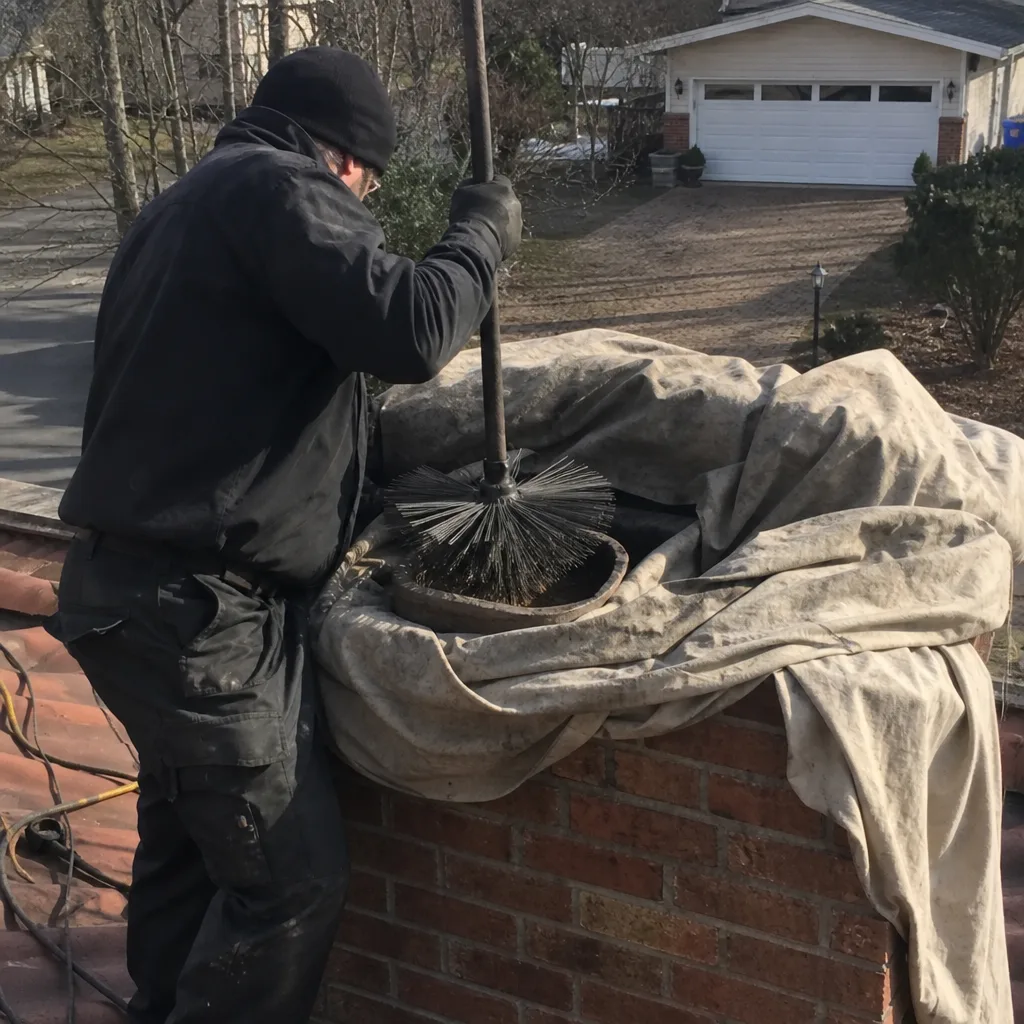
Across the more than 38,000 chimney inspections and cleanings we’ve completed since 2009, certain conditions come up repeatedly in Washington, DC’s housing stock. Here’s what the camera tends to find, and what it means in plain terms.
- Clay tile liner cracks and joint separation. DC’s older rowhouses – many with chimneys built between the 1890s and 1940s – use segmented clay tile liners. The mortar joints between tiles deteriorate over decades, and freeze-thaw cycling in DC winters accelerates the process. A separated or cracked joint means combustion gases, including carbon monoxide, can bypass the liner and enter wall cavities. This is the most common finding that triggers a liner repair or HeatShield resurfacing recommendation.
- Stage II or Stage III creosote buildup. Stage I creosote is a light, dusty deposit that sweeps out easily. Stage II is a harder, tar-like buildup that requires rotary cleaning tools. Stage III – sometimes called glazed creosote – is a dense, shiny coating that’s difficult to remove and significantly raises the risk of a chimney fire. We name the class we find; we don’t use language like “moderate” or “heavy” and leave you guessing.
- Crown cracking and water intrusion. Washington, DC gets roughly 40 inches of rain per year, and freeze-thaw cycles in January and February are hard on chimney crowns. A cracked crown lets water into the masonry, which accelerates spalling and liner joint deterioration. On the camera footage, water intrusion shows as staining, efflorescence (white salt deposits on the liner interior), or visible liner deterioration concentrated near the top of the flue.
- Animal obstructions. Chimney swifts and squirrels are the two most common culprits in DC. Chimney swifts are a federally protected migratory species, which means an active nest cannot be removed until the birds have migrated – typically by October. We note what we find and explain the legal and practical implications before recommending any cap installation.
- Offset flues and corbelling issues in rowhouses. In common-wall rowhouses, flues sometimes run at angles to navigate around building structure. Offsets create areas where creosote accumulates faster and where camera inspection is the only way to confirm liner integrity. A standard visual inspection misses these entirely.
FAQs – Level 2 Chimney Inspection in Washington, DC
How much does a Level 2 chimney inspection cost in Washington, DC?
A Level 2 chimney inspection in Washington, DC costs between $199 and $349 for a single-flue system, with multi-flue chimneys running $299 to $499. Those figures include the camera scan and the documented photo record – there’s no version of this service where we hand you a verbal summary and no footage. The exact price is written down before the inspection begins. Call (240) 621-1264 for a free estimate on your specific setup.
What’s the difference between a Level 1 and Level 2 chimney inspection?
A Level 1 inspection is a visual check of the accessible portions of the chimney – the firebox, damper, and the section of flue you can see with a flashlight and mirror. A Level 2 inspection goes further: it requires a camera scan of the full flue liner, an examination of accessible attic and basement spaces where the chimney runs, and a documented record of findings. NFPA 211 requires a Level 2 any time you’re buying or selling a home, after a chimney fire, or when changing fuel types or appliances. A Level 1 won’t catch a cracked liner joint 15 feet up the flue; a Level 2 will.
How long does a Level 2 inspection take in Washington, DC?
Most single-flue Level 2 inspections in Washington, DC take 60 to 90 minutes from the time our technician arrives. Multi-flue chimneys or properties with complex rooflines – common in larger Capitol Hill or Kalorama properties – can run closer to two hours. The camera footage review and written documentation are done on-site; you’re not waiting for a report to arrive by email days later.
Do I need a Level 2 inspection if I just had the chimney swept last year?
An annual sweep and a Level 2 inspection aren’t substitutes for each other. A sweep removes creosote and debris; an inspection documents the structural condition of the liner, smoke chamber, and masonry. If you’ve had a sweep but no camera-scan inspection, you have a clean chimney but no documented record of liner integrity – and that’s the record that matters when you’re refinancing, dealing with an insurance claim, or troubleshooting a draft problem. Most DC homeowners benefit from combining both services on the same visit, which also reduces the total cost.
Why Level Two Chimney Washington for This Work
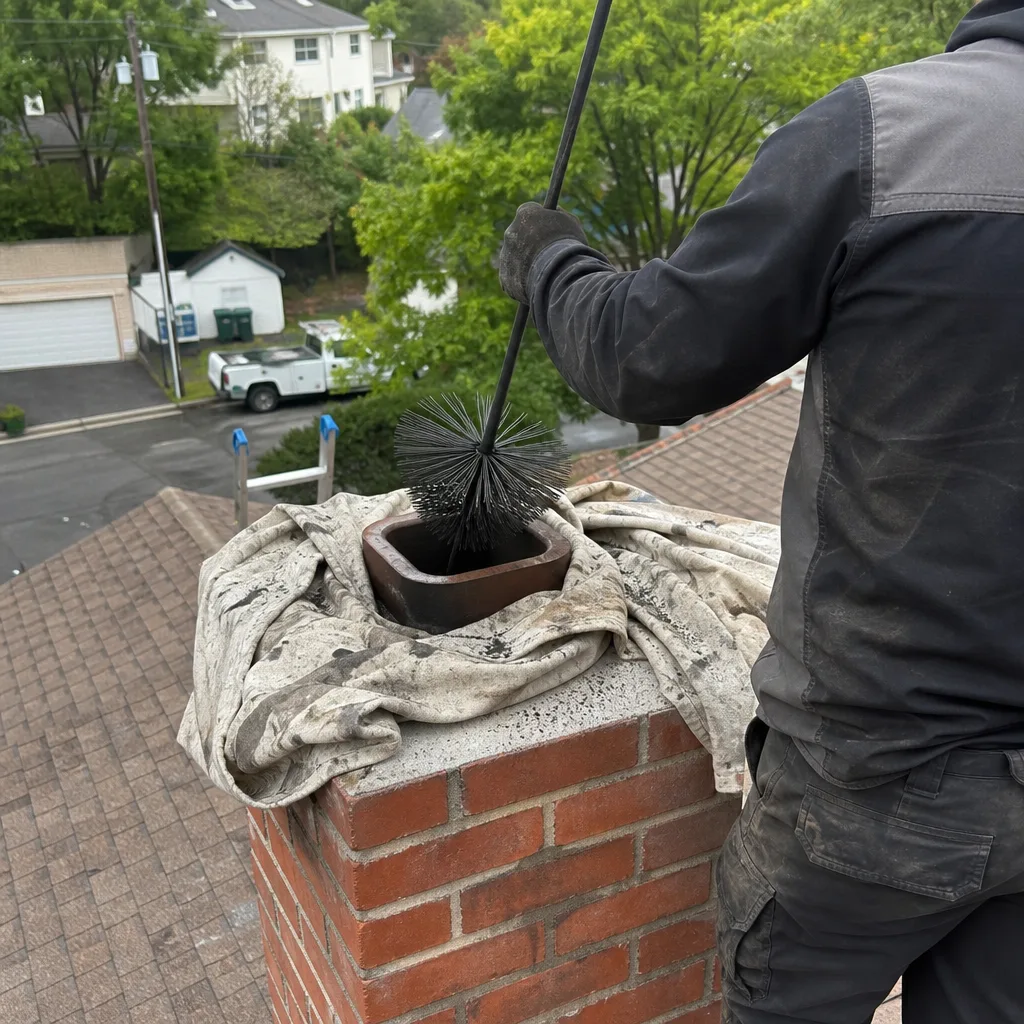
We started doing camera-scan inspections as the baseline – not the upgrade – in 2009. That’s when we opened, and that’s how we’ve run every job since. At the time, most competitors were still charging for a flashlight look and calling it an inspection. We thought that was the wrong way to do it, so we didn’t do it that way. That practice eventually became Clause 4 of the Haven Standard: a documented photo record on every job, included as standard.
More than 38,000 chimneys inspected and cleaned later, that hasn’t changed. Every technician is background-checked and uniformed. You’ll know their name before they arrive, and you’ll get a text when they’re on the way. The written price comes before any work starts – Haven Standard Clause 1 – and the 365-Day Done Right Promise backs the work after we leave. If something isn’t right within a year of the job, we make it right. That’s not a marketing line; it’s stamped on every job we complete.
For repair work that comes out of an inspection, we source materials through Haven’s buying network – DuraFlex liner systems, Copperfield chimney components – specifically to keep the cost to our customers fair. You’ll see the material specified in the written price, not just a line that says “parts and labor.”
The home page has a full overview of how we operate, the Haven Standard, and what to expect from your first call. If you want to go straight to scheduling a Level 2 inspection in Washington, DC, call (240) 621-1264. A live person will pick up.
Schedule Your Level 2 Inspection in Washington, DC
If you’re buying or selling a home in Washington, DC, had a chimney fire, or just don’t have a camera-scan record on file, this is the right next step. The inspection is $199 to $349 for a single-flue system, the price is written before the camera goes in, and you walk away with a documented photo record you can actually use.
Call (240) 621-1264 to schedule or get a free written estimate. Live phone support runs 24 hours a day, 7 days a week – no voicemail, no web form, no waiting until Monday.
Written by Corrine Halstead, Owner at Level Two Chimney Washington, serving Washington.