
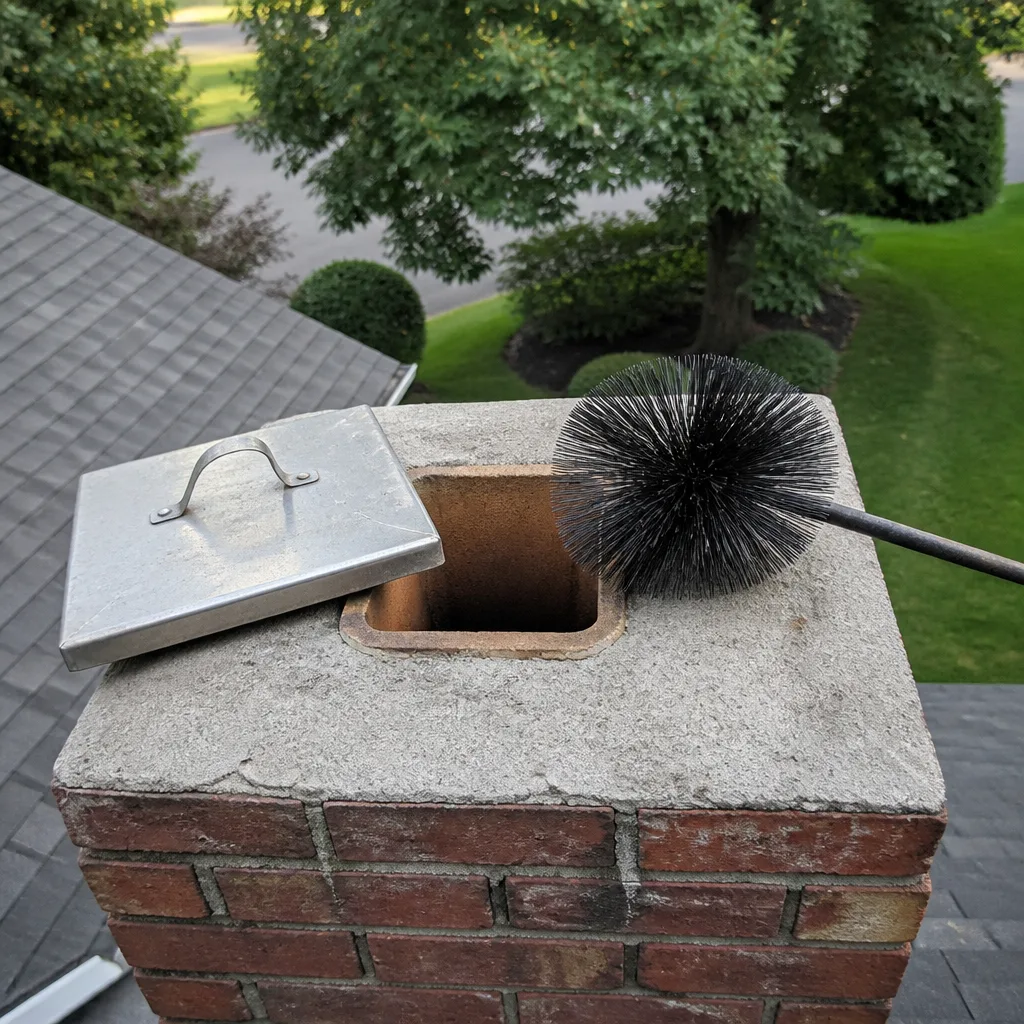
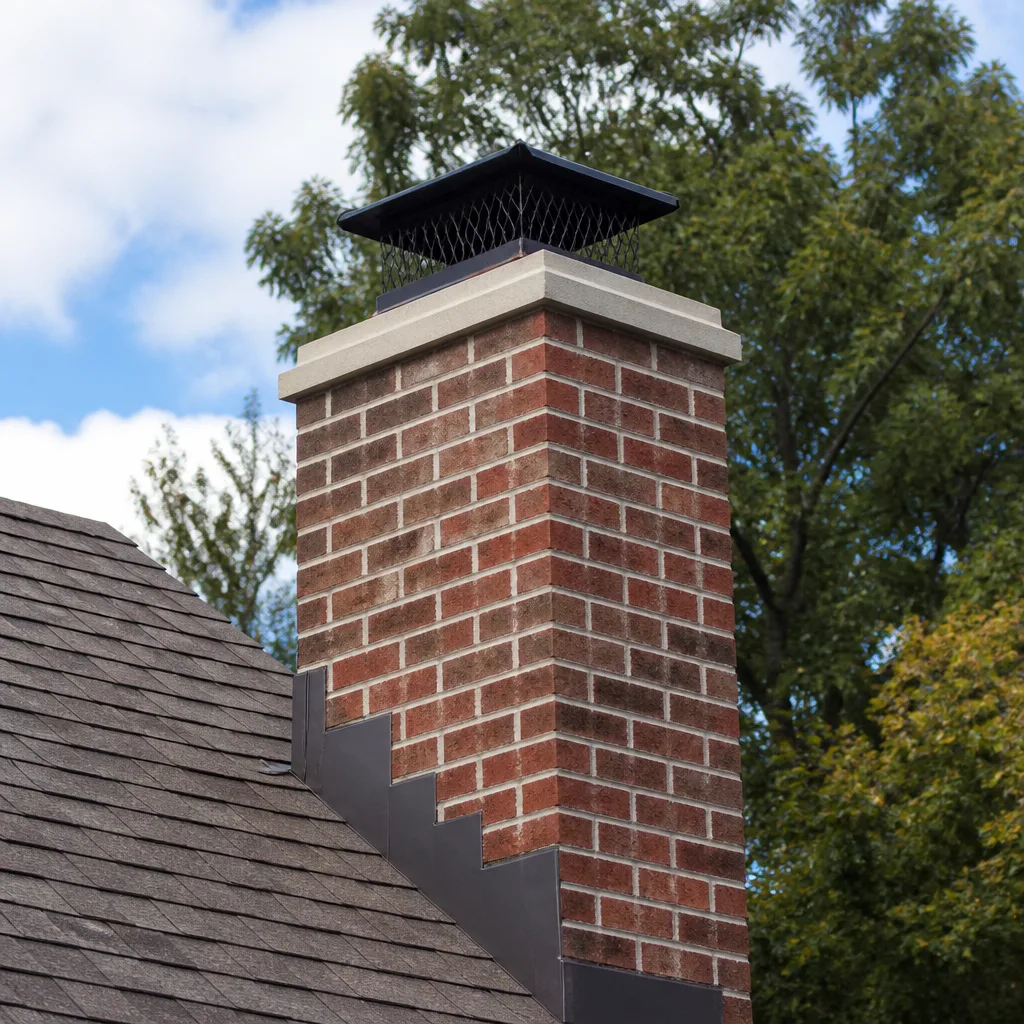
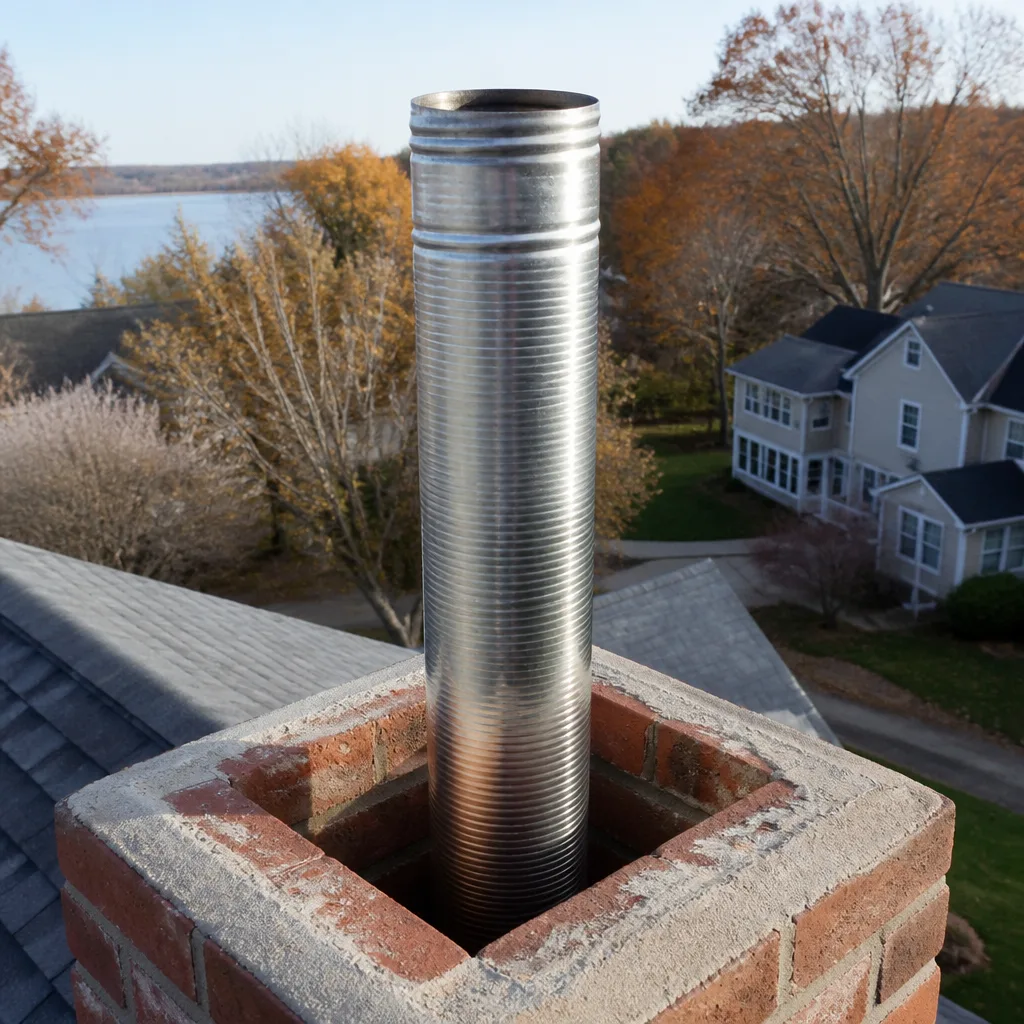
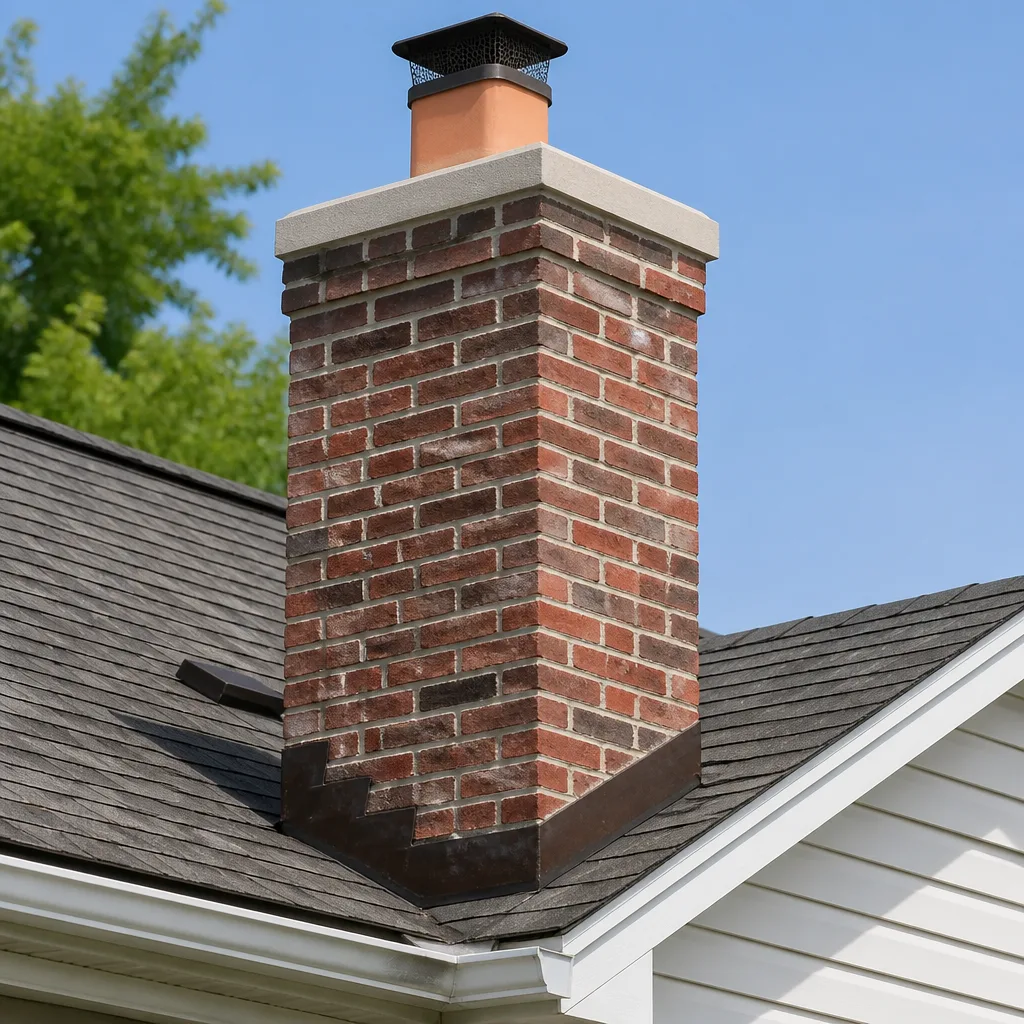
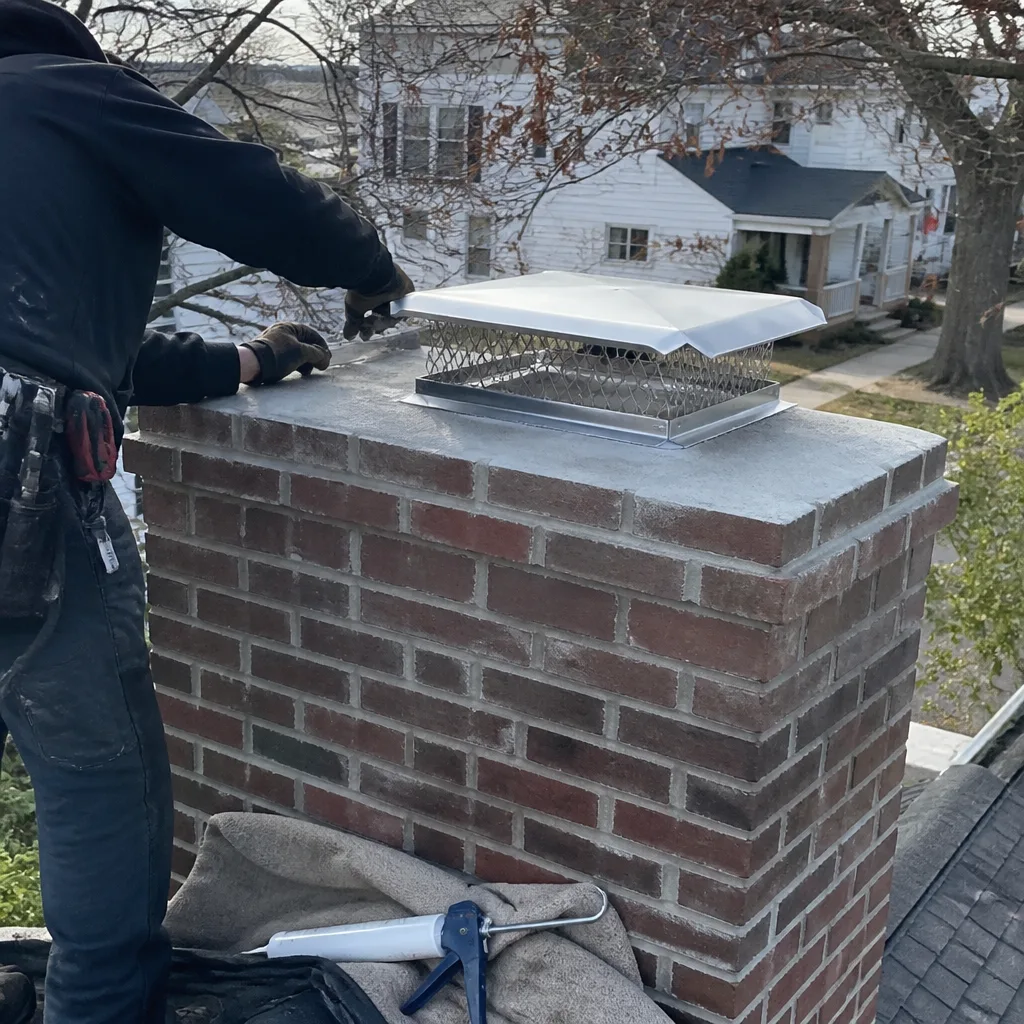
Level 1 sweep and inspection to the NFPA 211 annual standard - flue, crown, cap, and flashing checked and photographed
Chimney sweep logs do not sweep chimneys. They loosen some creosote - which then falls where a brush and vacuum still have to collect it.
 Before
 After
After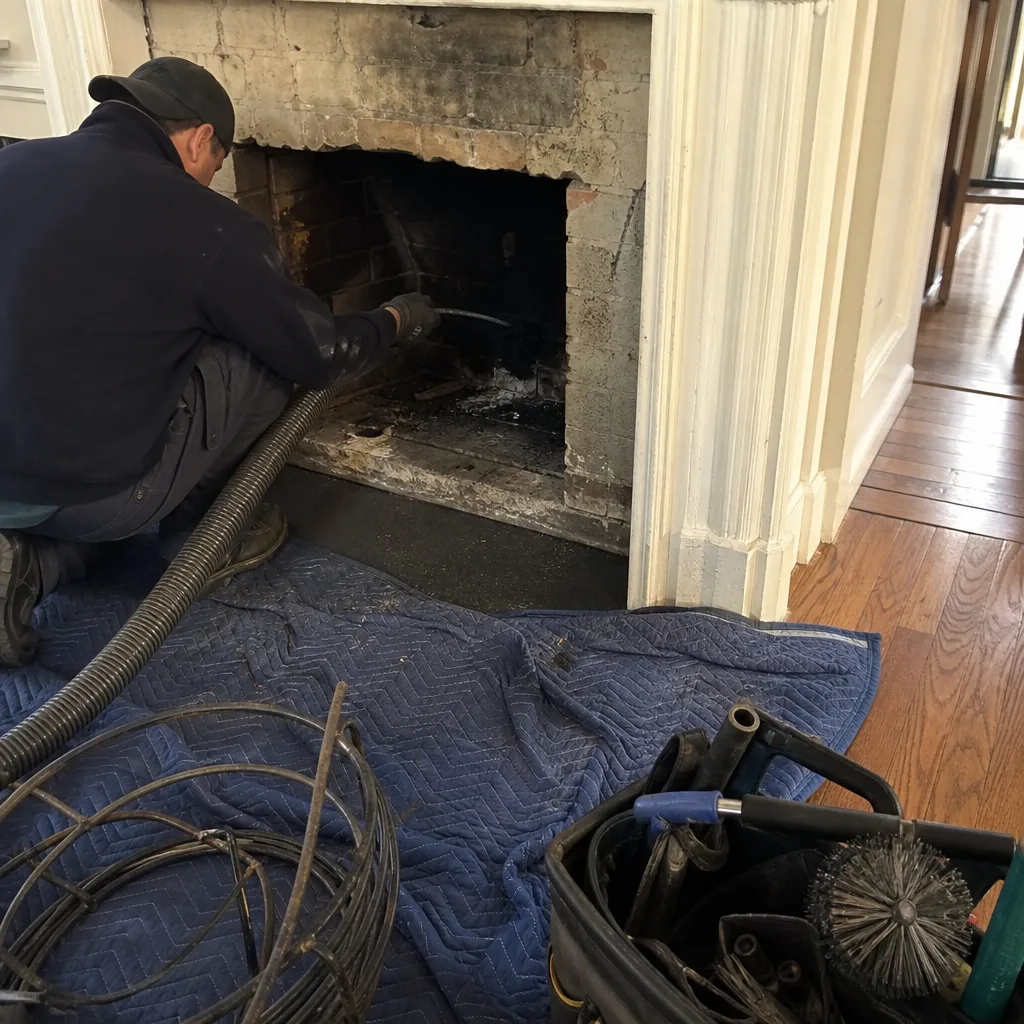 Before
 After
After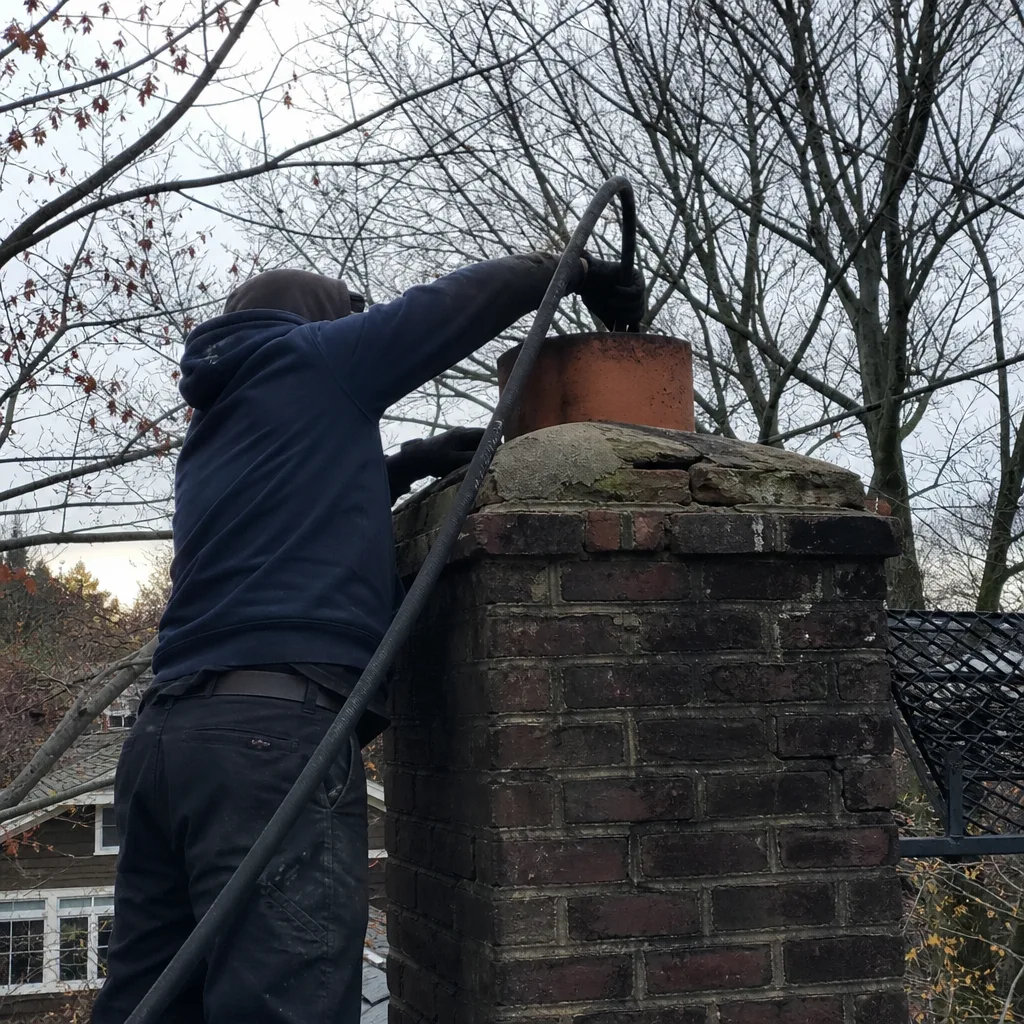 Before
 After
AfterAnnual Sweep in Washington, DC
An annual Chimney Cleaning & Sweep in Washington, DC removes the creosote, soot, and debris that build up inside your flue during a heating season – and it does so before those deposits become a fire hazard or a liner problem. At Level Two Chimney Washington, every annual sweep includes a camera-scan inspection to NFPA 211 Level 2 standards, a written price before anyone picks up a brush, and a documented photo record when the work is done. Call us at (240) 621-1264 – a live person answers around the clock, every day of the year.
Most Washington homeowners who use their fireplace regularly through November to March accumulate enough creosote to warrant professional cleaning before the next season opens. That cycle is the whole premise of the annual sweep: one visit per year, scheduled before you need the fire, so you’re never burning over deposits you haven’t seen. Our Chimney Cleaning & Sweep in Washington service is the parent of this page, and the annual sweep is the version most DC homeowners book – one predictable appointment, one written price, one photo record you can file with your insurer or home warranty provider.
We’ve completed more than 38,000 chimney inspections and cleanings since 2009, every one of them with a written price before work started and a documented record on the way out the door. That’s not a marketing line – it’s Haven Standard Clause 1 and Clause 4 combined, and it’s how Level Two Chimney Washington has operated from day one.
When You Need an Annual Sweep
The NFPA 211 standard calls for at least one inspection per year for any chimney in use – but the condition of your flue at that inspection is what determines whether cleaning follows immediately or can wait. In Washington, DC, a few local factors push most fireplaces into the “clean now” column faster than the national average suggests.
- You burned more than a cord of wood last winter. A cord or more deposited through a single season is reliably enough volume to produce a coating of Class I or Class II creosote – the dry, flaky kind that’s easiest to brush out now, before it bakes into Class III glaze over a summer.
- You smell smoke in the house when the fireplace isn’t lit. A lingering smoke odor, especially on humid days in DC’s late spring and summer, usually points to creosote deposits absorbing ambient moisture and off-gassing back into the home. An annual sweep clears the source, not just the symptom.
- Your last documented cleaning is more than 12 months ago. If you can’t produce a written record with a date and a photo, the clock resets. Many Washington homeowners who moved in between 2015 and 2025 inherited chimneys with no cleaning history on file – that’s the first thing we fix.
- You’ve been burning green or unseasoned wood. Green wood burns cooler and wetter, accelerating creosote formation. One season of unseasoned wood in a DC row house with a clay-tile liner can leave heavier deposits than two seasons of properly seasoned hardwood.
- Your home insurance renewal or mortgage lender asks for proof of chimney maintenance. A documented annual sweep with a written scope, photos, and a signed completion record satisfies nearly every insurer’s fireplace-maintenance clause. We produce that record on every visit under Haven Standard Clause 4 – it’s not an add-on.
- The damper feels stiff, or you’re getting more smoke rollout into the room than you used to. Partial blockages from debris, bird nesting material, or heavy soot accumulation in the smoke chamber restrict draft. That’s a cleaning problem before it becomes a liner problem.
Our Annual Sweep Process in Washington, DC
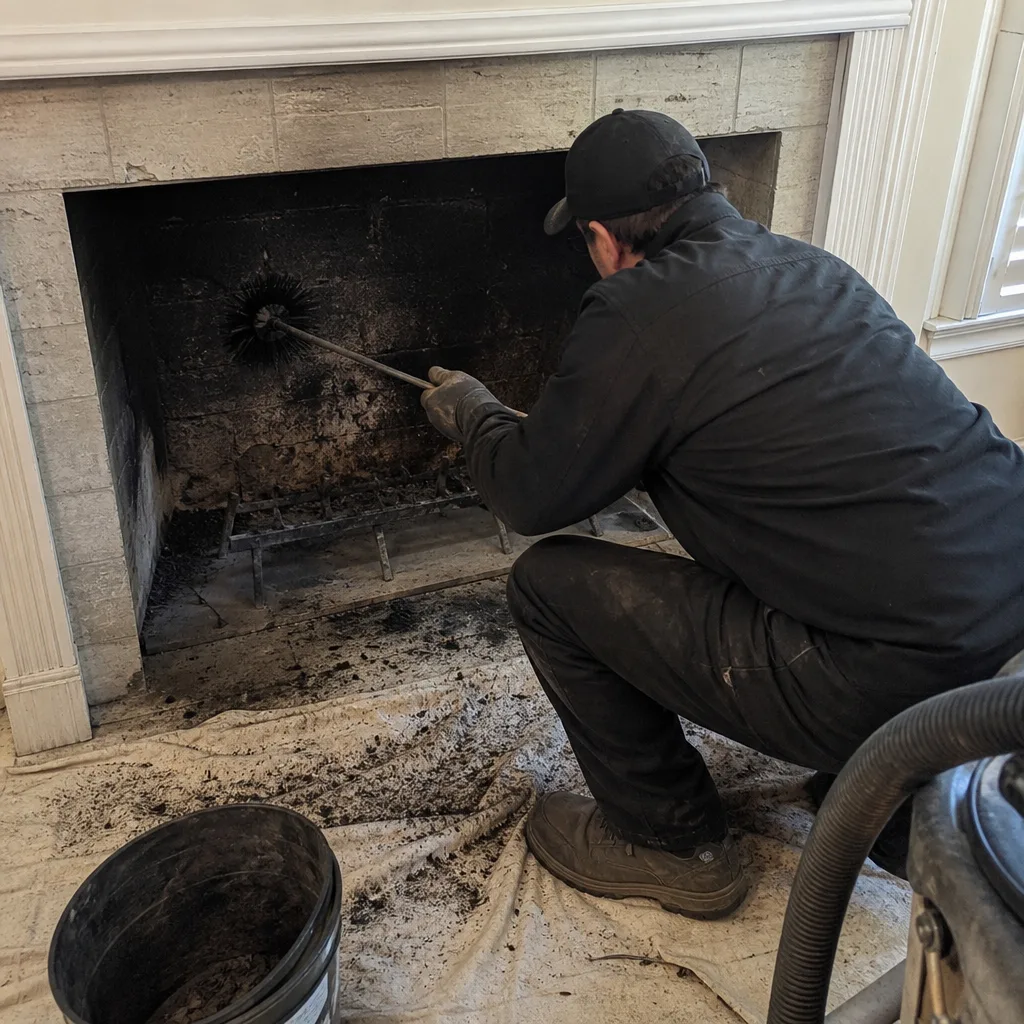
Here’s exactly what happens when a Level Two Chimney Washington technician arrives for an annual sweep. No steps skipped, no shortcuts on documentation, no price surprises after the fact.
- Written price and scope delivered before work starts. Haven Standard Clause 1 – what we call the “H” in H.A.V.E.N., “Have it in writing” – requires that a written price, written scope of work, and written warranty be in your hands before the technician opens a single tool bag. If the camera inspection reveals conditions that change the scope, you get a revised written price before any additional work proceeds. Always.
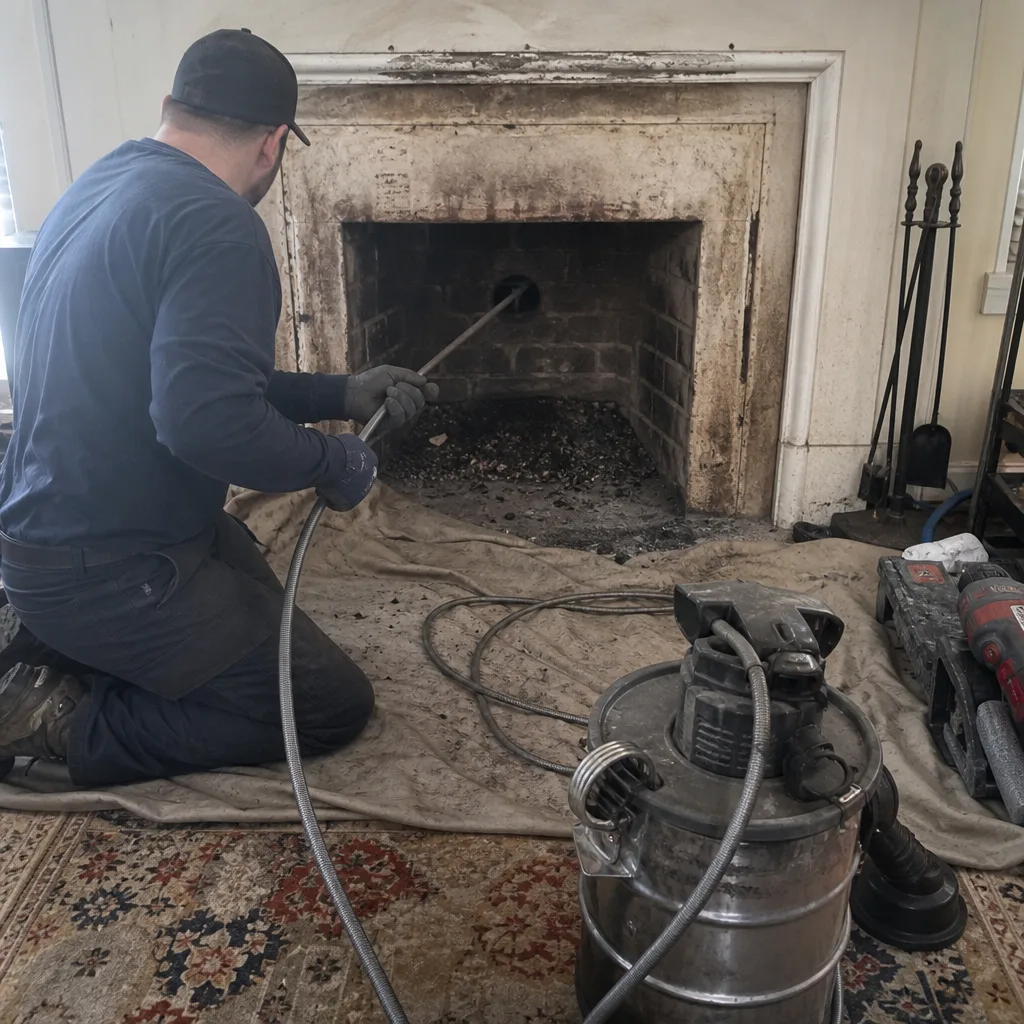
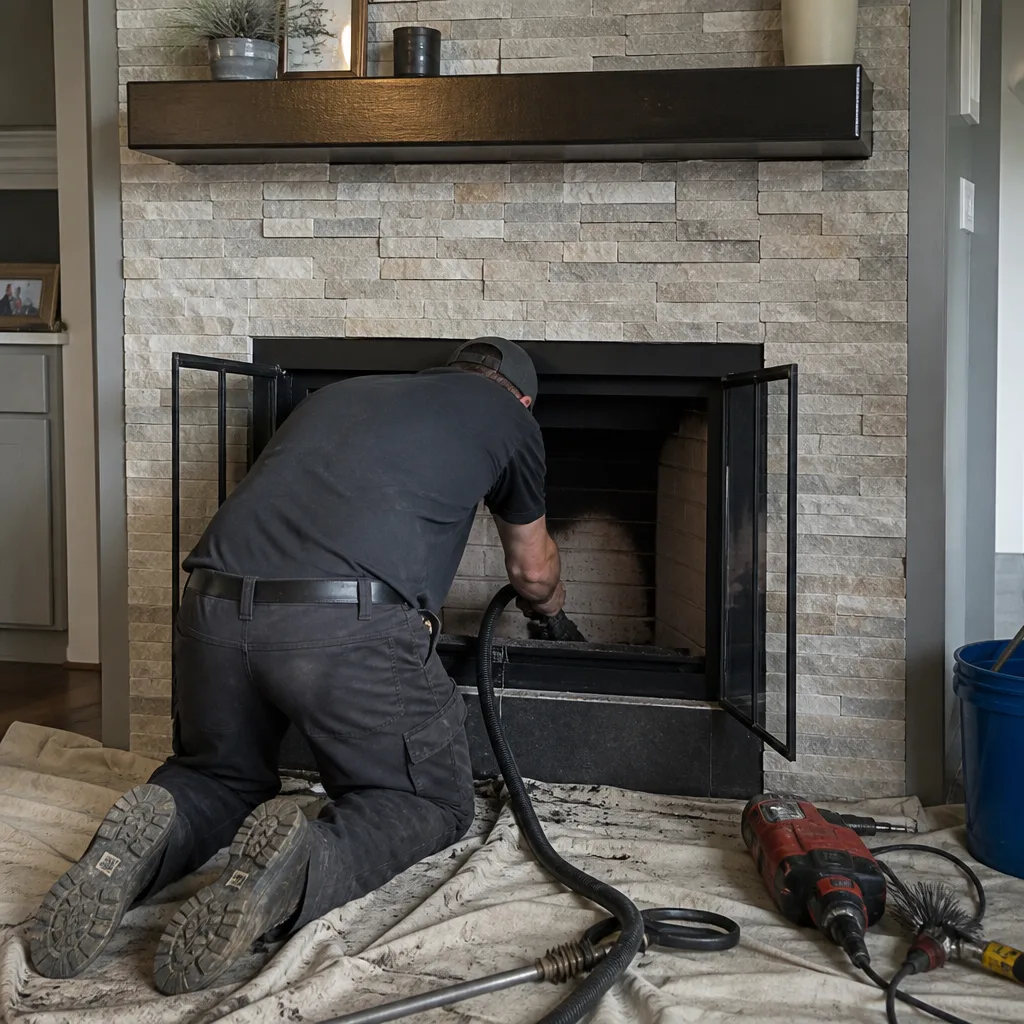
- Drop cloths and prep. Your living space stays clean. Technicians lay down protective drop cloths over the hearth area, use a high-filtration vacuum system during brushing to contain airborne particulate, and wear boot covers throughout. In Washington’s older row houses and Capitol Hill-area townhomes, where rugs and hardwoods are close to the firebox, this step matters.
- Camera-scan inspection before the brushes go in. We run a camera down the flue to document baseline condition – liner integrity, creosote class, smoke chamber, firebox floor and back wall, damper plate, and smoke shelf. This is an NFPA 211 Level 2 inspection, not a flashlight look. The footage and stills become part of your permanent record. Most Washington homeowners who’ve had “inspections” elsewhere have never seen their own flue on camera – this is the baseline we set before cleaning starts.
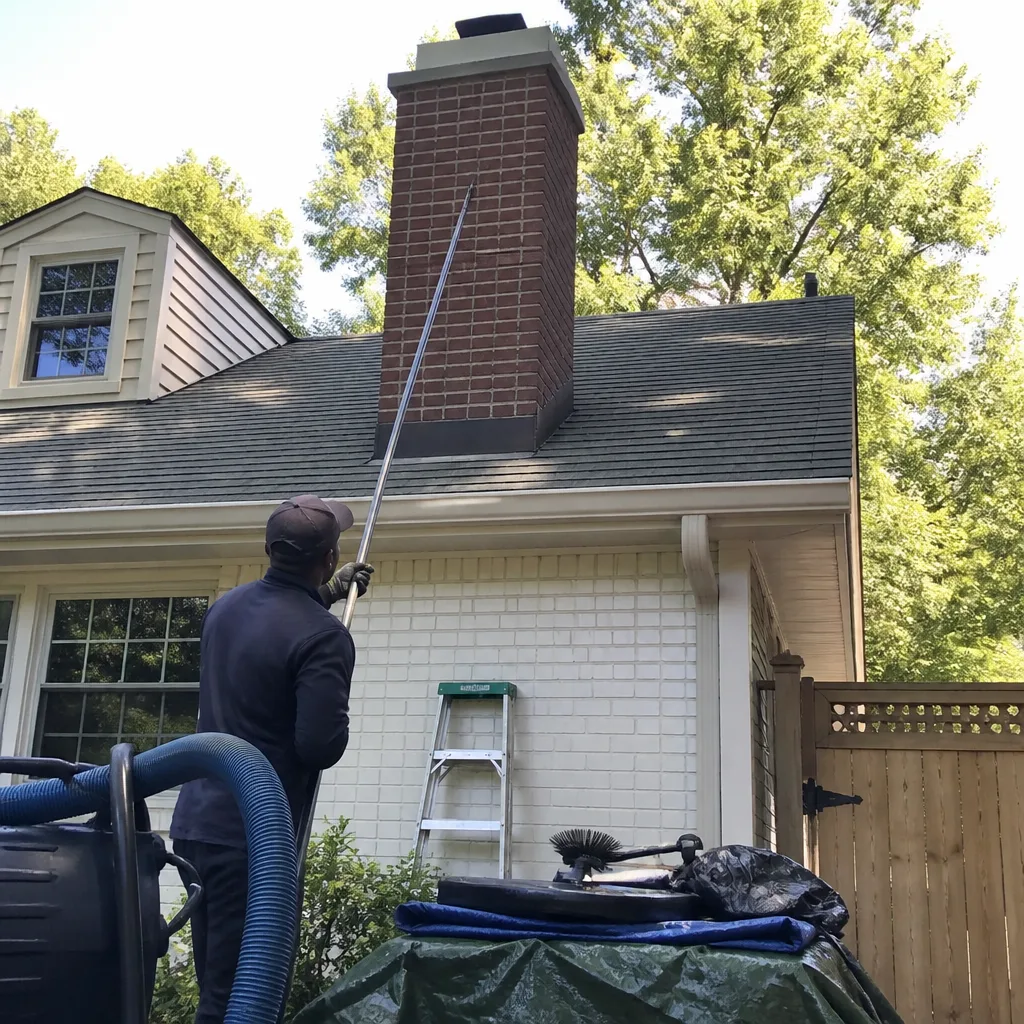
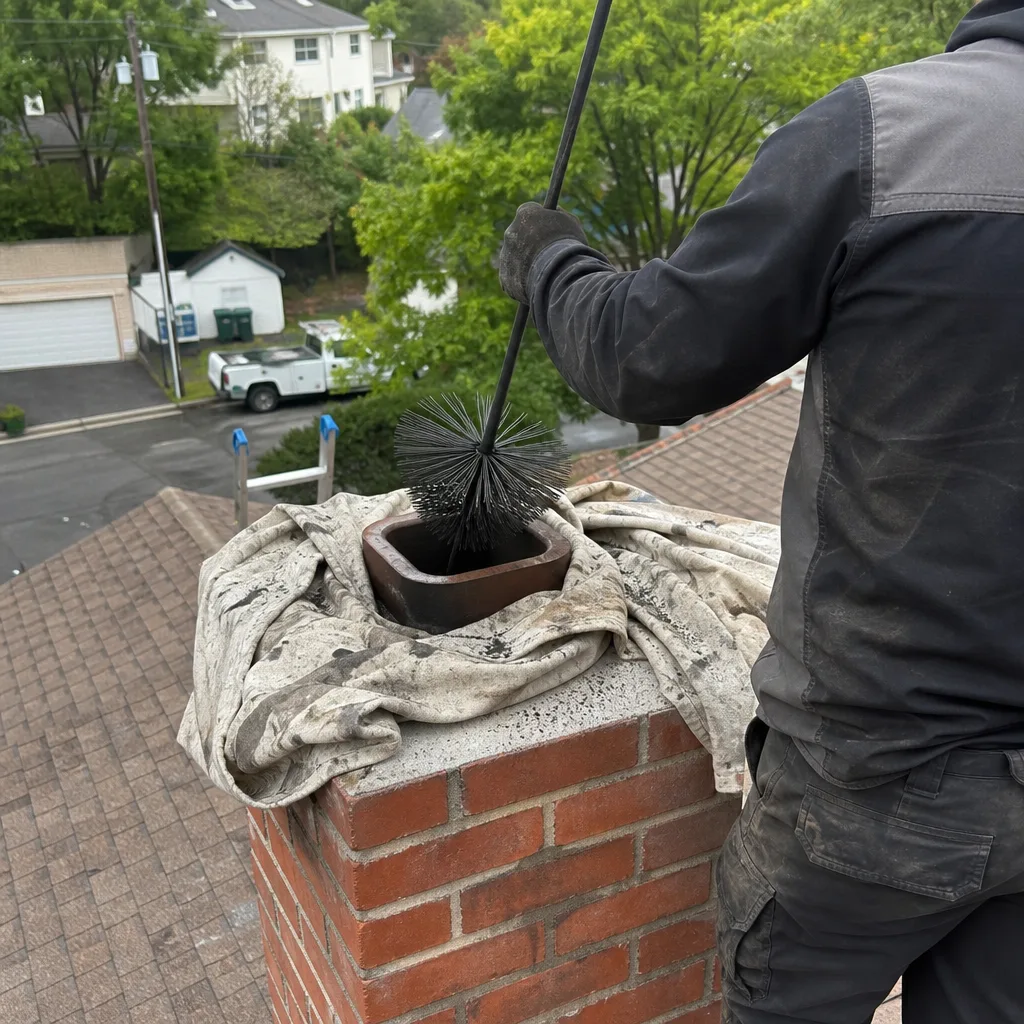
- Mechanical brushing, top to bottom. The technician works rotary brushes down the full length of the flue liner – whether that’s a clay-tile liner in an older DC home built pre-1980 or a flexible liner installed more recently. Creosote and soot dislodged from the walls fall into the firebox and are captured by the vacuum system simultaneously. The smoke chamber and smoke shelf are cleaned manually, since their geometry requires hand tools and sometimes a mirror.
- Second camera pass and written documentation. After brushing, the camera goes back down. We document the post-cleaning condition and confirm that the liner surfaces are clear. Any hairline cracks in a clay-tile liner, spalling at a joint, or other structural findings that were obscured by deposits and only visible after cleaning are noted with photos and plain-language description in the written record. If a finding changes your scope or budget, you hear about it before you’re invoiced – not after.
- Written completion record and photo archive handed to you before we leave. Haven Standard Clause 4 requires a documented photo record on every visit. You receive the written scope, the before-and-after camera stills, any findings, the price paid, and the warranty terms. That package is yours to keep – for your records, your insurer, or the next owner of your home.
BeforeAfterAnnual Sweep Pricing in Washington, DC
Annual chimney sweep pricing in Washington, DC typically runs between $195 and $349 for a standard single-fireplace system. That range reflects the variation in flue height, liner type, accessibility, and creosote load. Below is a breakdown of what moves the number in each direction.
| Condition or Factor | Typical Price Impact |
|---|---|
| Standard single flue, light creosote (Class I), up to 25 ft | $195 – $249 |
| Standard single flue, moderate creosote (Class II) | $249 – $299 |
| Heavy creosote load or Class III glaze requiring chemical treatment | $299 – $349+ |
| Second fireplace or additional flue on same visit | Add $95 – $149 |
| Flue height over 30 ft (common in older DC rowhouses with tall chimneys) | Add $40 – $75 |
| Prefabricated / zero-clearance fireplace system | $175 – $225 |
Creosote Removal for Class III creosote – the hard, glazed variety – requires a chemical treatment agent applied before mechanical removal. In Washington’s older housing stock, particularly properties in Brookland, Petworth, and Brightwood built between 1910 and 1940 with original clay-tile liners and years of unrecorded use, we see Class III deposits more often than the DC average would suggest. The camera scan before brushing tells us exactly what class we’re dealing with, so the written price you receive reflects actual conditions, not a guess.
Every estimate is free, written, and given before any work starts. If you have a competitor’s written quote, bring it – our Free Second Opinion is available on any written estimate, no strings attached.
What the Camera Finds That a Flashlight Misses
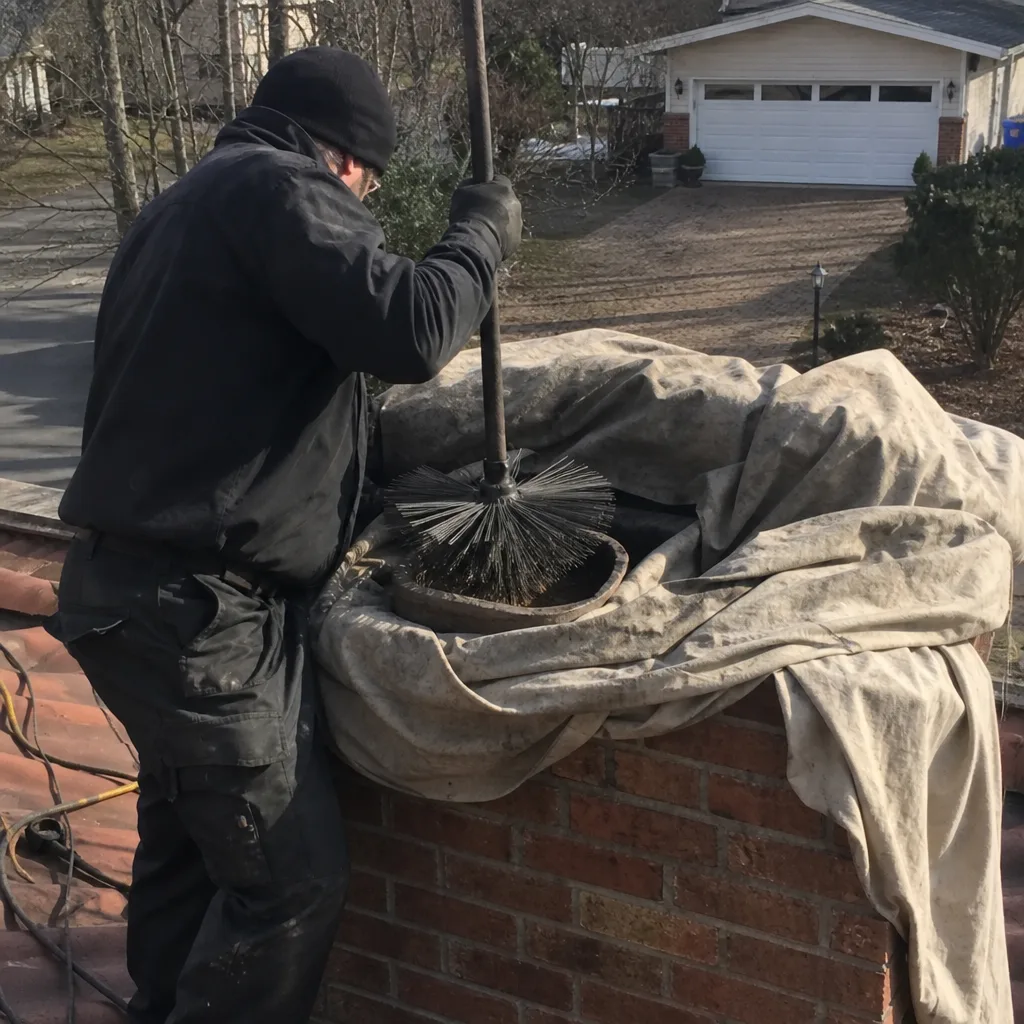
The camera has been the default at Level Two Chimney Washington since 2009 – not because regulators required it, but because a flashlight look from the firebox opening cannot document what’s happening at the back of a flue joint 18 feet up, or what the flue liner surface actually looks like above the smoke chamber. In Washington, DC specifically, a few findings come up repeatedly that only the camera reliably surfaces.
Spalling at clay-tile joints – where mortar degrades and tiles shift slightly – shows up in a lot of DC homes built before 1960. From the firebox, you can’t see it. On camera, it’s obvious, and the photo goes into the written record so you have documentation if a repair becomes necessary. We source liner and joint repair materials through Copperfield and DuraFlex, which keeps pricing inside what Haven’s buying network negotiated – not whatever a tech pulls from a retail distributor.
Smoke chamber corbeling damage is another common Washington finding. The smoke chamber is the angled section between the firebox and the flue liner, and in older DC masonry fireplaces, the parging (the mortar coating over the brickwork) frequently cracks or falls away, exposing the rough brick to high-temperature combustion gases. That’s a repair item, not a cleaning item – but the annual sweep is usually how it gets found.
None of this is shared to alarm you. It’s shared because the camera is how you find out what’s actually there, as opposed to what a tech guesses from the bottom. A real expert tells you what the camera shows. A written record means you’re not relying on memory six months later.
The 365-Day Done Right Promise
Every annual sweep at Level Two Chimney Washington is backed by the 365-Day Done Right Promise: if it’s not done right, we make it right. That warranty is written into the completion record you receive before we leave, not offered verbally and forgotten. You don’t need to chase us – you have it on paper, with a date and a signature, stamped under the Haven Standard.
That’s not a typical sweep-company posture. Most competitors charge for the visit, hand you nothing in writing, and consider the job closed. We consider the job closed when the camera record, the written scope, the price, and the 365-day warranty are in your hands. Same day. Every time.
FAQs – Annual Sweep in Washington, DC
How much does an annual chimney sweep cost in Washington, DC?
An annual chimney sweep in Washington, DC costs between $195 and $349 for a standard single-flue system, depending on flue height, liner type, and creosote class. Light Class I deposits fall toward the lower end; heavy Class II or glazed Class III deposits push the price toward or above $299. That price is written before work starts – not estimated verbally on arrival and adjusted later. Call (240) 621-1264 for a free written estimate based on your specific system.
How often does a chimney need to be swept in Washington, DC?
NFPA 211 calls for at least one inspection per year for any chimney in active use, and most Washington homeowners who burn wood regularly through the heating season need a full cleaning at that annual inspection. Homeowners who use their fireplace occasionally – a handful of fires per season – may find that the camera scan shows light enough deposits to defer brushing by a year, but that determination comes from the camera record, not a guess. The annual visit locks in the documentation even in a light-use year.
Is an annual sweep the same as a chimney inspection?
Not exactly. An inspection assesses the condition of the system; a sweep removes what’s there. At Level Two Chimney Washington, the two are combined on every annual sweep visit: a camera-scan inspection to NFPA 211 Level 2 standards runs before and after the cleaning, so you get both a documented condition assessment and a clean flue in one appointment. Some companies sell a “Level 1 inspection” as a separate line item – a flashlight look from the bottom. That is not what happens here.
Can you do an annual sweep on a gas fireplace?
Yes – gas fireplaces and gas log inserts still produce byproducts that accumulate in the flue liner and venting system, and the chimney structure itself (cap, crown, liner, damper) still requires annual inspection regardless of fuel type. The sweep process for a gas system is less intensive than for a wood-burning fireplace – there’s no creosote removal – but the camera inspection and documentation are identical. Pricing for a gas fireplace annual sweep typically runs $175 to $225. Call (240) 621-1264 and we’ll confirm the right scope for your system before you book.
Key Takeaways
- Annual sweep pricing in Washington, DC: $195 to $349 for a single flue, written before work starts.
- Every sweep includes a camera-scan inspection to NFPA 211 Level 2 standards – before and after cleaning.
- You receive a written price, written scope, before-and-after photos, and a 365-Day Done Right Promise before the technician leaves.
- Class III creosote (glazed) costs more to remove and requires chemical treatment – the camera identifies which class you have before pricing is finalized.
- A Free Second Opinion is available on any written estimate from a competitor.
- Live phone support at (240) 621-1264 – a person answers, not a voicemail.
Schedule Your Annual Sweep in Washington, DC
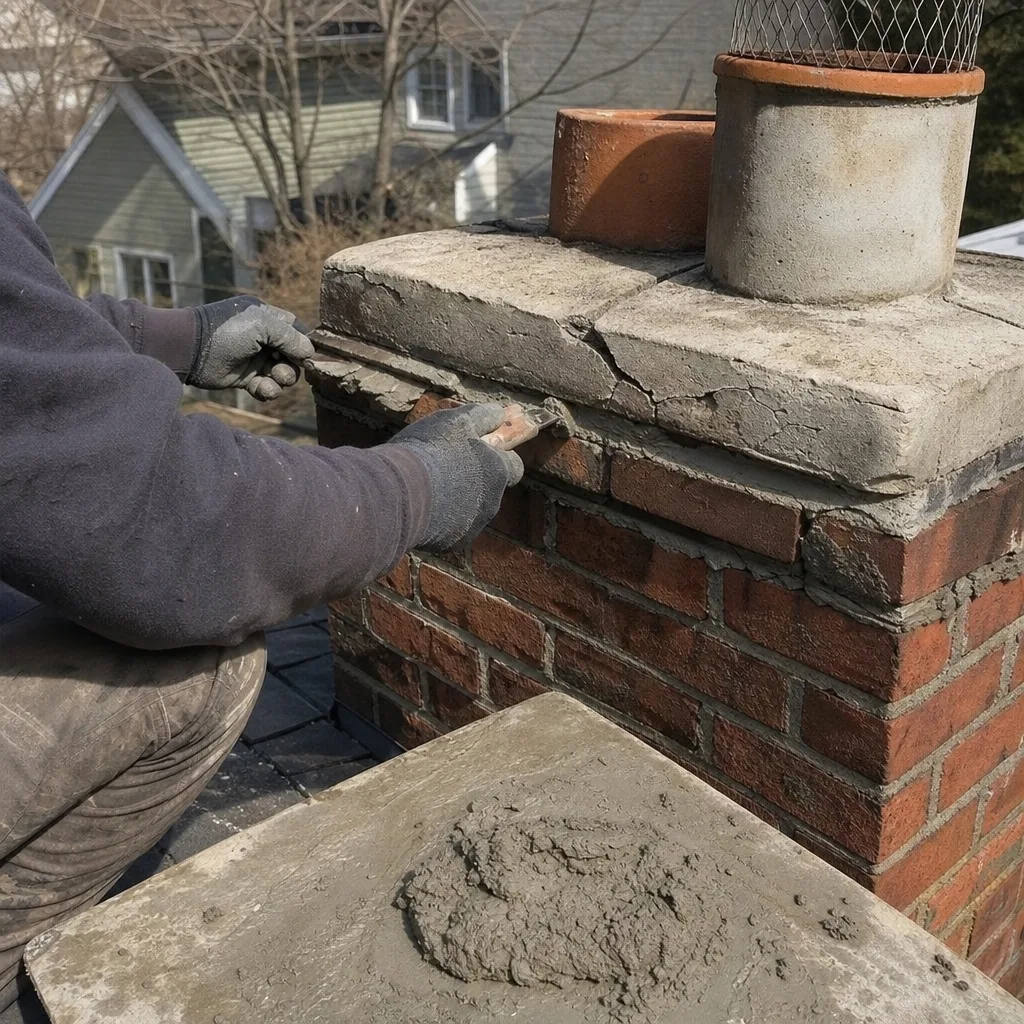
If you’re searching for Chimney Cleaning & Sweep Near Me in Washington, DC and your last documented chimney cleaning is more than 12 months ago – or you’ve never seen a written record from a previous sweep – this is the right time to book. The written price is on the page. The camera goes down the flue. The photo record comes home with you. And if anything isn’t right, the 365-Day Done Right Promise covers it.
Call Level Two Chimney Washington at (240) 621-1264. A live person answers every call, any hour of the day. Free estimate, written before work starts. No voicemail, no web form holding pattern.
Written by Corrine Halstead, Owner at Level Two Chimney Washington, serving Washington.