
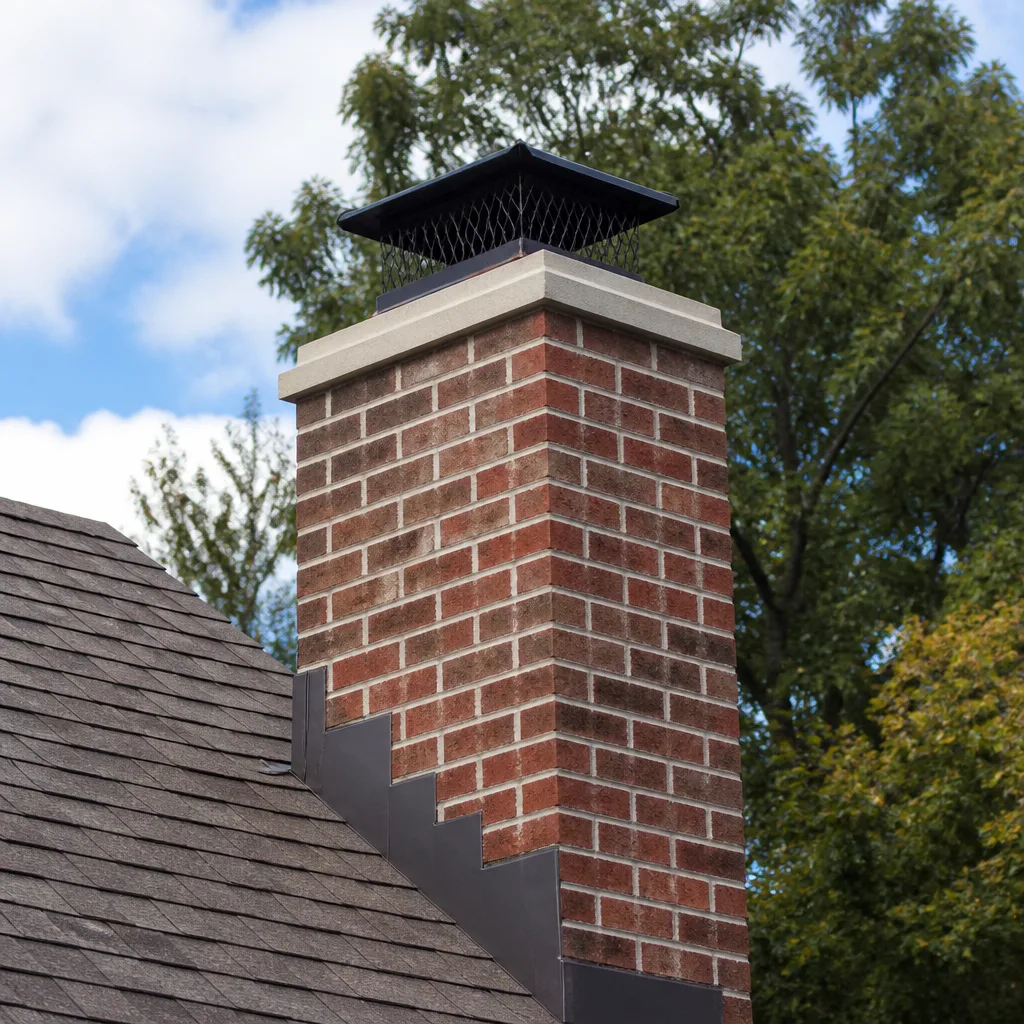
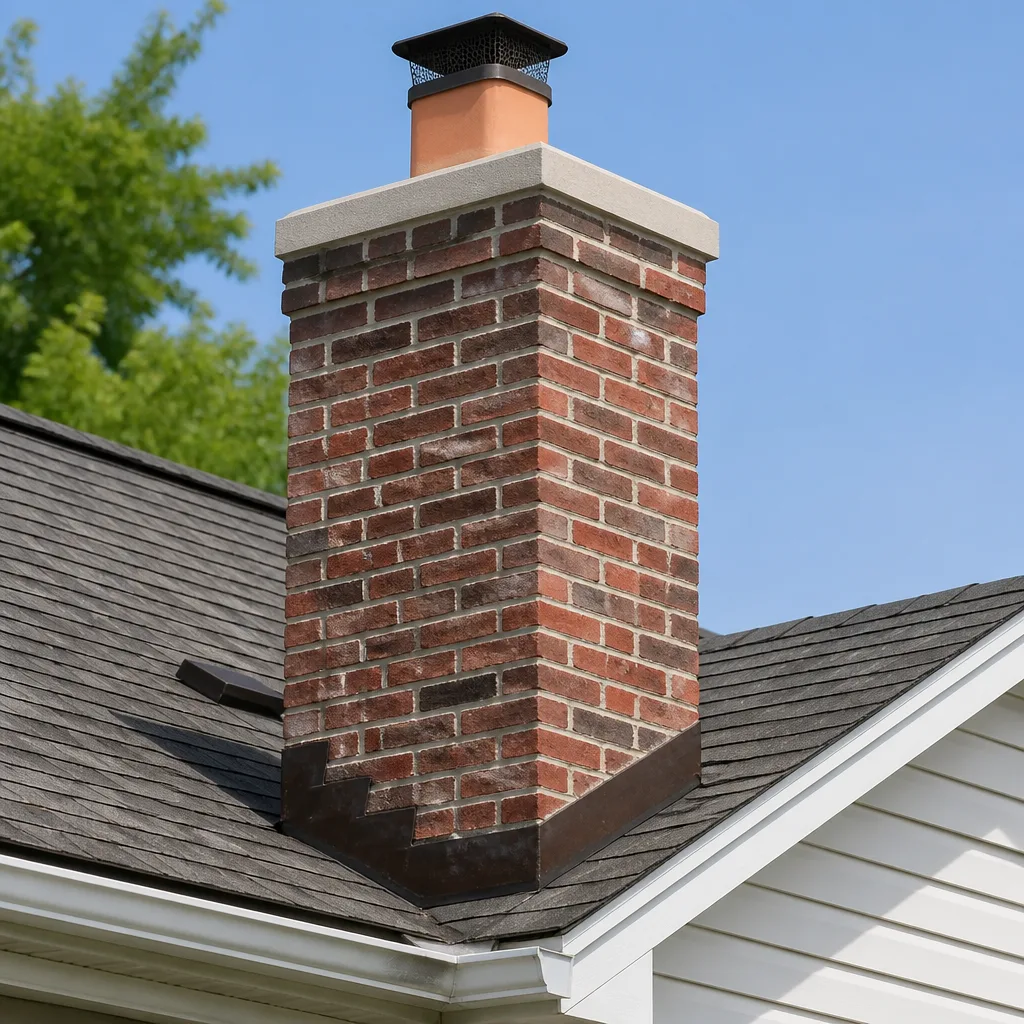
Level 1 sweep and inspection to the NFPA 211 annual standard - flue, crown, cap, and flashing checked and photographed
Chimney sweep logs do not sweep chimneys. They loosen some creosote - which then falls where a brush and vacuum still have to collect it.
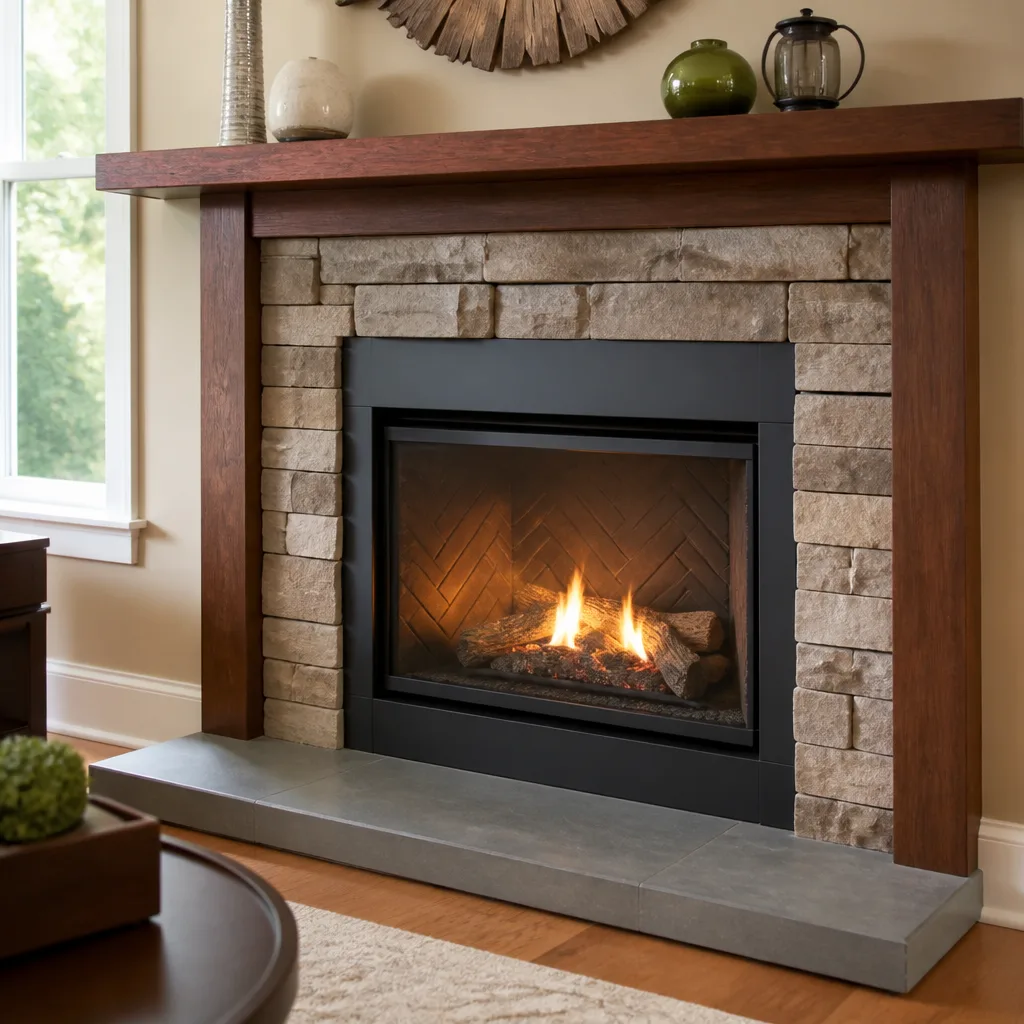
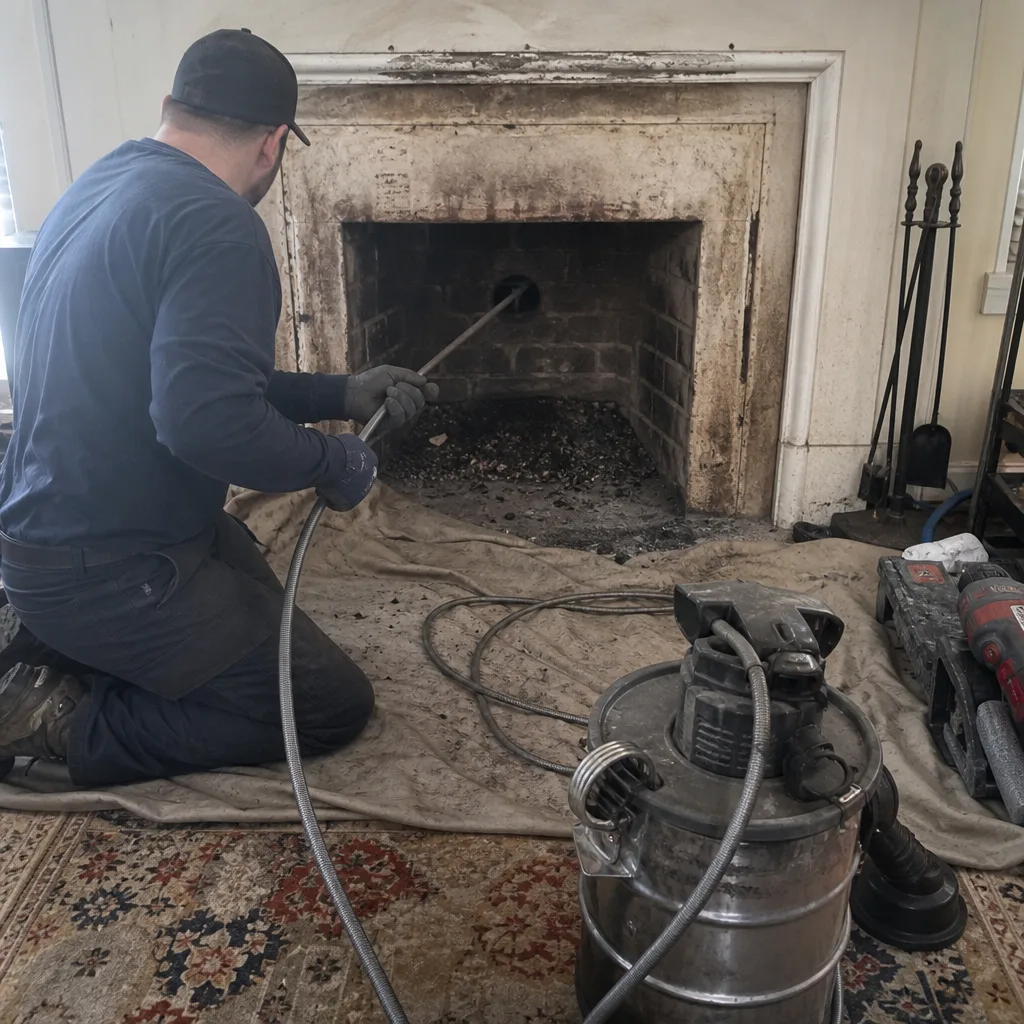 Before
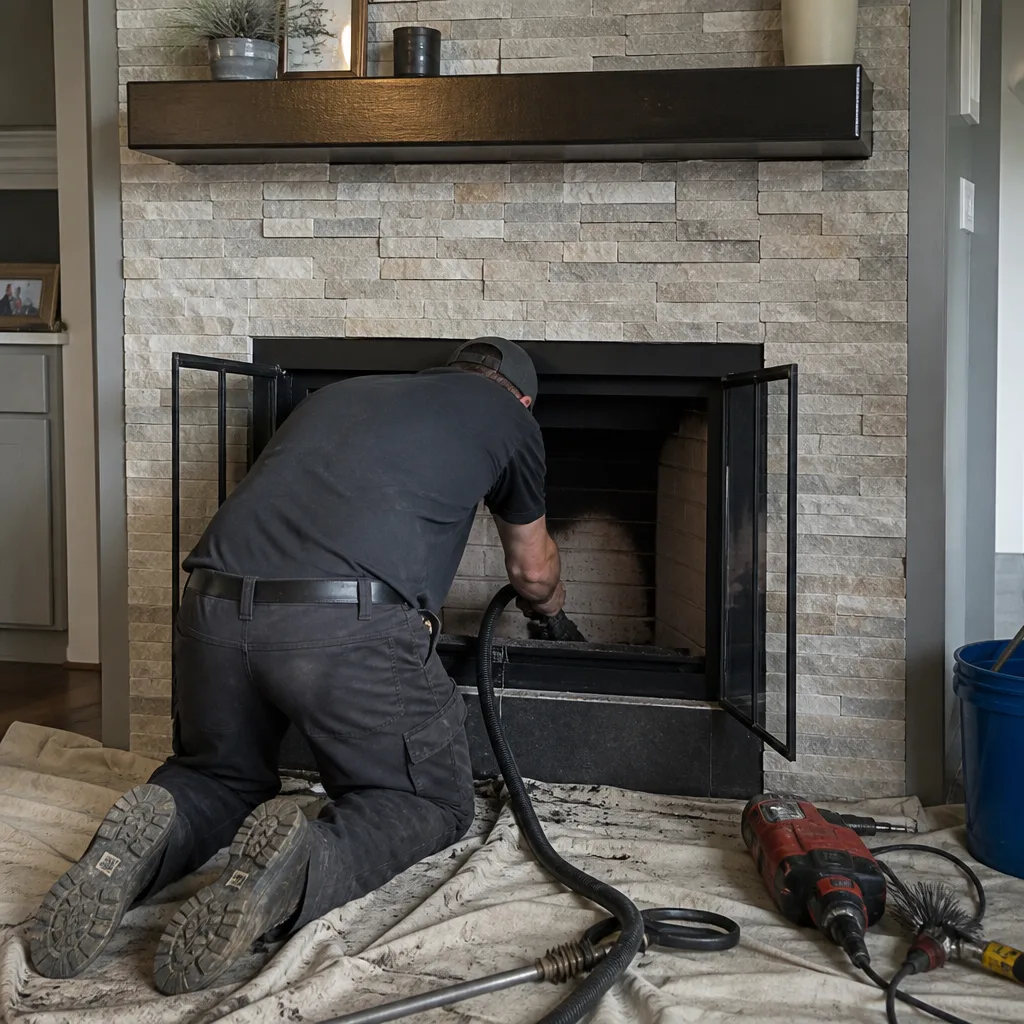 After
After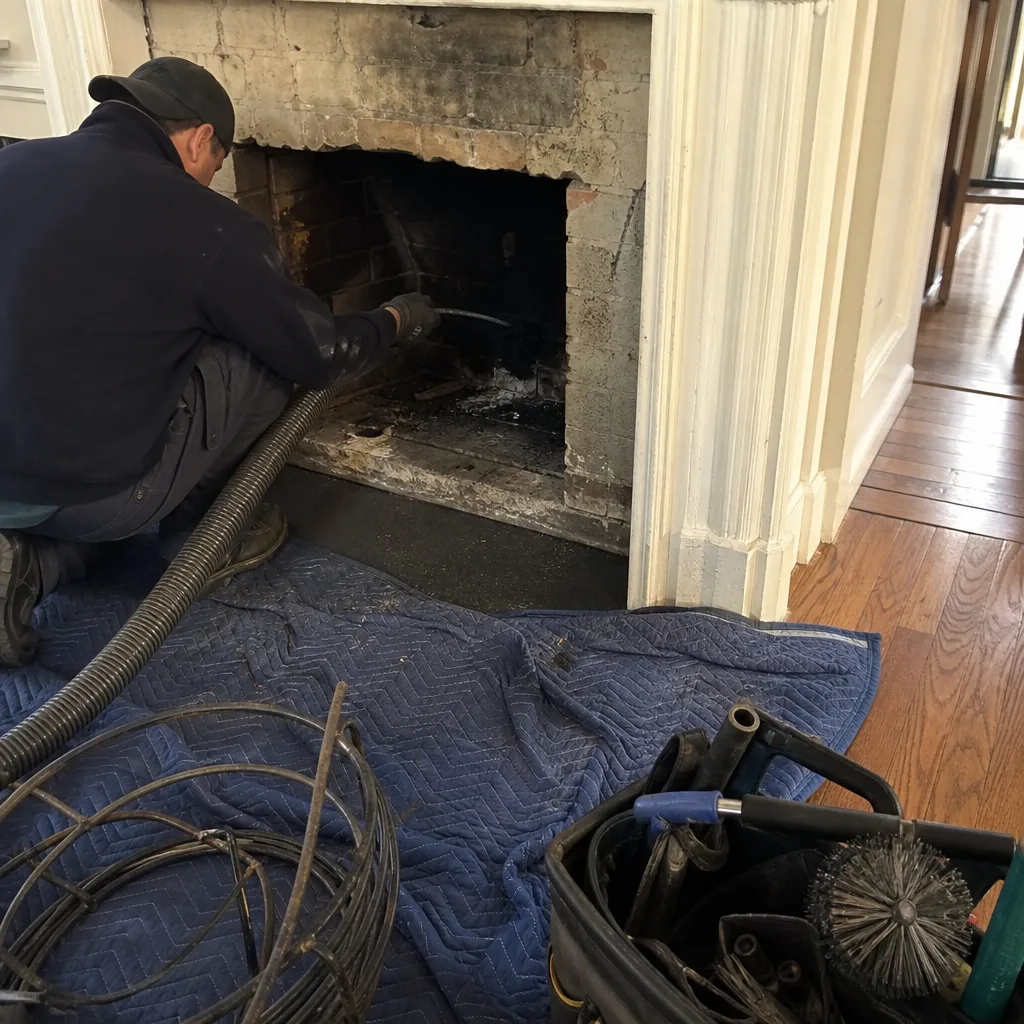 Before
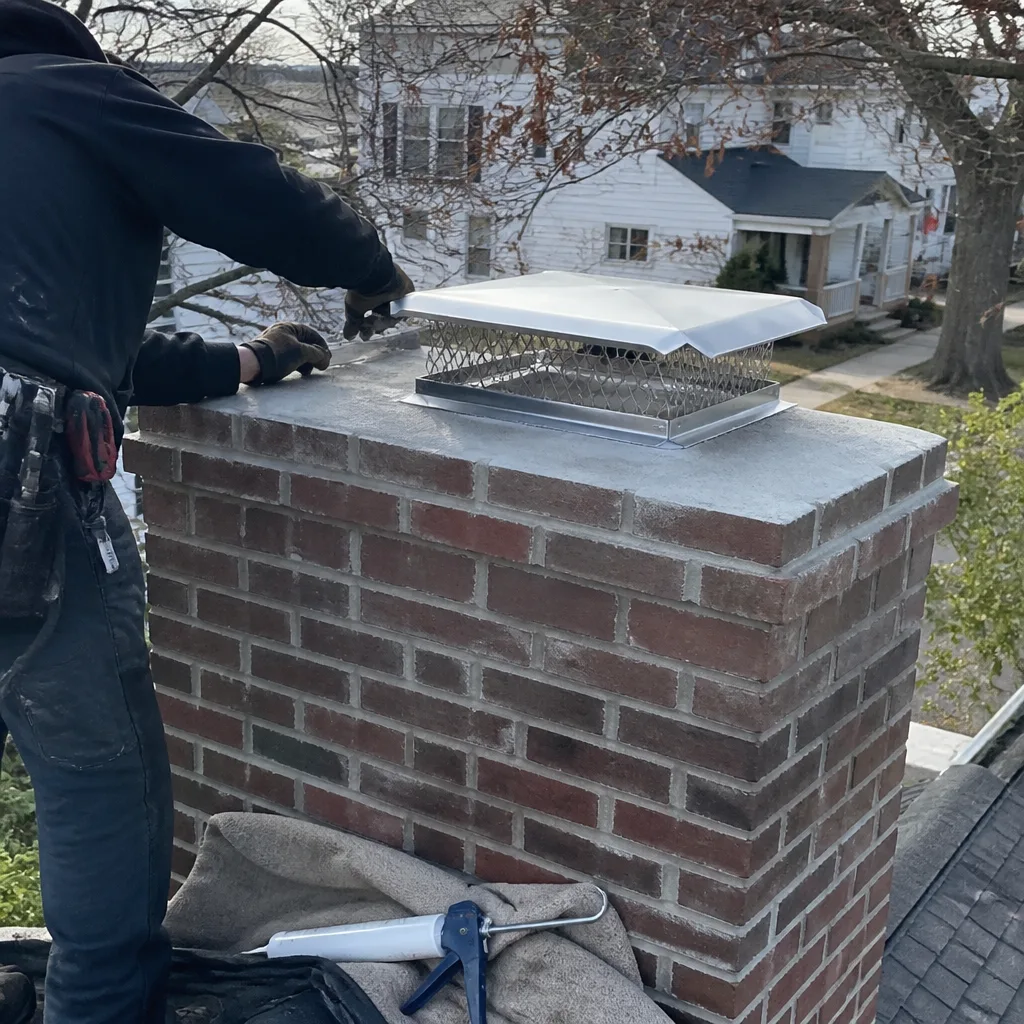 After
After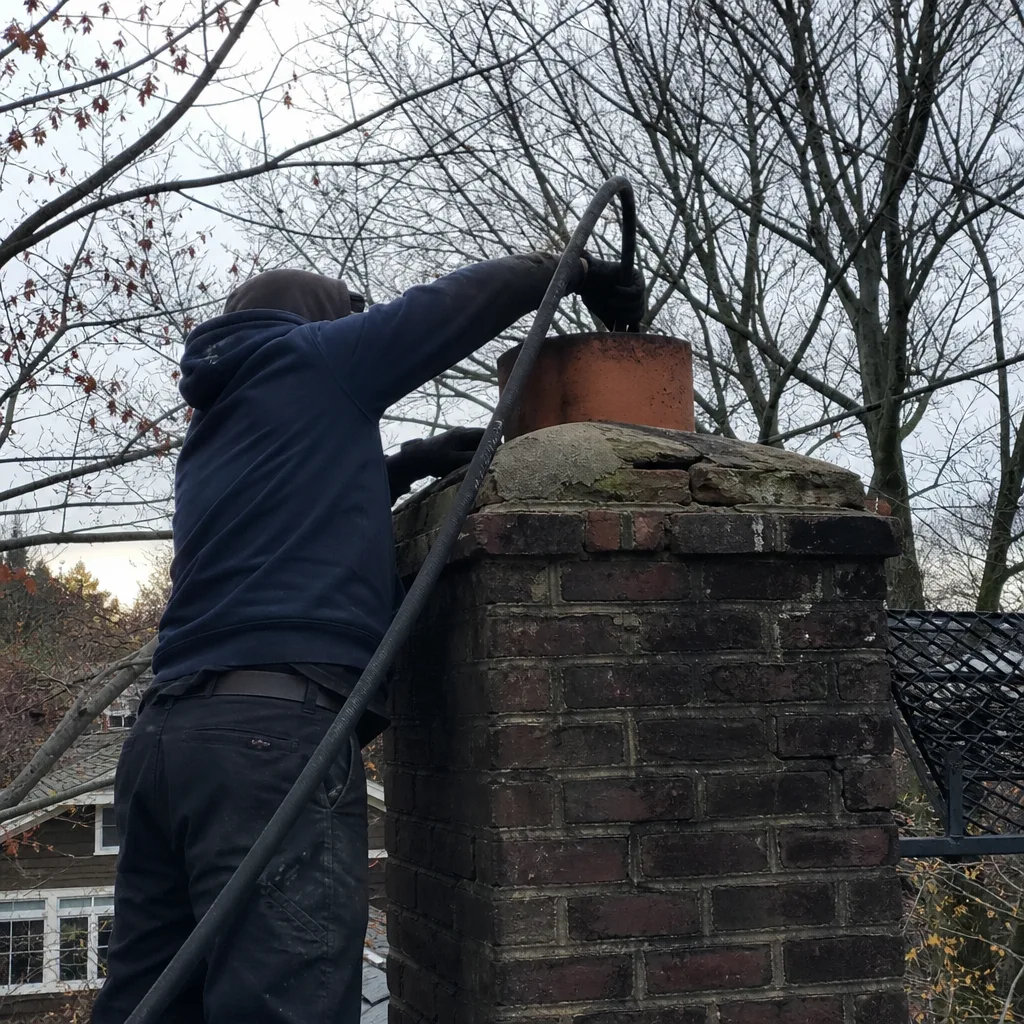 Before
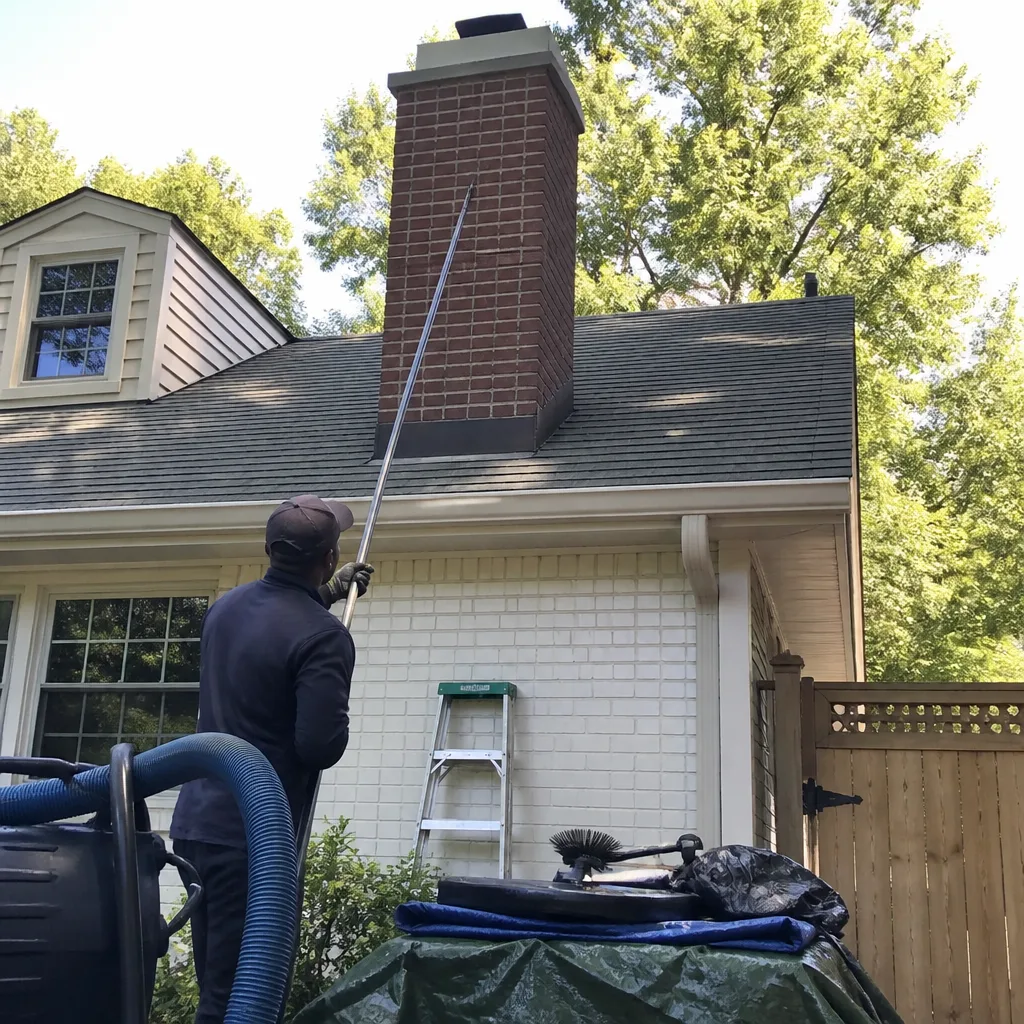 After
AfterSoot Removal in Washington, DC
Soot removal in Washington, DC typically runs between $149 and $349, depending on how much accumulation is present, which sections of the flue and smoke chamber are affected, and whether a full Chimney Cleaning & Sweep in Washington is needed alongside it. Most jobs are completed in a single visit, with a written price in hand before any work starts.
Soot is the soft, powdery carbon residue that settles on flue liner walls, smoke chamber corbeling, and firebox surfaces every time you burn. In a well-functioning system it stays manageable, but Washington’s housing stock – older rowhouses in Capitol Hill, brick colonials in Cleveland Park, townhomes in Petworth – tends to have flue systems that were sized for coal or wood at a time when people burned constantly. Modern intermittent use creates exactly the conditions where soot packs into shelf-like ledges and smoke chamber angles and stays there. Left alone, it absorbs moisture, accelerates liner deterioration, and eventually becomes the base layer on which Class II or Class III creosote forms. That is when a Chimney Cleaning & Sweep problem becomes a fire hazard.
At Level Two Chimney Washington, we’ve run camera-scan documentation on every job since 2009 – well before it became a standard practice – so when we say there’s soot buildup in your smoke chamber, we can show you exactly where and how much. A photo record goes home with you on every visit, under Clause 4 of the Haven Standard. If you’d rather talk through what you’re seeing before scheduling anything, call us at (240) 621-1264 – someone picks up every time, any hour.
When You Need Soot Removal
Soot doesn’t announce itself the way a cracked liner does. It accumulates quietly, and most Washington homeowners don’t think about it until they notice one of the following:
- Black staining around the firebox opening or on the surrounding masonry. When soot is pushed back through the fireplace mouth by downdraft – a common occurrence in Washington’s winter pressure events where cold air sinks fast through older flues – it leaves a dark smear on your face brick or mantel surround. That visible stain means there’s a reservoir of soot somewhere in the system feeding it.
- A persistent smoky or acrid smell, even when the fireplace hasn’t been used recently. Soot holds odor. During Washington’s humid summers, the moisture that settles in an unused flue activates soot deposits and the smell travels down into the living space. Neighborhoods near the Anacostia waterfront and Rock Creek tend to see this more often because of ambient humidity levels.
- Visible black dust or debris falling into the firebox. If you’re seeing fine black powder settling on your firebox floor between uses, soot has built up to the point where it’s shedding. It’s a straightforward sign that cleaning is overdue.
- You haven’t had the chimney cleaned in more than 12 months and you burned regularly last winter. The Chimney Safety Institute of America recommends annual cleaning for regularly used wood-burning systems. In a DC rowhouse with a tight flue and a wood-burning insert, one season of regular burning is enough to create meaningful soot accumulation.
- Your most recent inspection report flagged soot depth in the smoke chamber or lower flue section. If another company gave you a written estimate referencing soot, bring it to us. We offer a free second opinion on any written estimate – no charge to review what they found.
- You’re preparing to sell or just purchased a home in Washington. Real estate transactions in DC frequently surface deferred chimney maintenance. A soot-coated smoke chamber won’t pass a buyer’s Level 2 inspection, and we document everything in writing so there are no disputes at settlement.
Our Soot Removal Process
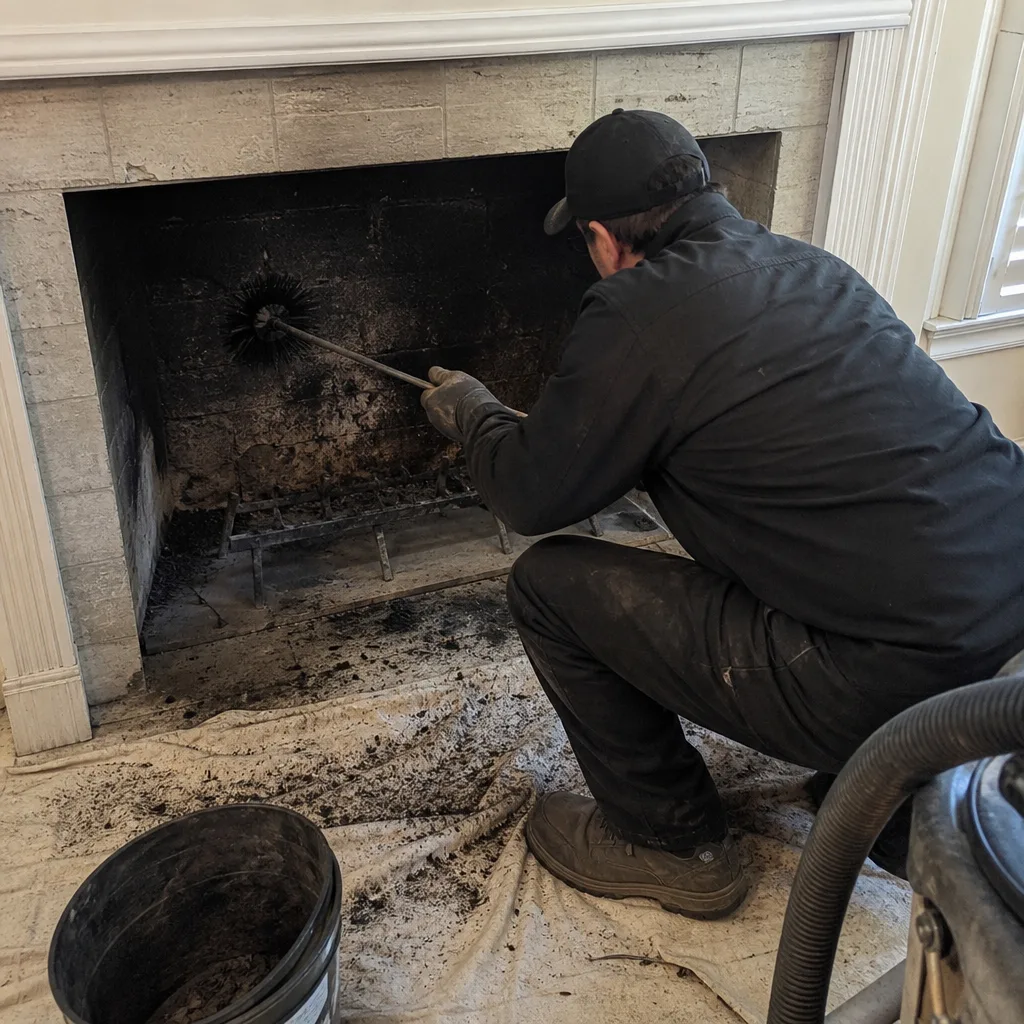
We don’t hand you a price after the work is done. Before anyone touches your chimney, you get a written scope, a written price, and a written warranty – that’s Haven Standard Clause 1. Here’s what the actual work looks like once you’ve approved it:
- Pre-work camera scan of the full flue system. A NFPA 211 Level 2 camera inspection goes down the flue before we start cleaning. This documents the existing condition of the flue liner, smoke chamber, and firebox, shows us exactly where soot has concentrated, and gives you before-and-after photo evidence. The camera scan is included on every visit – it’s not an upsell.
- Firebox and living space protection. Our uniformed technician – background-checked, with their name and license information available to you before they arrive – sets up drop cloths, seals the firebox opening, and attaches negative-pressure equipment at the hearth. Soot is extraordinarily fine and migrates fast in DC’s older homes; we don’t leave without checking every surface in the room.
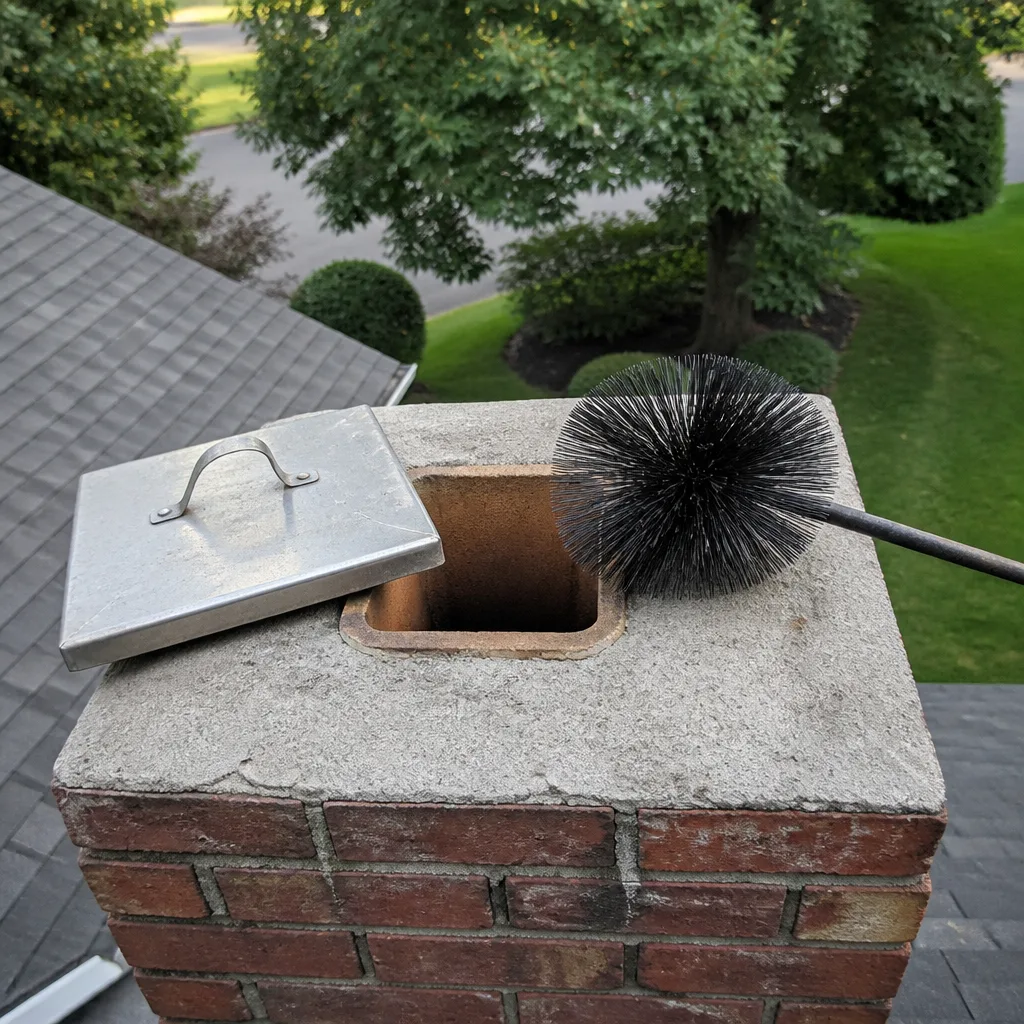
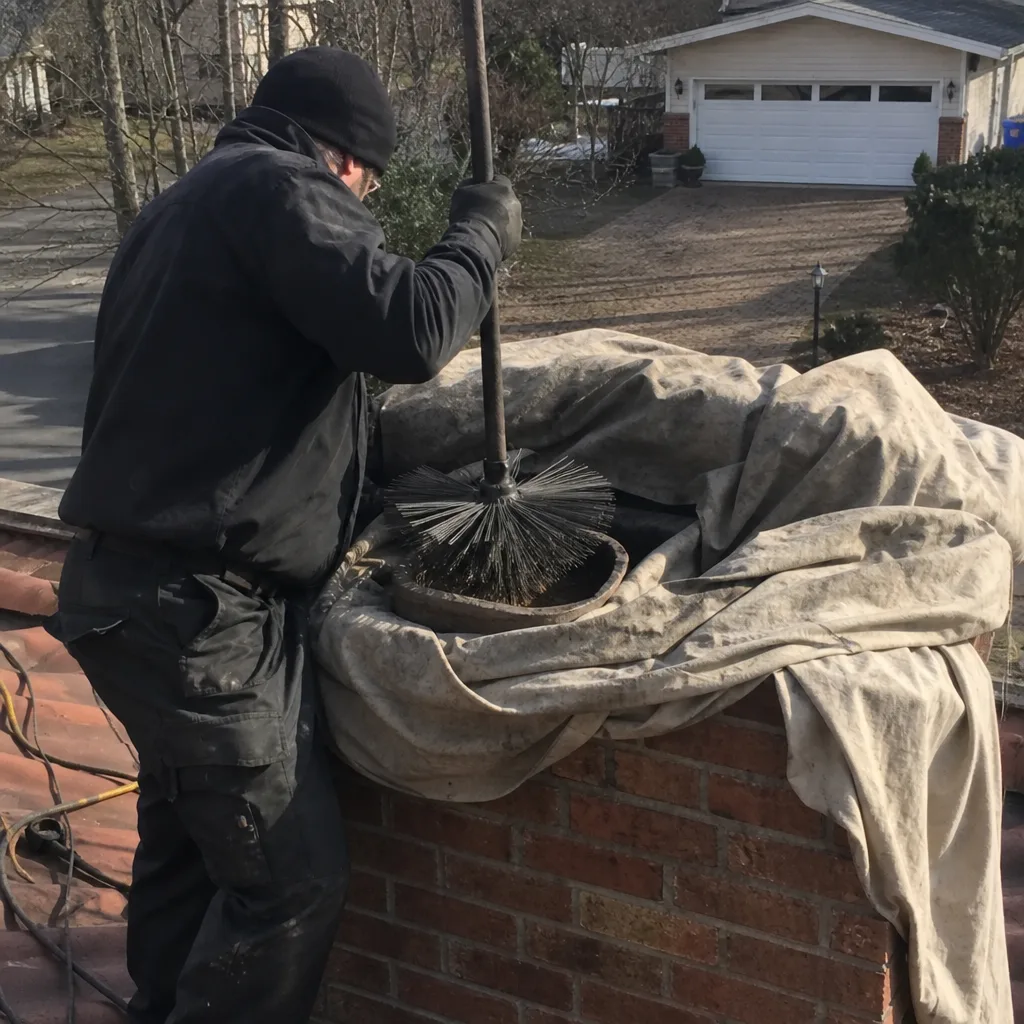
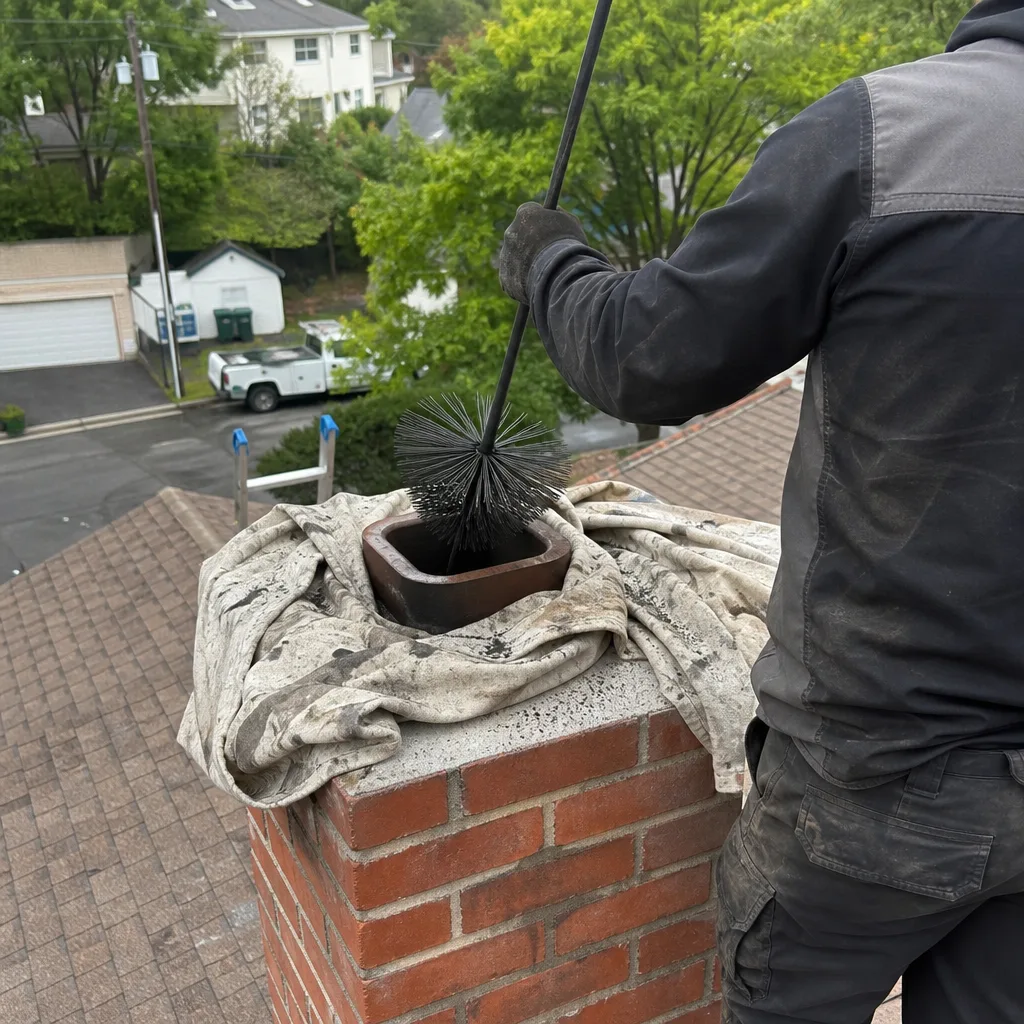
- Top-down rotary brush cleaning of the flue liner. Starting at the chimney top, we work rotary brushes – sized specifically to your flue’s internal dimensions – down through the full liner length. Copperfield brush systems are what we use for most standard flue profiles. The debris falls to the firebox and is captured by our vacuum system before it can reach your living space.
- Smoke chamber hand cleaning. The smoke chamber is the corbeled (step-angled) space directly above the firebox damper. It’s the single most under-cleaned surface in residential chimneys because most brushes can’t reach its angled walls. We hand-tool the smoke chamber with specialized scrapers, pulling soot out of every ledge. In older Washington rowhouses, this section alone can hold several pounds of accumulated material.
- Full debris removal and firebox wipe-down. Everything collected – soot, small debris, any flaking material from the liner – is bagged and removed from your home. We don’t leave it in the firebox or “let it burn off next time.” The firebox interior gets a final wipe to verify cleanliness.
- Post-work documentation and written record. After cleaning, we run a second camera pass. You receive a documented photo record showing the before and after condition – liner walls, smoke chamber surfaces, firebox – under Clause 4 of the Haven Standard. If the camera picks up anything that needs repair, we note it in writing with a separate scope and price. No surprise verbal recommendations at the door.
BeforeAfterSoot Removal Pricing in Washington, DC
How Much Does Chimney Cleaning & Sweep Cost? (2026 Price Guide) - Washington, DC: soot removal in Washington, DC costs between $149 and $349 for most residential jobs. That range covers the camera inspection, the cleaning itself, smoke chamber work, and the documented photo record. Here’s what moves the number within that range:
| Scenario | Typical Price Range |
|---|---|
| Single flue, light soot accumulation, accessible smoke chamber | $149 – $199 |
| Single flue, moderate accumulation, smoke chamber hand cleaning included | $199 – $269 |
| Heavy soot with extended smoke chamber work (common in Capitol Hill and Petworth rowhouses with multi-decade buildup) | $269 – $349 |
| Second flue or multi-flue system (common in larger Cleveland Park and Georgetown properties) | Add $99 – $149 per additional flue |
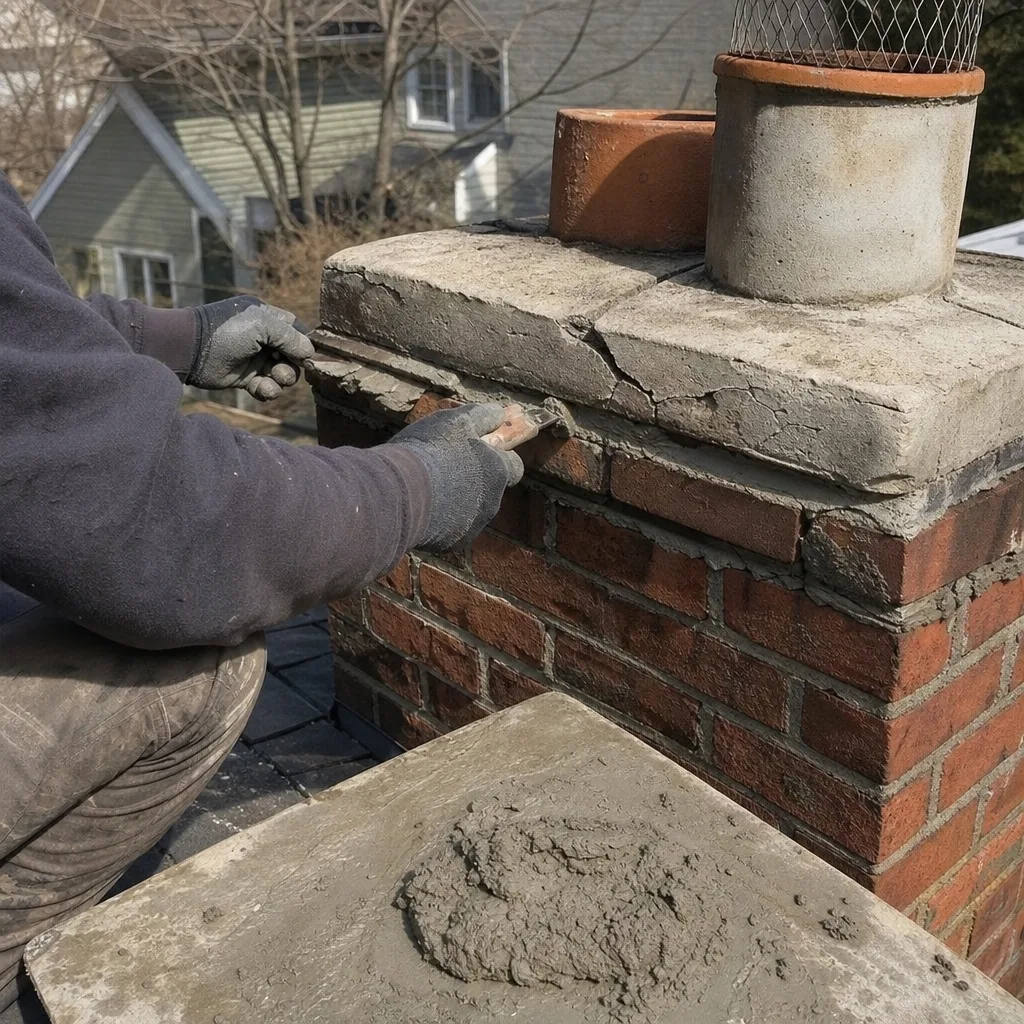
What affects your specific price: flue length and internal diameter, how long since the last cleaning, whether the smoke chamber has tight corbeling that requires extended hand work, and whether there’s any pre-existing liner damage that the camera picks up before we start. If that camera scan reveals a cracked tile liner or failing mortar that needs repair, that’s a separate written price – no work proceeds until you’ve approved it.
We don’t do “call for a quote.” You get the number before we start. That’s the point of every job we run.
Free Second Opinion: If you have a written estimate from another Washington chimney company and want to know if it’s accurate, bring it to us. We’ll review it at no charge.
What Soot Does to a Chimney Liner Over Time
This is worth understanding before you decide whether to schedule now or wait until spring. Soot is porous, and porous material absorbs moisture. In Washington’s climate – where winters bring freeze-thaw cycles and summers bring extended high humidity – a soot-coated flue liner faces two different deterioration mechanisms in the same year.
During winter, moisture trapped in soot deposits freezes and expands. Over several seasons, this works micro-cracks wider in tile liner sections, particularly at the mortar joints between liner tiles. In spring and summer, the same soot absorbs ambient moisture and creates an acidic environment against the liner surface. Clay tile liners are more resistant to this than unlined brick, but neither is immune.
The practical result: soot that sits for two or three seasons tends to accelerate liner wear in a way that turns a straightforward cleaning into a liner repair or repoint job. We see this pattern regularly in older homes in Brookland, Takoma, and upper Brightwood, where chimneys were built for coal use and haven’t been relined. Catching it at the cleaning stage is almost always less expensive than catching it at the repair stage.
And soot is also the substrate on which creosote forms. First-degree (dry, flaky) creosote is relatively easy to remove. If it progresses to second-degree (tar-like) or third-degree (glazed, shiny black), the removal process is different, longer, and more expensive. A chimney that’s cleaned with Annual Sweep services rarely gets past first-degree accumulation.
Why Washington, DC Homes Accumulate Soot Faster
Washington’s housing density and flue geometry are specific enough to warrant a direct explanation. A significant share of the residential fireplace systems in DC – particularly in the corridor running from Columbia Heights north through Petworth and into Brightwood – are original masonry flues serving multi-story rowhouses. These flues are often narrower than modern sizing guides specify for a given firebox opening, which means they run cooler and slower than they should. Cooler, slower flues deposit more soot per cord of wood burned.
Add to that the fact that many DC homeowners burn infrequently – one or two fires a week during the cold months rather than daily – which means flue temperatures rarely get high enough to self-clear minor deposits. The result is steady soot accumulation across the season, concentrated in the smoke chamber and lower third of the flue where gases slow and cool before the draft takes hold.
Gas log and gas insert systems, which are common in the Capitol Hill and Georgetown historic districts because of wood-burning restrictions in some blocks, produce their own soot profile: less of it, but finer and more adherent, and often overlooked because people assume gas burns clean. It doesn’t burn fully clean. Annual cleaning applies to gas systems too.
The Documentation You Walk Away With
When a Level Two technician finishes a soot removal job in Washington, you receive:
- A written scope describing what was found before the work started and what was done
- Before-and-after camera photos of the flue liner interior, smoke chamber, and firebox
- A written record of any secondary findings – liner condition, cap integrity, crown condition – noted but not acted on without your approval
- The written warranty under the 365-Day Done Right Promise: if the work isn’t right, we make it right
- Contact information for your assigned technician and our live-answer support line
That file is yours. It’s useful for home insurance purposes, for documentation if you sell, and for comparison at the next inspection. Under Haven Standard Clause 4, this documentation is included as a standard part of every job – not an option you select at checkout.
FAQs – Soot Removal in Washington, DC
How much does soot removal cost in Washington, DC?
Soot removal in Washington, DC runs $149 to $349 for most single-flue residential jobs, with the price depending on how much accumulation is present and whether extended smoke chamber hand work is needed. The written price is given before any work starts – no adjustments at the door. Search Chimney Cleaning & Sweep Near Me in Washington, DC or call (240) 621-1264 for a specific quote based on your system; estimates are free.
Is soot dangerous, and how urgent is it to remove it?
Soot itself is not an immediate fire hazard the way third-degree creosote is, but it does two things that create serious problems over time: it holds moisture against your flue liner (accelerating cracking and joint failure), and it provides the organic base layer on which creosote builds. A flue that goes two or three seasons without cleaning almost always shows liner wear that could have been avoided. If you’re also seeing any dark, tar-like or glazed deposits – Class II or Class III creosote – that requires a different removal protocol and a trained technician; it’s not a DIY cleaning situation. Call (240) 621-1264 if you’re unsure what you’re dealing with.
Can I clean soot myself with a chimney brush kit?
You can remove some loose soot from the firebox interior and visible lower flue with a consumer brush kit, but the smoke chamber – where the heaviest accumulation typically sits – requires specific hand tools and training to clean properly, and you won’t have any way to inspect the liner condition while you’re working. A camera scan before and after cleaning is how you confirm that what you’re removing is soot and not flaking liner material that needs evaluation. We include the camera inspection on every job specifically because the brush pass alone doesn’t give you that picture. For DC properties with older clay-tile flue systems, we’d strongly recommend a professional cleaning rather than a DIY attempt – the risk of missing early liner damage is real.
How long does soot removal take?
A standard single-flue soot removal in a Washington rowhouse or single-family home takes between 60 and 90 minutes from setup to documentation. Larger systems – two-flue chimneys, systems with fireplace inserts, or situations with heavy smoke chamber buildup – can run two hours or more. We give you a time estimate when you book, and your technician sends a text when they’re on the way so you’re not waiting in a window.
How do I know if I have soot or creosote?
Soot is dry, soft, and powdery – it wipes off surfaces easily and looks like black talc. First-degree creosote looks similar but feels slightly more granular and may have a faint tar smell. Second-degree creosote is sticky or tar-like; third-degree (glazed) creosote is hard, shiny, and black, almost like varnish on the liner wall. The camera scan we run before every job is the clearest way to see which you have and where it’s concentrated. If it’s Class II or III, the removal process changes significantly and we’ll explain that in writing before we start.
Schedule Soot Removal in Washington, DC
If you’re seeing soot staining around your firebox, smelling smoke between fires, or just haven’t had your chimney cleaned since last season, the straightforward move is to get a camera scan and a written price. Level Two Chimney Washington has documented more than 38,000 chimney inspections and cleanings since 2009 – every one of them with a written price before work started and a photo record when it was done. The 365-Day Done Right Promise covers every job.
Call (240) 621-1264 to schedule. Someone answers every time – no voicemail, no web form. Estimates are free, the price is in writing before anyone starts, and the camera record goes home with you when the job is done. You can also visit our home page for a full picture of what we cover across Washington.
Written by Corrine Halstead, Owner at Level Two Chimney Washington, serving Washington, DC since 2009.