
Last updated September 20, 2026
Level 1 sweep and inspection to the NFPA 211 annual standard - flue, crown, cap, and flashing checked and photographed
Chimney sweep logs do not sweep chimneys. They loosen some creosote - which then falls where a brush and vacuum still have to collect it.
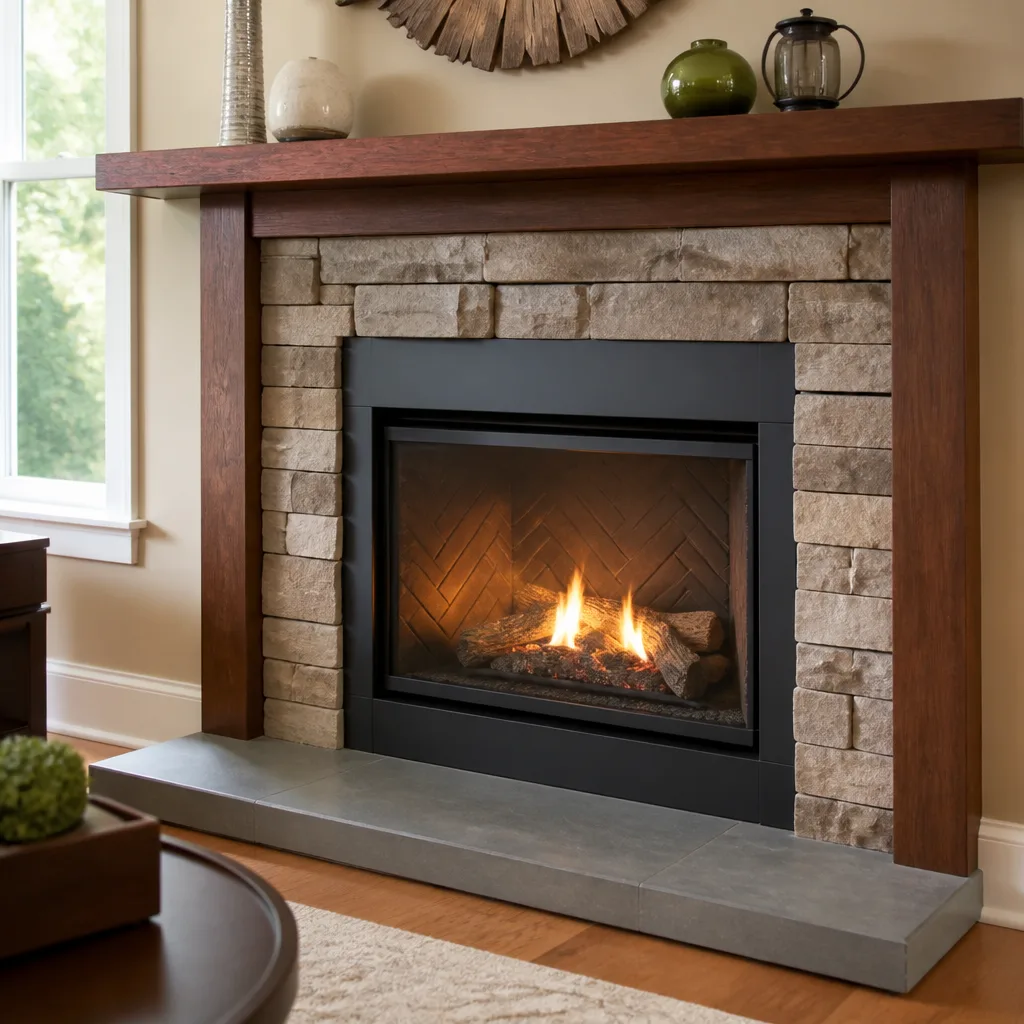
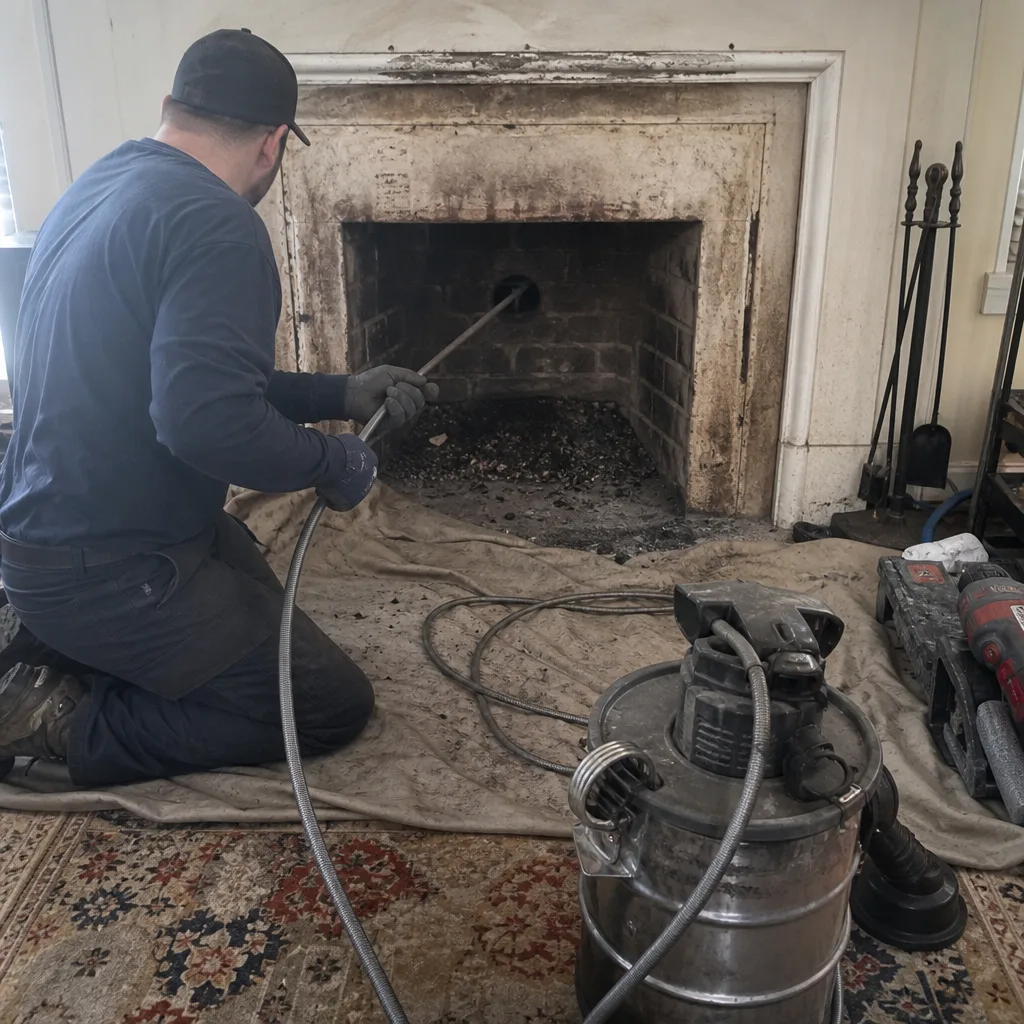 Before
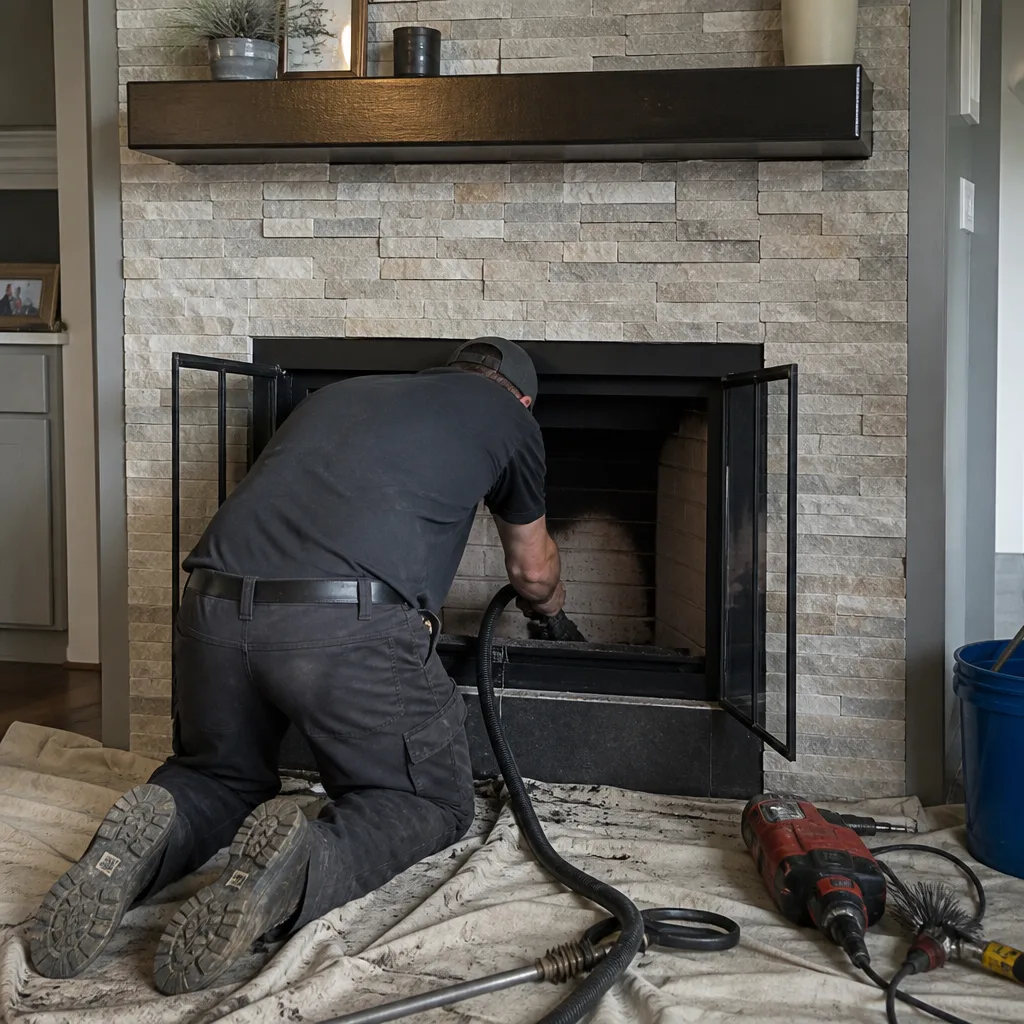 After
After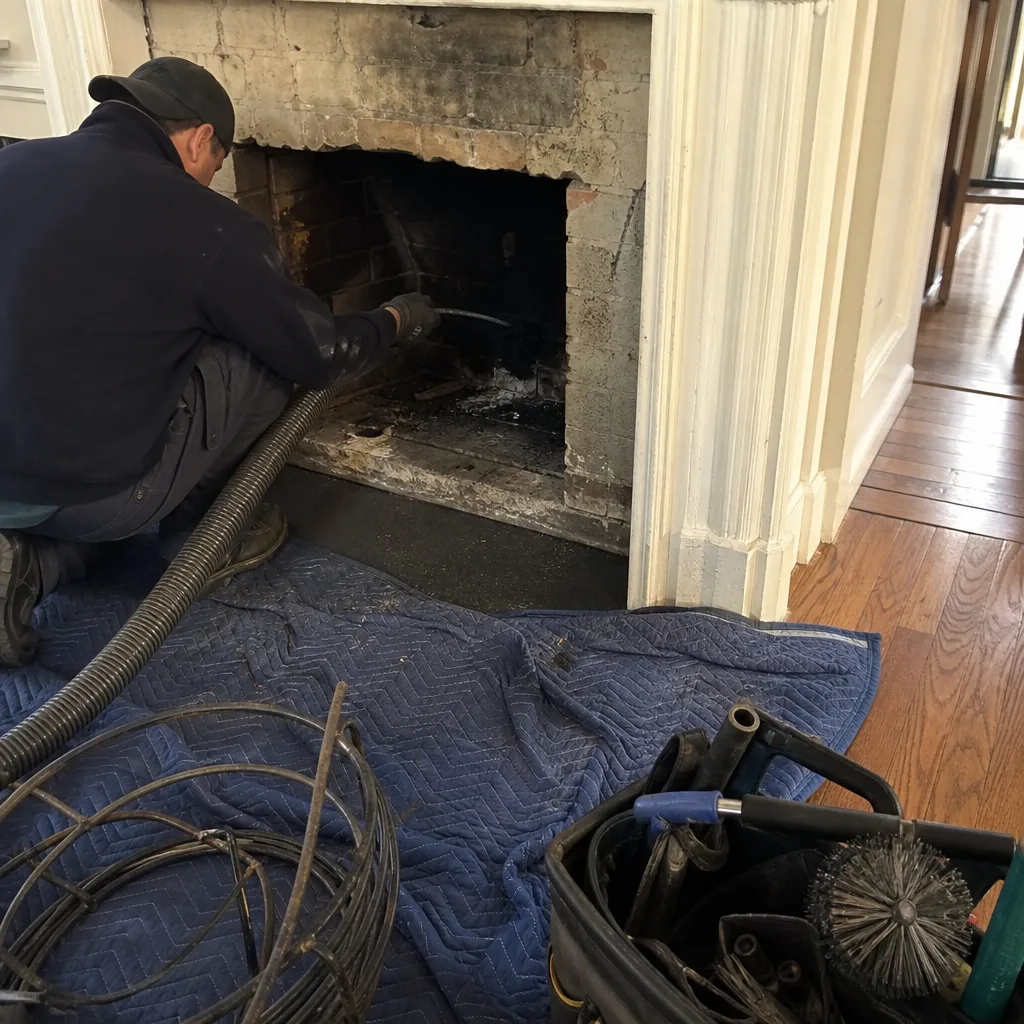 Before
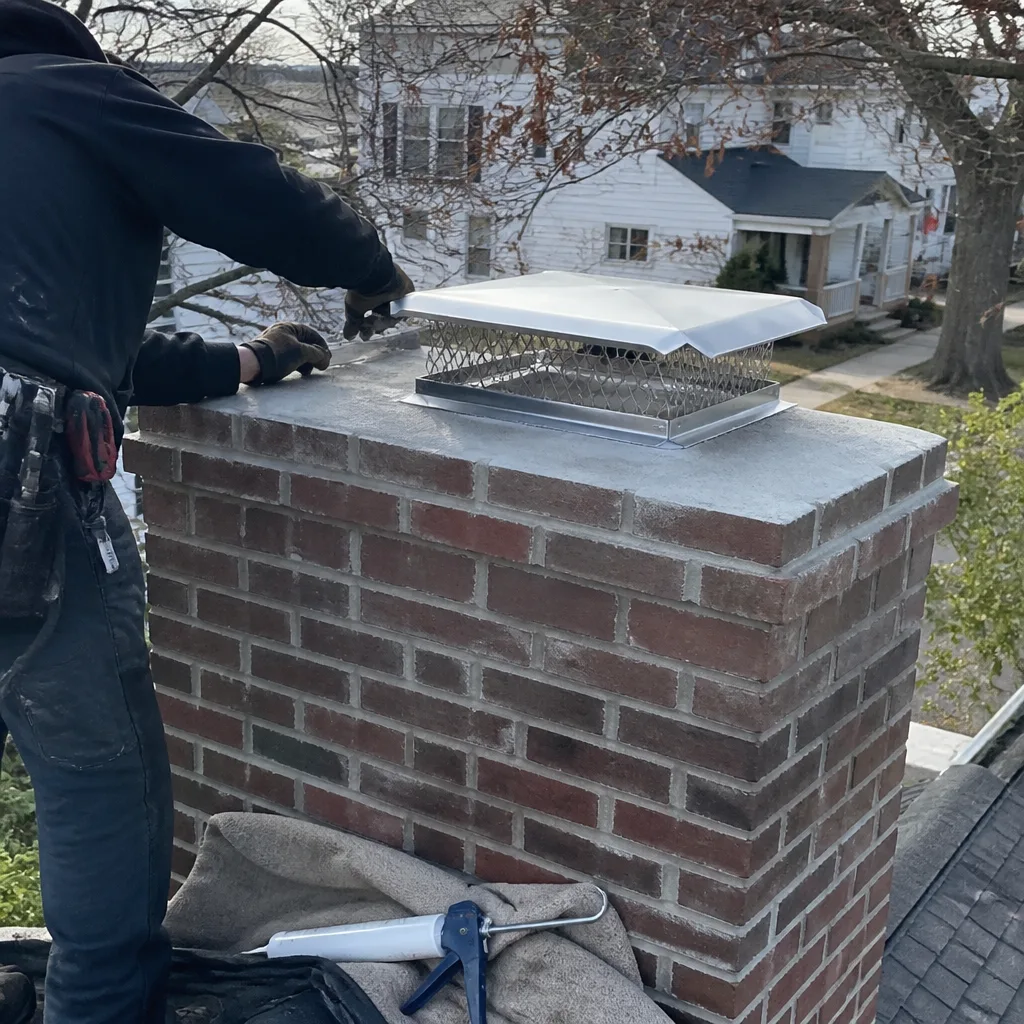 After
After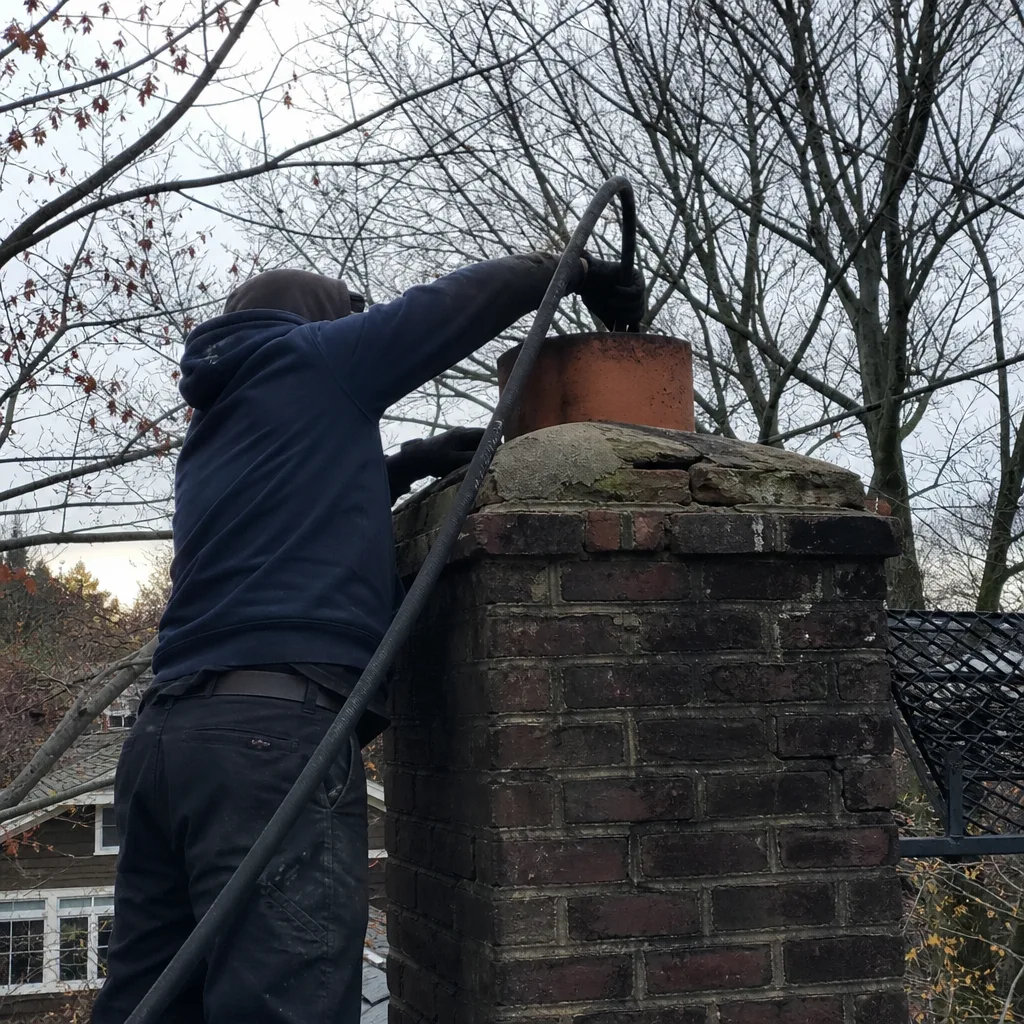 Before
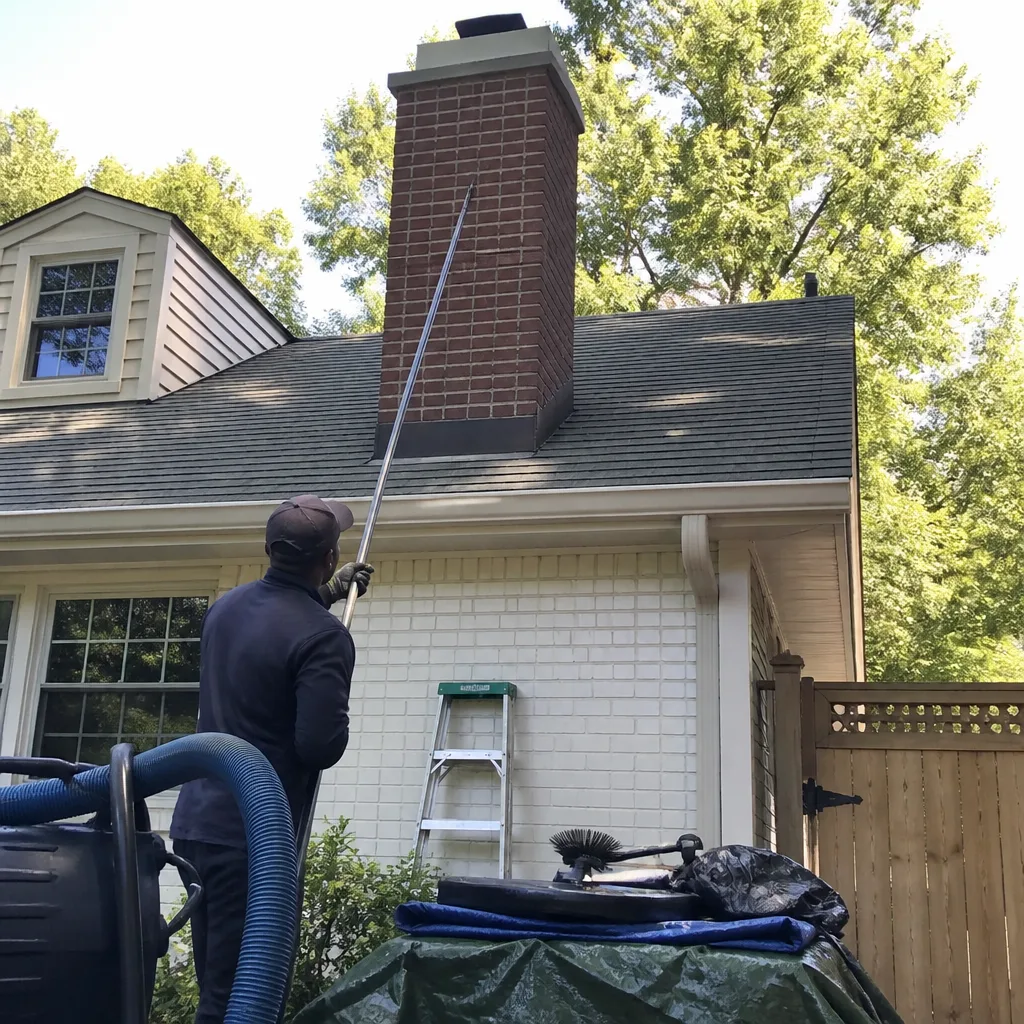 After
AfterDIY vs Professional Chimney Cleaning: The Washington Homeowner’s Decision Guide
A $30 chimney cleaning kit from a hardware store will remove Stage 1 creosote from a straight, accessible flue. But it cannot tell you whether the liner you just swept has a crack that will turn a contained chimney fire into a house fire. And neither can a sweep who doesn’t put a camera in. This guide walks Washington homeowners through the actual decision, not the marketing version of it: what you can verify yourself, what requires equipment you don’t own, and why the documentation you walk away with matters more than who held the brush.
Quick Answer
DIY chimney cleaning is reasonable for Washington homeowners with a straight flue, Stage 1 creosote, safe rooftop access, and a documented inspection from the last 12 months. A professional sweep is the better call when you have an offset flue, Stage 2 or 3 creosote, rowhouse roof access challenges, an undocumented maintenance history, or any visible masonry concern you can’t explain. In both cases, the value is in the documentation: a cleaning without a camera scan and a written record leaves you with no more information than you had before.
Table of Contents
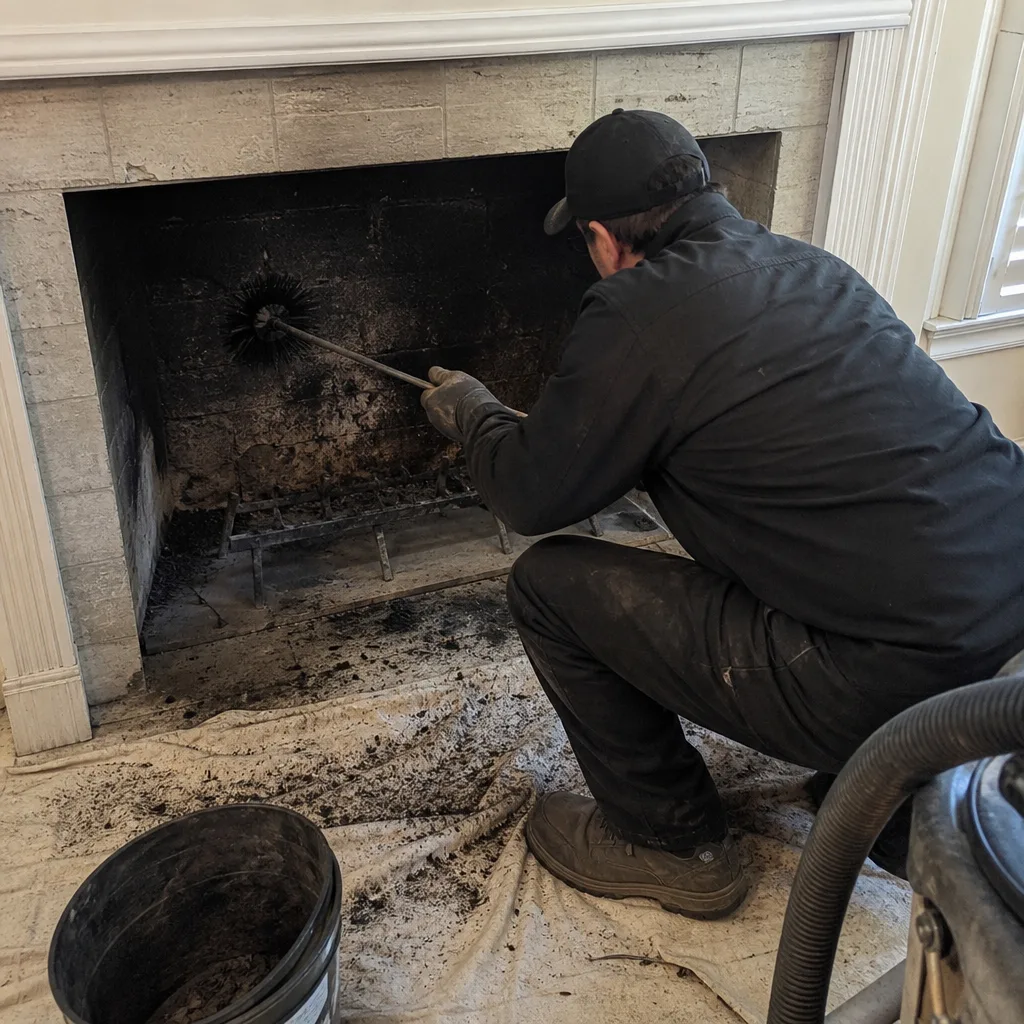
- What DIY Can Actually Accomplish
- What ‘Professional’ Means in Verifiable Terms
- Washington Factors That Shift the Calculus
- The Insurance and Liability Position
- The Decision Matrix: Flue Type, Last Inspection, Creosote Stage
- Creosote Stages Explained in Plain Terms
- The Documentation Gap: What You Should Walk Away With
- Cost Comparison: DIY vs Professional in Washington
BeforeAfterWhat DIY Can Actually Accomplish
The honest answer: more than most sweep companies admit, but less than the hardware store packaging implies. A homeowner with a straight flue, a brush kit sized correctly, and safe access can remove Stage 1 creosote and light soot. That’s a real cleaning. It’s not a scam. The economics work if your chimney is accessible and your creosote hasn’t advanced.
What we’ve seen in Washington rowhouses is that “accessible” is doing a lot of work. Many homes in Capitol Hill, Georgetown, and Logan Circle have chimneys that require navigating a steep, sometimes slate roof, or a parapet wall that was never designed for pedestrian traffic. The brush kit works; the access doesn’t.
Here’s what a capable DIYer can do safely and effectively:
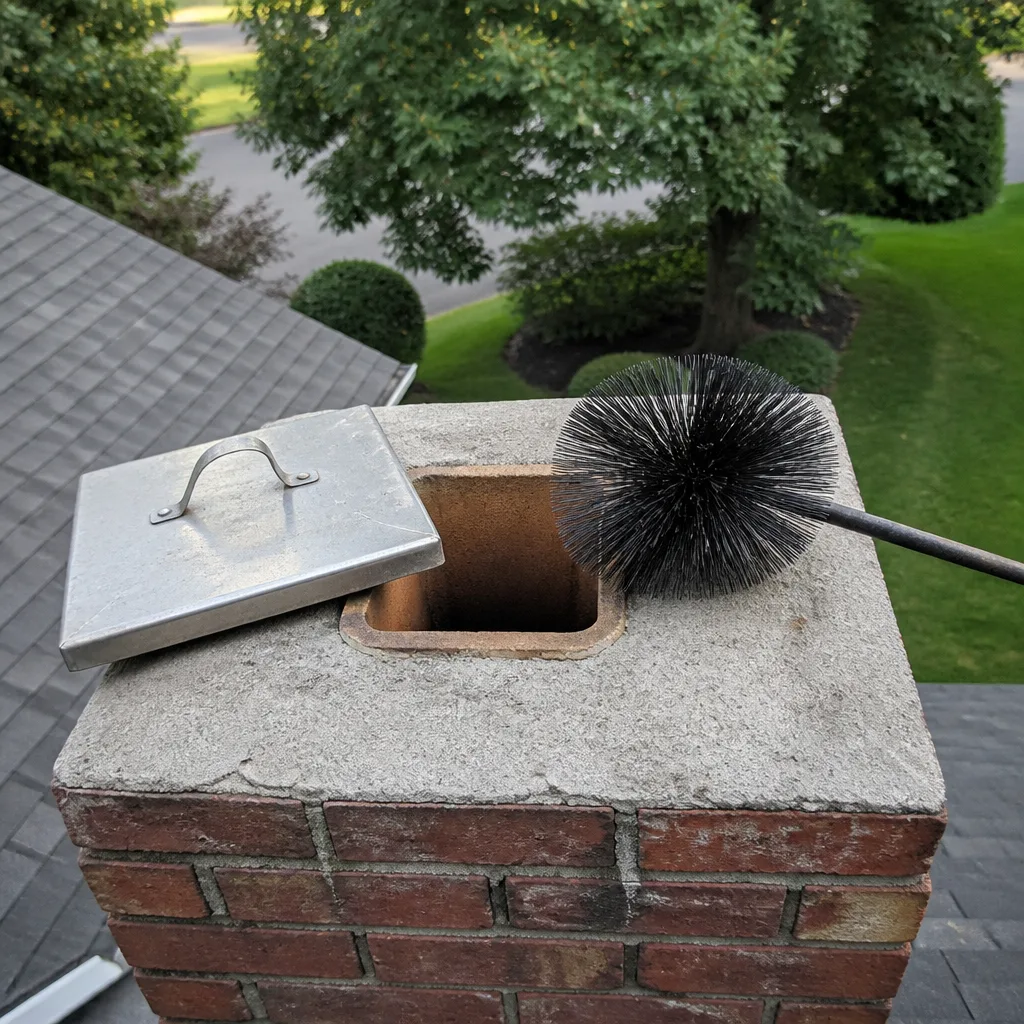
- Stage 1 creosote brushing on a straight, accessible flue. Stage 1 is a light, flaky, brownish deposit. A poly brush with the right diameter removes it. If your flue is truly straight and you can get the rods down from the top, this is reasonable work.
- Visual inspection of the firebox and damper. You can see cracks in the firebrick, a damper that doesn’t fully open or close, and obvious animal debris. You can’t see the upper two-thirds of the flue, which is where most structural failures occur.
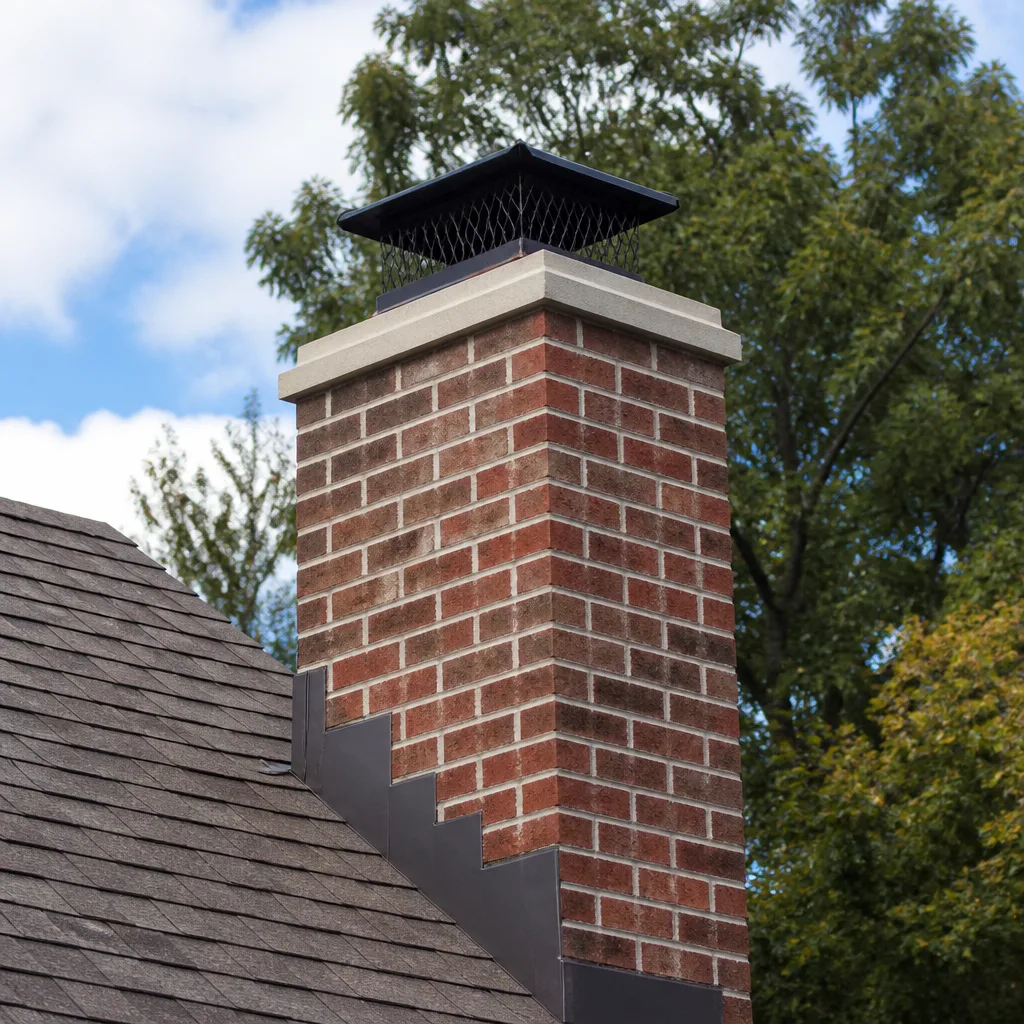
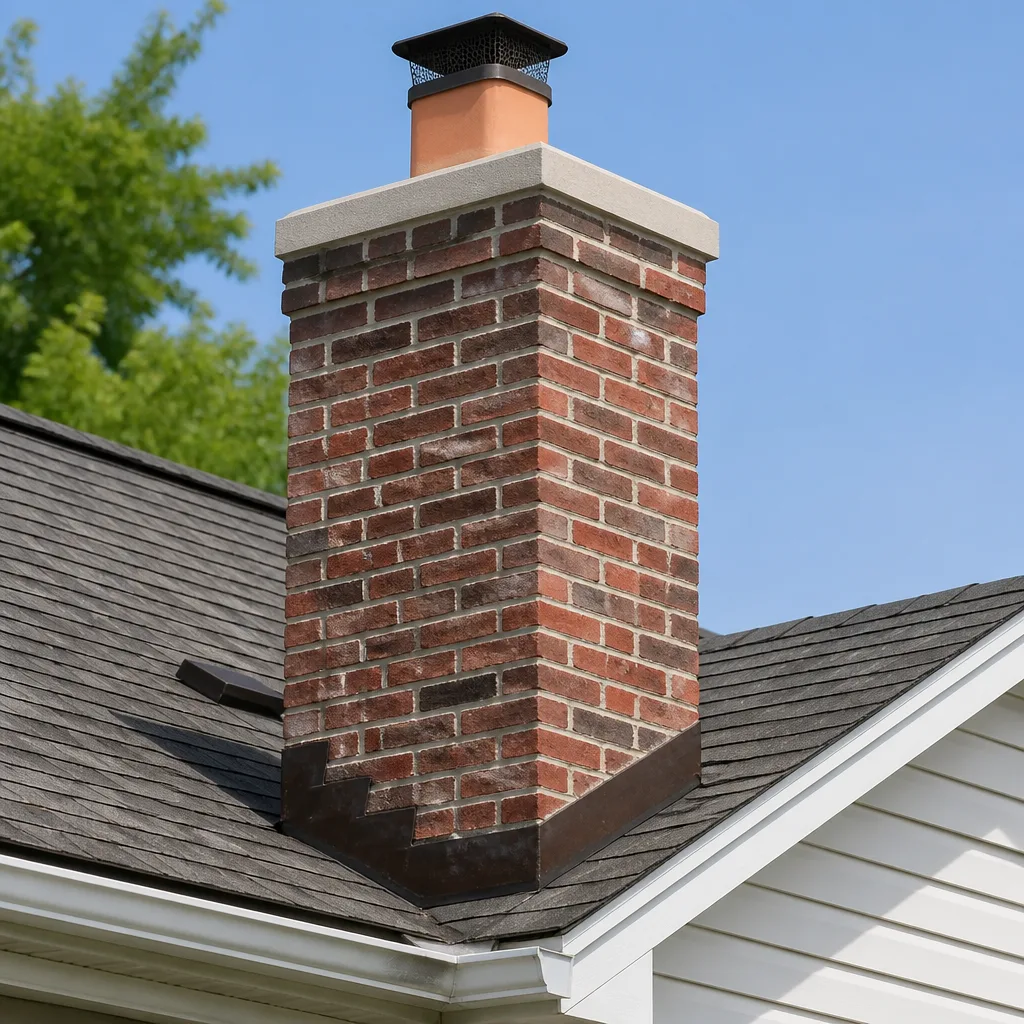
- Chimney cap and crown inspection from the roof. If you’re already up there, you can see a missing cap, a cracked crown, or rust on the flashing. What you won’t know is whether the crown cracks are cosmetic or structural, which in Washington’s freeze-thaw cycle matters.
- Smoke chamber cleaning. The area above the damper collects soot that a brush from above can loosen. It’s awkward but doable with the right extension.
What DIY cannot do, regardless of skill:
- See the interior of an offset flue. When the flue bends to accommodate a second-floor fireplace or attic framing, a brush follows the bend, but your eye doesn’t. You’re cleaning blind, and you’re not inspecting at all.
- Evaluate flue liner integrity. A crack in a clay tile liner is invisible to a brush and invisible to a flashlight from the top. It’s visible only to a camera. A cracked liner is the difference between a fire contained in the flue and a fire in the wall.
- Remove Stage 2 or Stage 3 creosote. Stage 2 is a tar-like glaze that a brush won’t remove. Stage 3 is a hardened, shiny fuel layer. Both require mechanical removal with specialized rotary equipment or chemical treatment followed by scraping. A homeowner with a brush kit will spend hours and make almost no progress.
- Distinguish cosmetic from structural masonry issues. Spalling brick (brick that has cracked and flaked due to moisture) looks bad. Sometimes it’s just aesthetic. Sometimes it means water has entered the masonry and compromised the structure. A trained eye knows the difference. A homeowner on a roof in Washington cannot.
What ‘Professional’ Means in Verifiable Terms
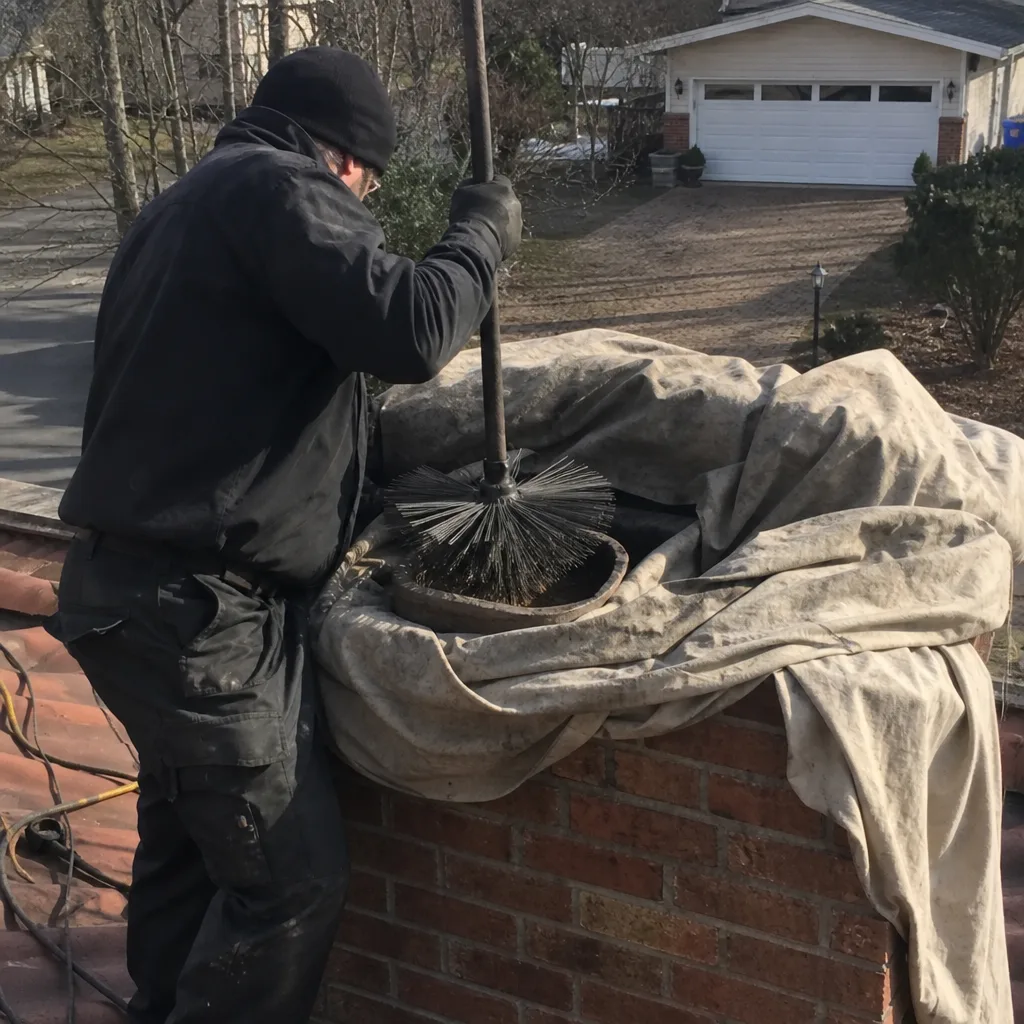
Here’s the part most more guides & resources never cover. Most comparison content frames the DIY vs professional decision as skill level: amateurs can’t do what experts can. That framing misses something important. In our experience in Washington and the surrounding area, we’ve re-swept chimneys that were “professionally cleaned” six months prior and found Stage 3 creosote past the first bend. The brush went down, the invoice went out, and the camera never did. What did the homeowner buy?
A professional sweep who provides no camera documentation and no written report leaves you with the same informational deficit as doing it yourself. You paid extra to know less than you’d planned.
The real question is which professional practice produces verifiable results. Here’s what that looks like in concrete terms:
- A camera scan of the full flue, top to bottom. Not a flashlight from the top. Not a mirror from the bottom. A camera that travels the entire flue and records what it sees. NFPA 211 Level 2 inspection is the standard, and it exists for a reason: most chimney problems are invisible to the naked eye.
- A written draft reading. After the sweep, a professional takes a draft measurement: airflow moving up the flue at a measurable rate. Too little draft means smoke enters the room. Too much means you’re losing heated air. The number is either in the report or it isn’t.
- Documented findings in a format you keep. Photos, camera footage, written scope, written warranty. Not a verbal summary at the door. Not a receipt that says “cleaned chimney.”
- A written price before work starts. In Washington’s market, the difference between a $250 sweep and a $2,500 liner repair is the difference between a company that looked and a company that charged. If the price appears only after the tech is already in your home, the inspection wasn’t an inspection; it was a sales call.
Clause 4 of the Haven Standard requires a photo record on every job. The practice started at our company in 2009, before insurers or regulators asked for it, because camera documentation is the only form of documentation that survives scrutiny. A written description of a flue is an opinion. A photo is evidence.
Washington Factors That Shift the Calculus
Washington is not a generic chimney market, and the DIY decision is different here than in a suburban split-level in Ohio. Here are the local factors that change the math:
Rowhouse rooftop access. A significant portion of Washington’s housing stock is rowhouses built between 1880 and 1930. Chimneys on these homes often exit through the peak of a steep roof or sit behind a parapet. Access requires walking a roof that was never designed for it. The fall risk is real and persistent. A chimney sweep in Washington has the ladders, harnesses, and roof-repair knowledge that a homeowner with a wire brush does not.
Offset flues are the norm, not the exception. Washington rowhouses were built with fireplaces on multiple floors, sharing a chimney. The flues bend to accommodate them. A brush from the top follows the offset, but it doesn’t tell you what’s behind the bend. A flexible camera rig does. If you have a multi-story home with fireplaces on more than one floor, your flue almost certainly offsets, and your DIY cleaning is incomplete by definition.
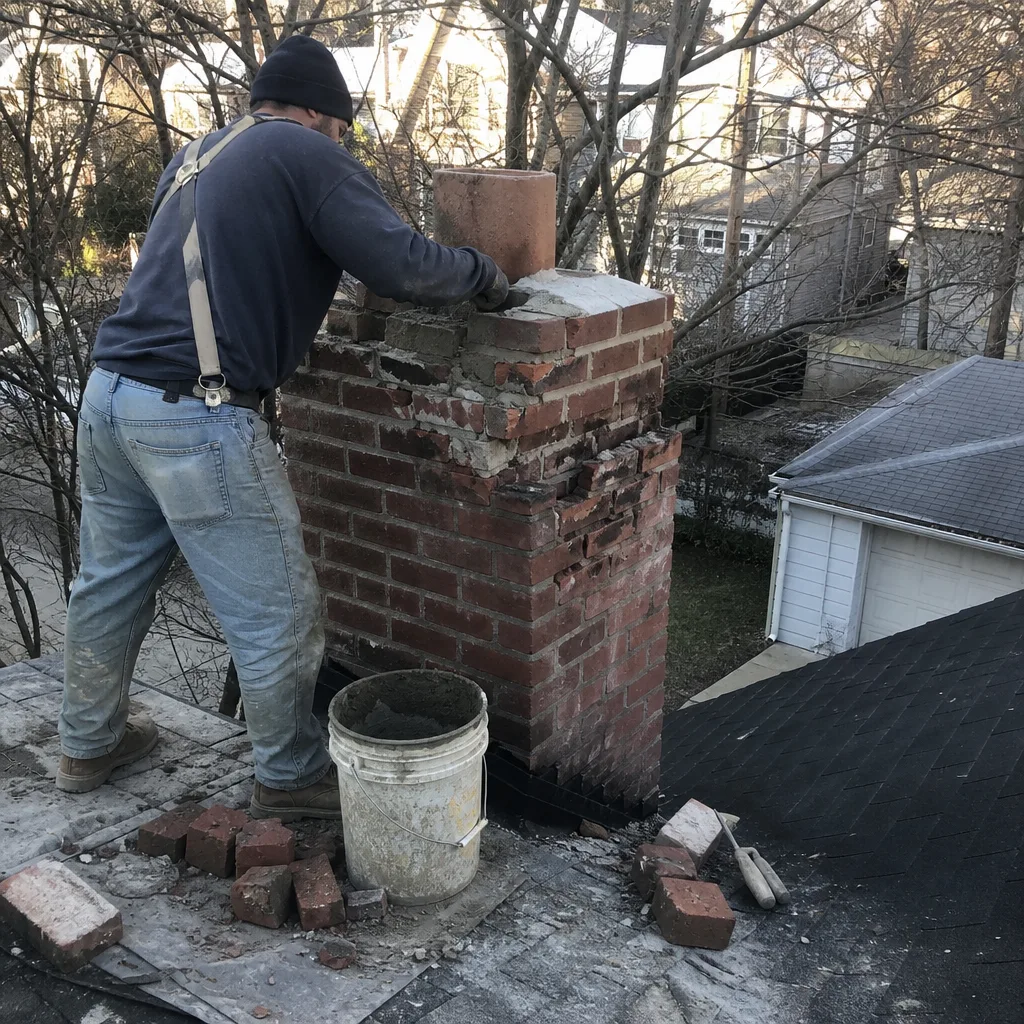
Masonry conditions tied to our climate. Washington’s freeze-thaw cycle is hard on chimneys. Water enters small cracks in the crown or brick, freezes, expands, and widens the crack. Over decades, this produces spalling brick, shifting mortar joints, and crowns that no longer shed water. A homeowner who self-cleans and notices “some cracking” has no way to distinguish a cosmetic crack from the early stages of structural failure. A trained eye in our market sees these conditions daily and knows what they mean.
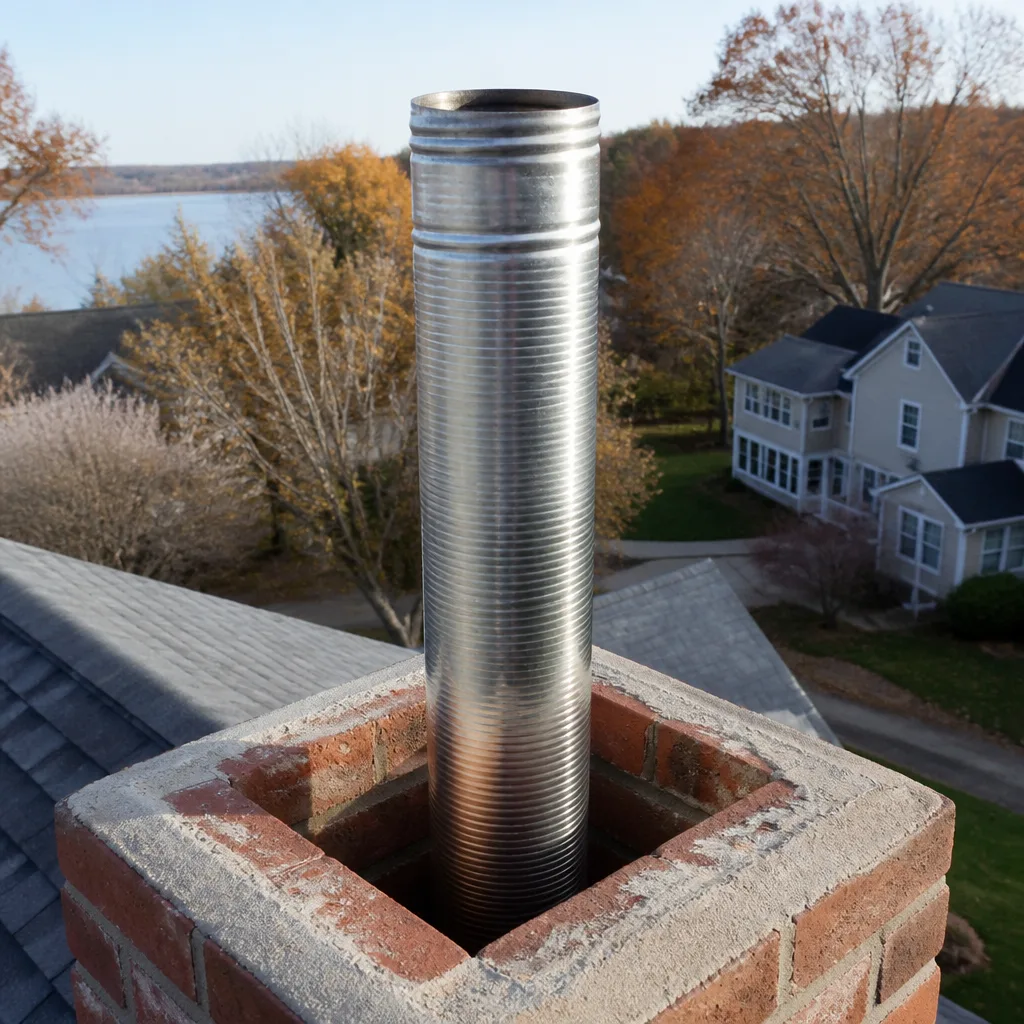
The age of the housing stock. The median Washington home is older than most markets. Older masonry means older flue liners. Clay tile liners installed in the 1920s through 1950s have now seen 70 to 100 Washington winters. They crack. They spall. They fill with creosote in places that brushing won’t help. A visual inspection by camera is the only way to know the liner’s condition.
Our Level Two Chimney Washington home page covers the full scope of what we see in this market daily.
The Insurance and Liability Position
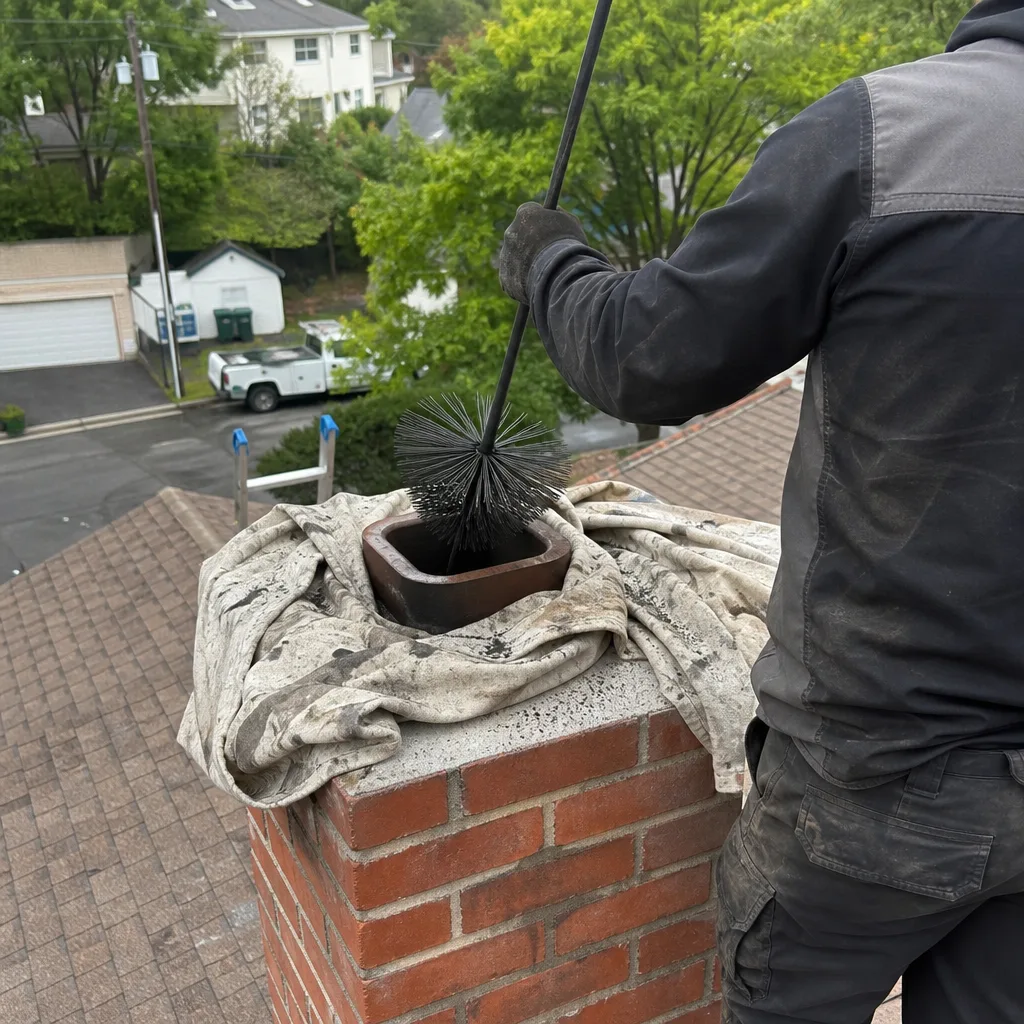
Most DIY chimney cleaning guides skip this section because it’s uncomfortable. But the question is real, and Washington homeowners ask it: if I clean my own chimney and then have a chimney fire, does my insurance cover the damage?
The answer depends on your policy and on what you can produce. Insurance carriers evaluate chimney-related claims the way they evaluate any fire claim: they look for documented maintenance. If you can produce an invoice from a professional sweep showing a cleaning and inspection within the last 12 months, you’ve established that you maintained the system. If your answer is “I cleaned it myself,” the carrier has a different question: can you prove it?
What we’ve seen in our work with Washington homeowners is that self-cleaning produces no documentation that an adjuster will accept. A receipt for a brush kit is not maintenance documentation. A police report of a chimney fire followed by “well, I swept it in November” is how legitimate claims get denied or reduced. The carrier’s position is straightforward: a professional’s invoice and photo record is evidence of maintenance. A homeowner’s recollection is not.
That doesn’t mean DIY is reckless. It means the risk calculus includes a variable you can’t control: how your insurance carrier evaluates undocumented maintenance history after a fire. In Washington, where the housing stock is older and chimney fires are more likely than in newer markets, the stakes of that variable are higher.
There’s also the liability question of who’s working on the roof. If you slip on your own rowhouse roof, that’s your health insurance problem. If an uninsured “handyman” you found on a neighborhood list slips, you may be liable. A licensed, insured sweep company carries its own workers’ compensation and liability coverage.
The Decision Matrix: Flue Type, Last Inspection, Creosote Stage
Every guide that ends with “it depends” is a guide that failed. Here’s an actual decision framework. Three questions determine the right call:
- What’s your flue type? Straight and accessible, or offset and difficult?
- When was your last documented inspection? Do you have photos, a written report, and a date?
- What’s your creosote stage? If you know (from your last report), use it. If you don’t know, assume Stage 2 or worse, because you have no evidence otherwise.
Here’s how the matrix works out:
- Straight flue + documented inspection within 12 months + Stage 1 creosote: DIY is reasonable. You know your system is sound because a camera told you so recently, and you know your creosote is removable because the report said so. Clean it yourself. Book a professional camera inspection again next year.
- Straight flue + documented inspection more than 12 months ago + unknown creosote: Book a professional sweep with camera documentation. You’re not paying for brushing; you’re paying for the camera’s verdict on what the last year did to your flue. After this year’s report, you can decide about next year.
- Offset flue + any inspection history + any creosote stage: Professional. Always. You cannot see an offset flue with a brush, and you cannot document its condition without a camera. This describes most Washington rowhouses.
- No documented inspection history + any flue type + any creosote stage: Professional camera-scan inspection before any cleaning. You need a baseline. Cleaning without knowing the liner’s condition is like painting over rust. In Washington’s older housing stock, a no-history chimney is a liability until someone looks.
- Known Stage 2 or Stage 3 creosote + any flue type: Professional with mechanical removal equipment. Your brush kit will glide over Stage 2 tar and do nothing to Stage 3 hardening. You’ll spend a weekend and finish with the same chimney fire risk you started with.
- Visible masonry concerns (spalling, crown cracks, efflorescence) + any flue type: Professional assessment. Washington’s freeze-thaw cycle amplifies masonry problems. What looks cosmetic in August becomes structural by February.
- Camera footage or stills of the full flue. Before and after cleaning. You should be able to see the liner walls, the smoke chamber, the damper, and the flue cap. If the company won’t show you the camera, ask why.
- A written draft reading. A number, usually in pascals or inches of water column, that tells you whether your flue drafts properly. This number changes after cleaning, so it should read differently than before.
- A written scope of work completed. What was cleaned, what was found, what was recommended, what was not recommended and why.
- Photos of any findings that need attention. Cracks, liner damage, masonry issues. You should know what they saw and where they saw it.
- A written warranty on the work performed. A sweep that stands behind its work for a period of time tells you something about its confidence.
Our Chimney Cleaning & Sweep in Washington page includes what a full camera-documented sweep covers, and what it costs.
Creosote Stages Explained in Plain Terms
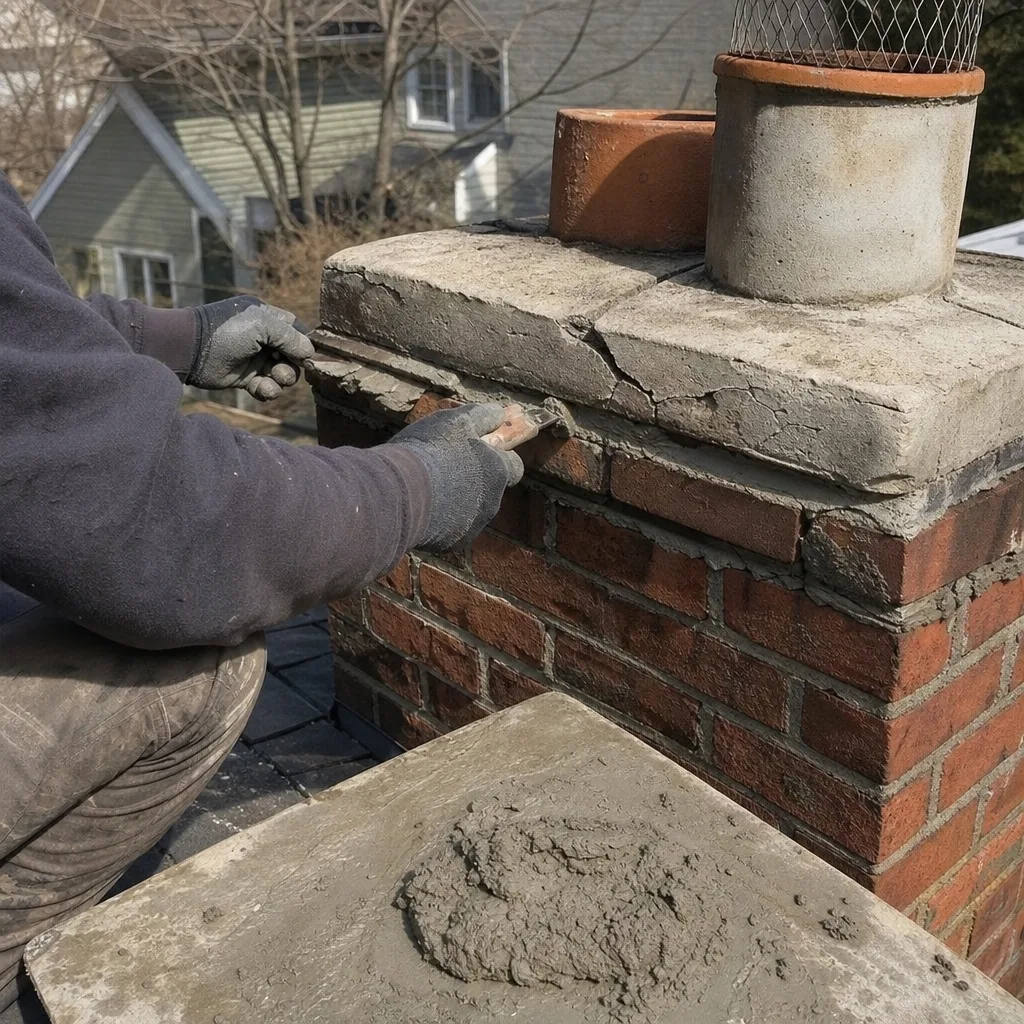
Creosote is the combustion byproduct that condenses inside your flue as smoke cools. It builds in three recognizable stages, and each stage changes what you need to do about it:
Stage 1: Flaky, brownish dust or light soot. This is what forms after burning seasoned hardwood with a good draft. It brushes off easily. A poly brush removes it. DIY is fine at this stage, provided you have access.
Stage 2: Shiny, tar-like glaze. This forms when the flue doesn’t get hot enough to fully exhaust, or when you burn wood with too much moisture. Stage 2 creosote is sticky and hard. A brush doesn’t remove it. It requires mechanical rotary tools, chemical treatment, or both.
Stage 3: Hard, shiny, black fuel layer. This is the dangerous one. Stage 3 creosote is concentrated fuel coating the flue. It ignites at relatively low temperatures and burns extremely hot. If you’ve reached Stage 3, you’re one hot fire away from a chimney fire. Removal requires aggressive rotary cleaning or chemical removal. Do not attempt this yourself.
The catch: most homeowners don’t know their creosote stage because they’ve never had a camera-documented inspection. They know they haven’t cleaned the chimney in a while, and that’s it. When you hear us in Washington talk about the “documentation gap,” this is what we mean: the information you don’t have is the most dangerous part of the system.
The Documentation Gap: What You Should Walk Away With
After any professional cleaning, regardless of who does it, here’s what the documentation should look like. If it doesn’t, you didn’t get what you paid for:
This is the standard we’ve worked to since 2009, and Clause 4 of the Haven Standard makes the photo record a requirement on every job, not an add-on. The documentation isn’t a deliverable in addition to the service. The documentation is the service.
Cost Comparison: DIY vs Professional in Washington
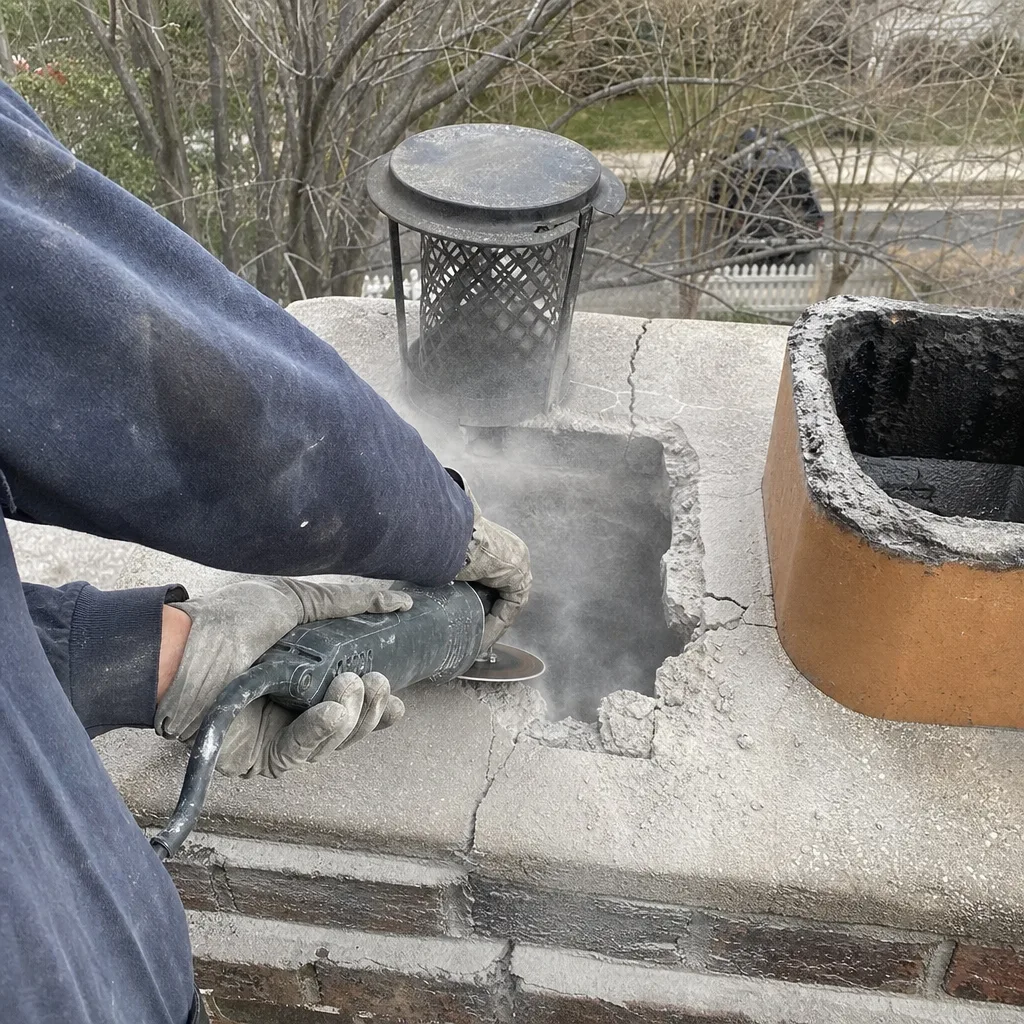
Here’s the cost picture in Washington, with real numbers:
| Item | Cost | What You Get |
|---|---|---|
| Hardware store brush kit (poly brush, rods, tarp) | $30-$70 | Stage 1 removal on a straight, accessible flue |
| Rotary drill attachment upgrade | $40-$90 | Moderately better Stage 1 removal |
| Professional sweep in Washington (standard cleaning) | $200-$400 | Cleaning, camera scan, written report, photo record |
| Professional sweep with Stage 2/3 creosote removal | $400-$900 | Mechanical removal, chemical treatment, full documentation |
| Camera-scan inspection only (no cleaning) | $150-$250 | Documented liner condition, creosote classification |
The comparison isn’t really $70 versus $300. It’s $70 and zero information versus $300 and a documented record that your insurance carrier will accept and that tells you whether your chimney is safe to use. If you do it yourself and miss a liner crack, the cost isn’t the $230 you saved. It’s whatever a house fire costs.
Materials matter too, though this is more our world than yours. When our company installs liners or repairs chimneys, we source from manufacturers like DuraFlex, Olympia Chimney, and Copperfield through the Haven buying network. The reason is straightforward: material quality affects price, and we want customer prices to reflect good material choices without markup games. You won’t buy these yourself as a DIYer, but you should know that the professional industry has tiers of quality, and the companies using better materials don’t charge as much more as you’d expect.
Common Mistakes to Avoid
- Buying a brush kit without knowing your flue size. A 6-inch brush in an 8-inch flue cleans nothing. Measure first. Many Washington rowhouses have nonstandard flue dimensions.
- Cleaning from the bottom with a drill attachment and no top access. You’ll push creosote up the flue and leave it sitting in the smoke chamber. Then you’ll light a fire and smell burning tar for a week.
- Assuming a straight roofline means a straight flue. Washington rowhouses often have flues that look straight from the outside but offset inside the attic. You cannot tell from the ground.
- Skipping the camera because “the last sweep said it was fine.” Verbal assurances are not documentation. If there’s no photo record, there’s no baseline. Every year without a camera scan is a year of unknown liner condition.
- Trusting the hardware store “creosote removal log” products for Stage 2 or 3. Those products help with Stage 1 and do almost nothing for hardened tar. They’re a maintenance aid, not a cleaning method.
- Self-cleaning before a property sale or insurance inspection. A buyer’s inspector or an insurance underwriter will want documentation of professional maintenance. Your word and a brush kit won’t satisfy either.
When to Call a Professional
Call a professional when the flue offsets, when the creosote is Stage 2 or worse, when you have no documented inspection history, when you can’t safely access the roof, or when you see masonry conditions you can’t explain. Also call when you’ve DIYed for a year or two and no one has looked at your liner with a camera since. A camera scan doesn’t mean you’ll be told you need expensive work. It means you’ll know whether you do. Level Two Chimney Washington offers free estimates in Washington, Maryland, and Northern Virginia. Call (240) 621-1264.
For more on our chimney services, see Chimney Repair in Washington and Fireplace Services in Washington.
Frequently Asked Questions
A standard chimney sweeping in Washington typically costs $200 to $400, depending on flue type, creosote stage, and rooftop access-see our Chimney Cleaning Cost Breakdown: The Washington Homeowner’s Reference for 2026 for full details. A camera-scan inspection is usually included in the sweep price. For an exact written quote, call (240) 621-1264. Estimates are free, and the price is in writing before work starts.
The National Fire Protection Association recommends a chimney sweeping whenever creosote buildup reaches 1/8 inch or more, which for most Washington homeowners means once per year if you burn regularly. If you burn only occasionally or use gas logs, every two years may be sufficient. The schedule should be based on a documented inspection, not a calendar.
Not always, but you need to see the evidence. A cracked clay tile liner in a Washington home is a real fire risk, but some companies recommend liner replacement for hairline cracks that are cosmetic. The answer is in the camera footage: if you can see the crack, and the crack penetrates the liner wall, replacement or resurfacing is usually correct. If the company won’t show you the photos, get a second opinion. We offer a free second opinion on any written estimate from a competitor.
Creosote accumulates, and in Washington’s climate, moisture combines with creosote to accelerate liner deterioration. Eventually you have one of two outcomes: a chimney fire, or a flue so blocked that smoke enters the living space and carbon monoxide levels build. Both are preventable with an annual camera-documented inspection. The cost of cleaning is always less than the cost of either outcome.
Gas fireplaces do not produce creosote, so the sweeping need is minimal. What they do produce is acid-laden moisture that corrodes certain liner types, and the venting can clog with debris. A professional camera inspection is still the right annual or biennial call, but there’s no DIY brushing to do. Leave the gas fireplace to a professional.
Washington adopts the International Residential Code with local amendments, and any chimney work beyond basic sweeping typically requires a permit through DCRA. A chimney sweep company working in DC should know the permit thresholds and local code requirements. What we know from years in this market is that many older Washington homes predate current code, and the practical question is not “does this meet code” but “is this safe to use.” A camera scan answers that question directly.
The Bottom Line
The DIY vs professional chimney cleaning decision is not primarily about skill level. It’s about what you can verify after the work is done. You can brush Stage 1 creosote from a straight, accessible flue and do a fine job. But you cannot inspect a liner, document a draft reading, or produce the photo record that an insurance carrier will accept. If you’re going to pay someone else, pay for documentation, not just brushing. That’s the form of professional results that exists. For Washington homeowners, the question is simple: is your chimney something you can see, and is your answer documented? If not, call (240) 621-1264 for a free estimate.
Written by Corrine Halstead, Owner at Level Two Chimney Washington, serving Washington since 2009.