
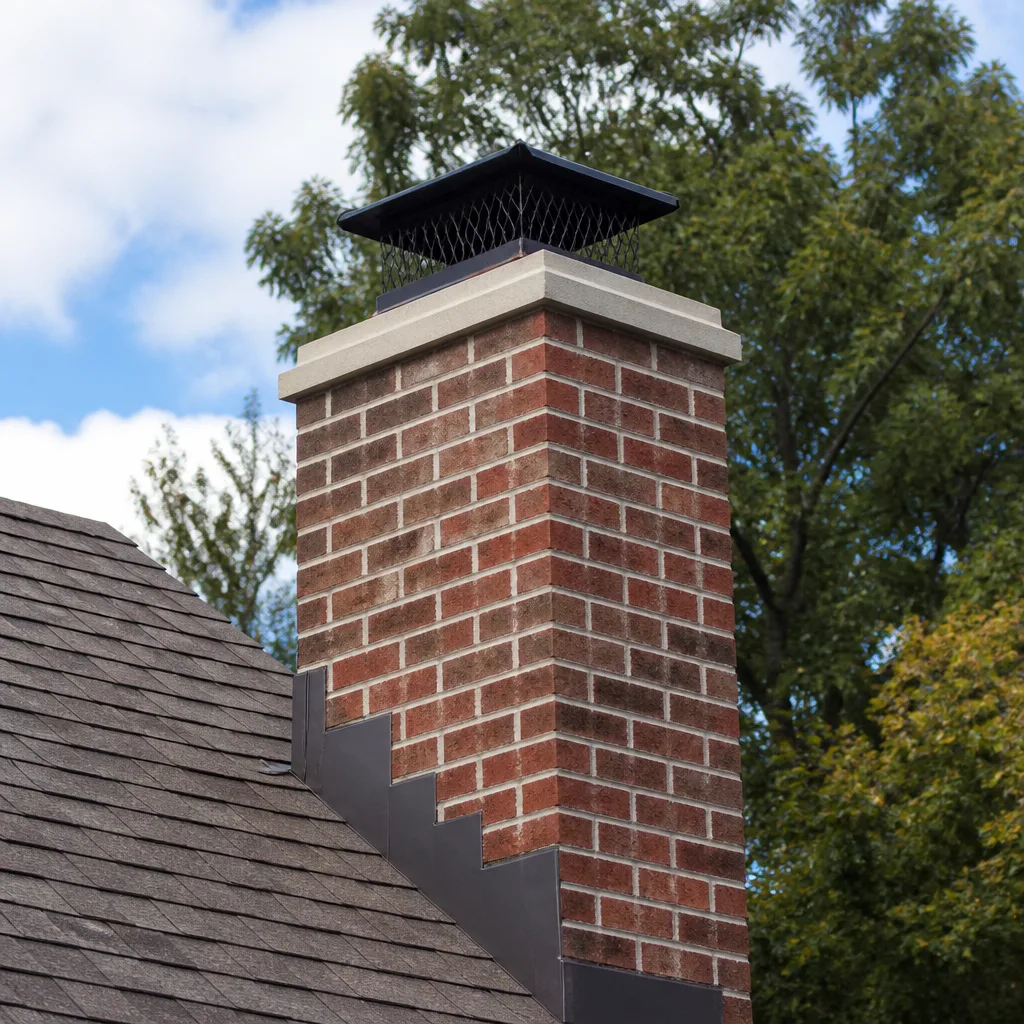
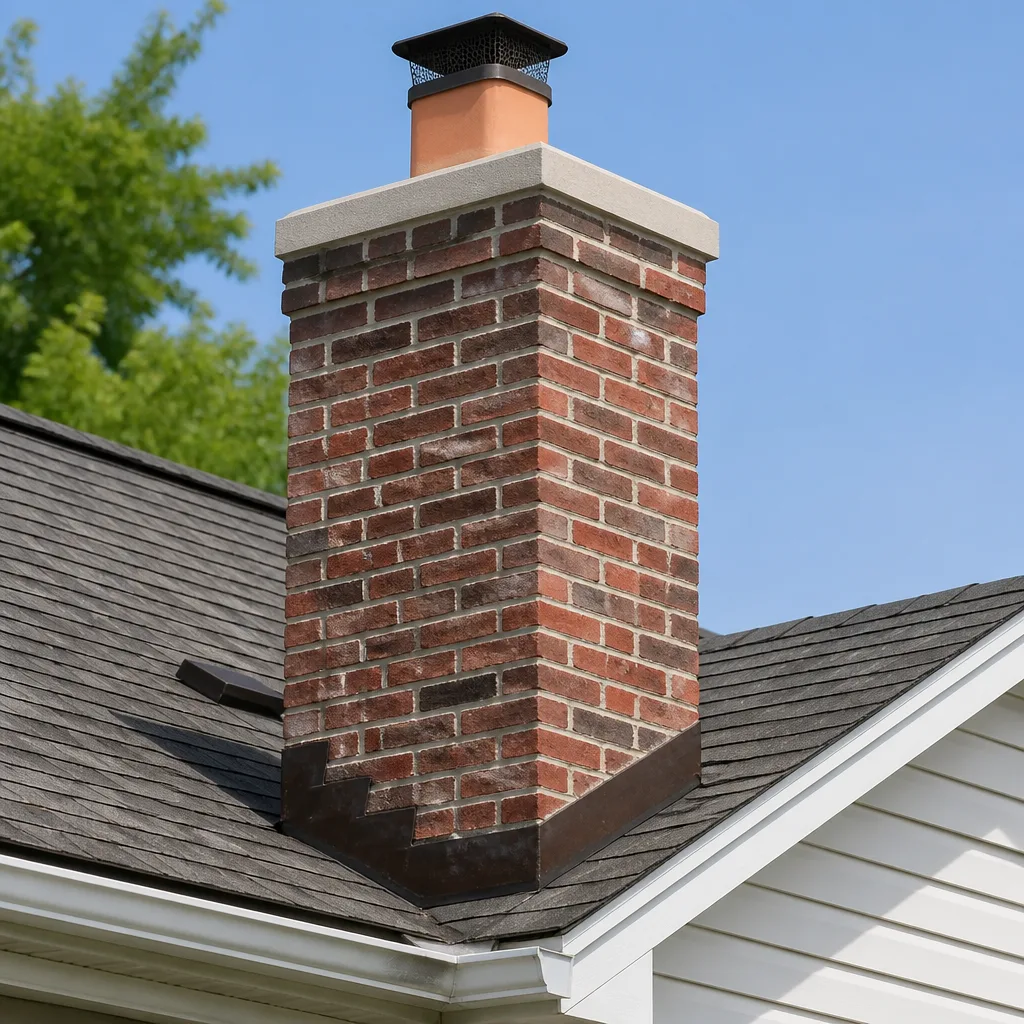
Level 1 sweep and inspection to the NFPA 211 annual standard - flue, crown, cap, and flashing checked and photographed
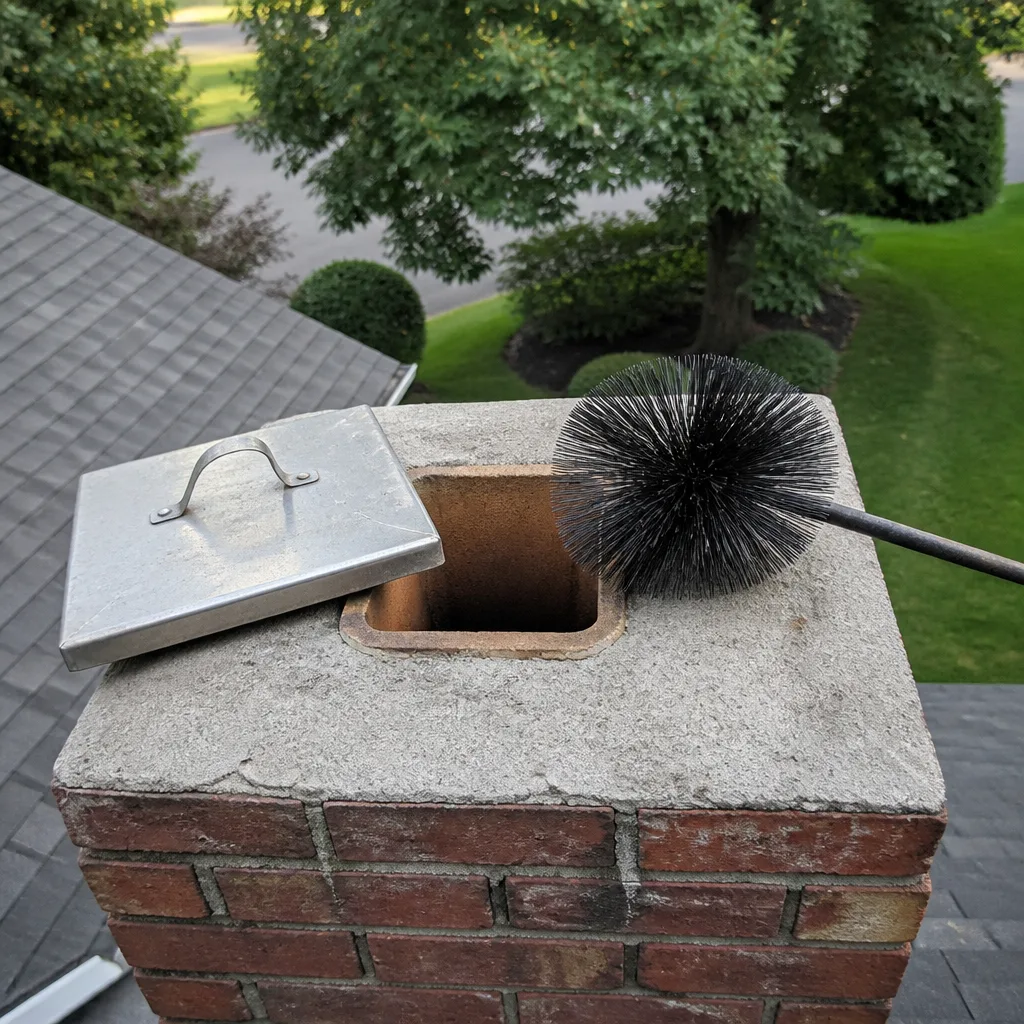
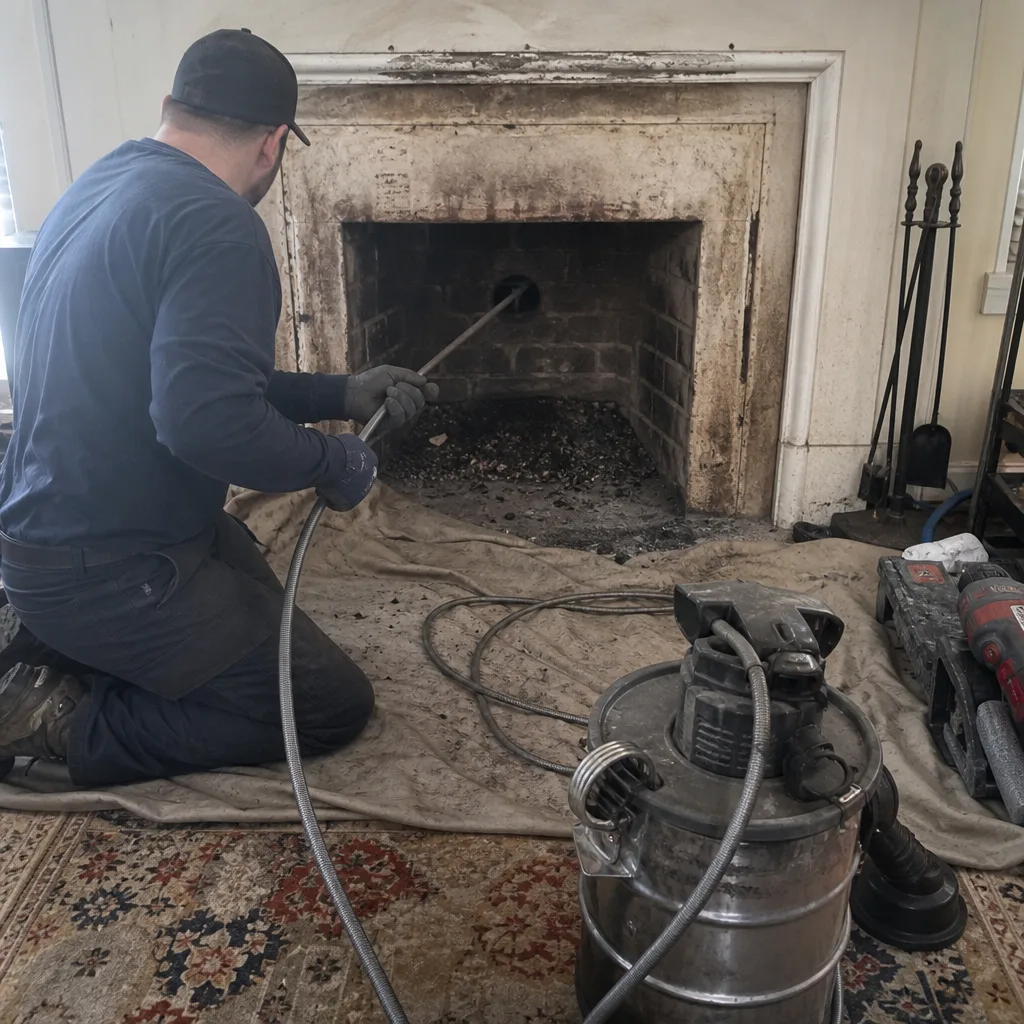
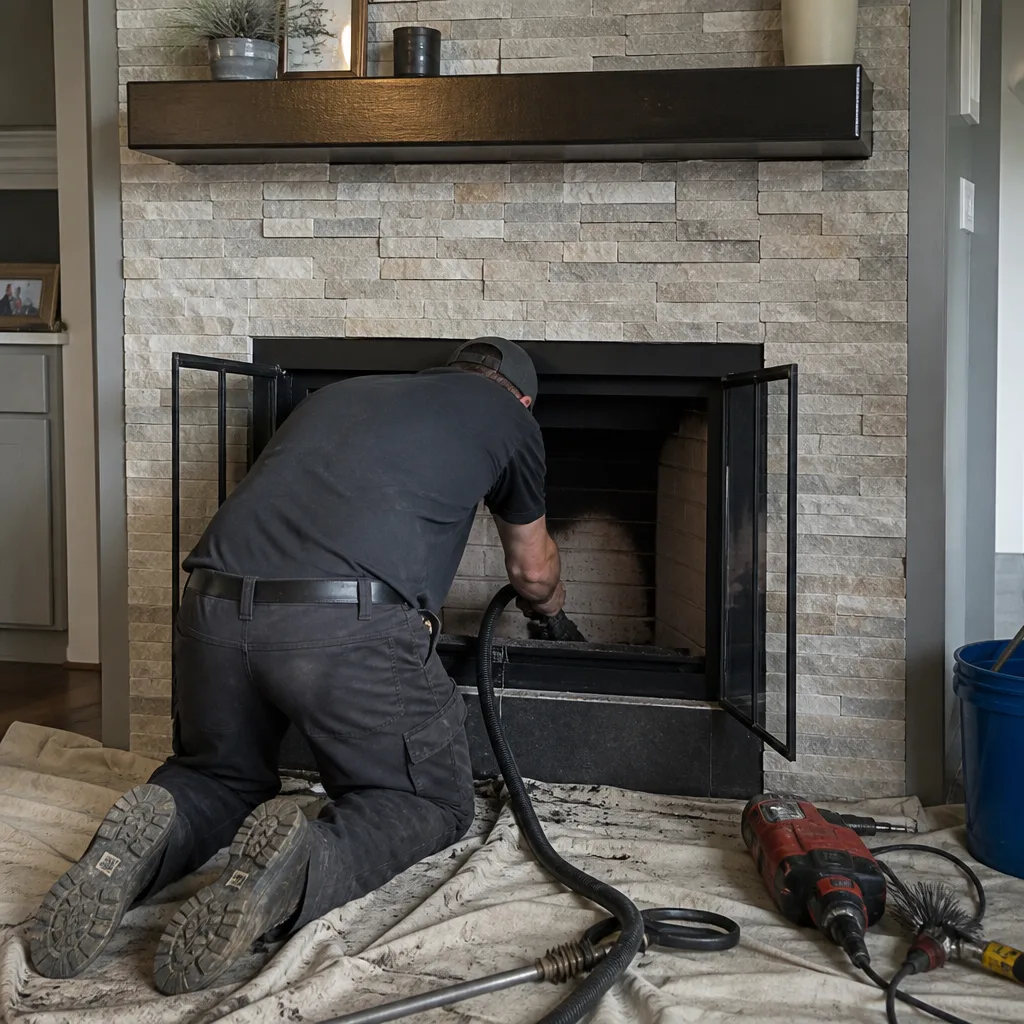
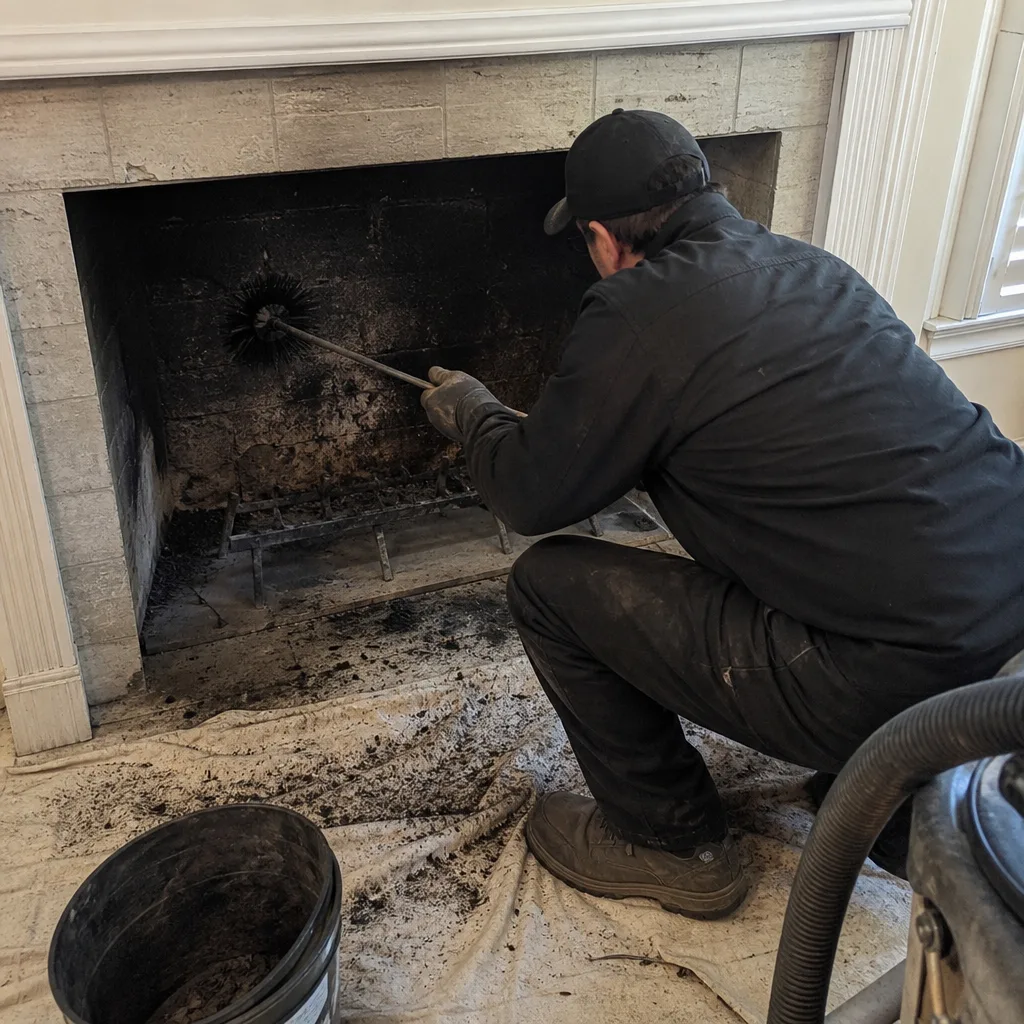
Chimney sweep logs do not sweep chimneys. They loosen some creosote - which then falls where a brush and vacuum still have to collect it.
 Before
 After
After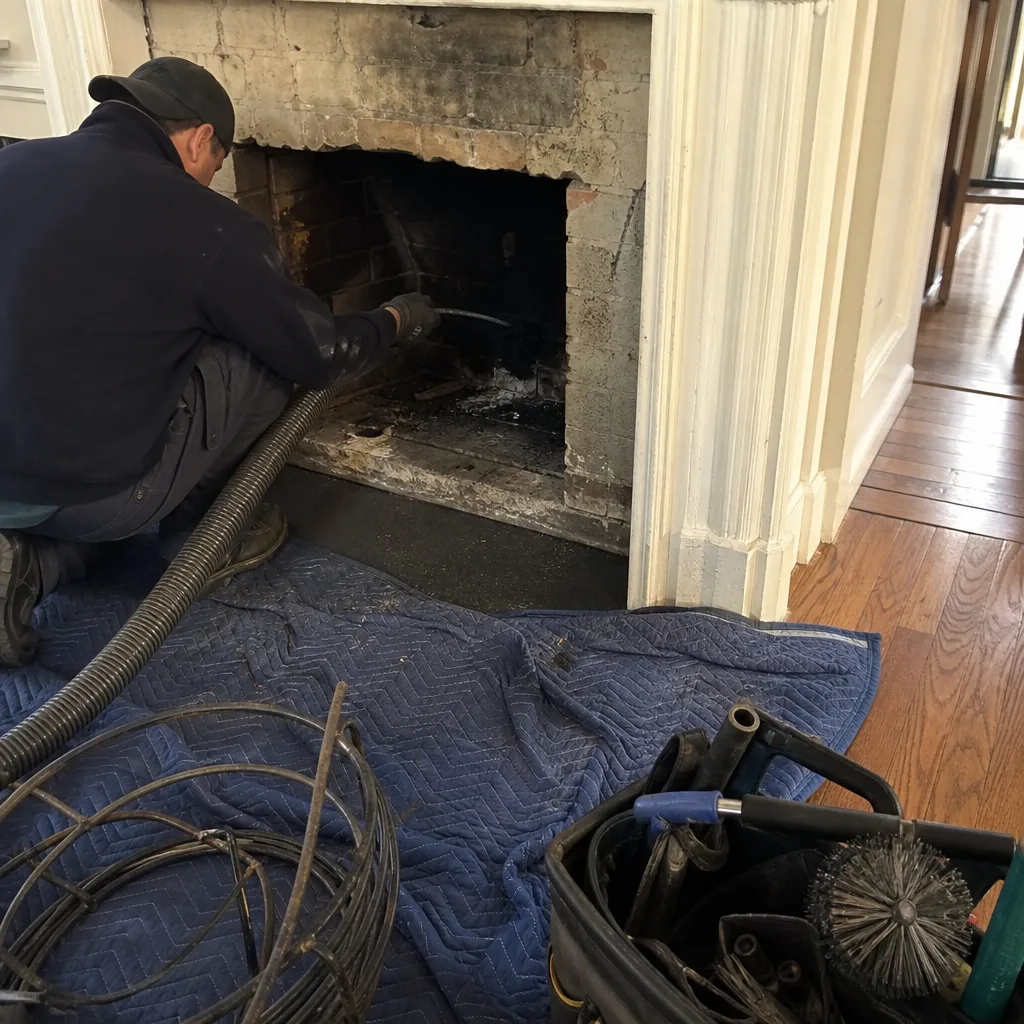 Before
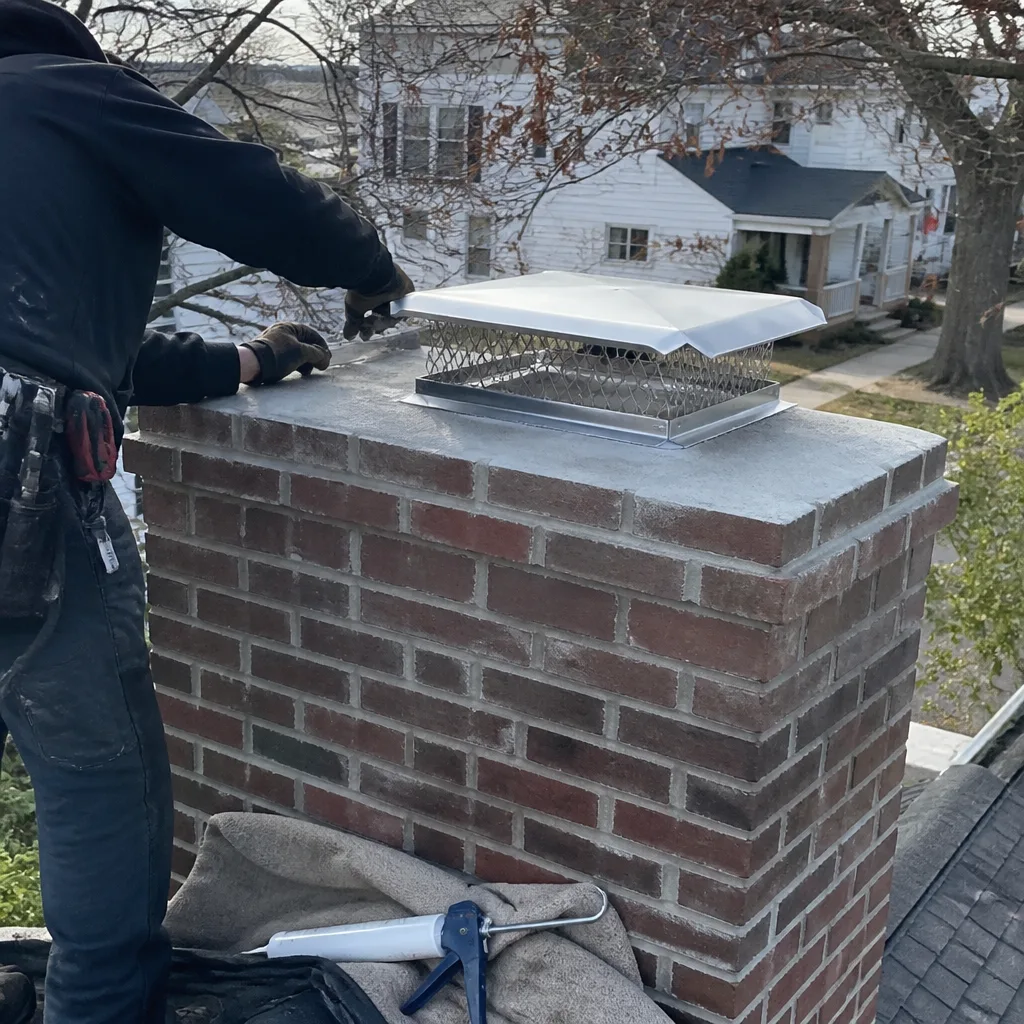 After
After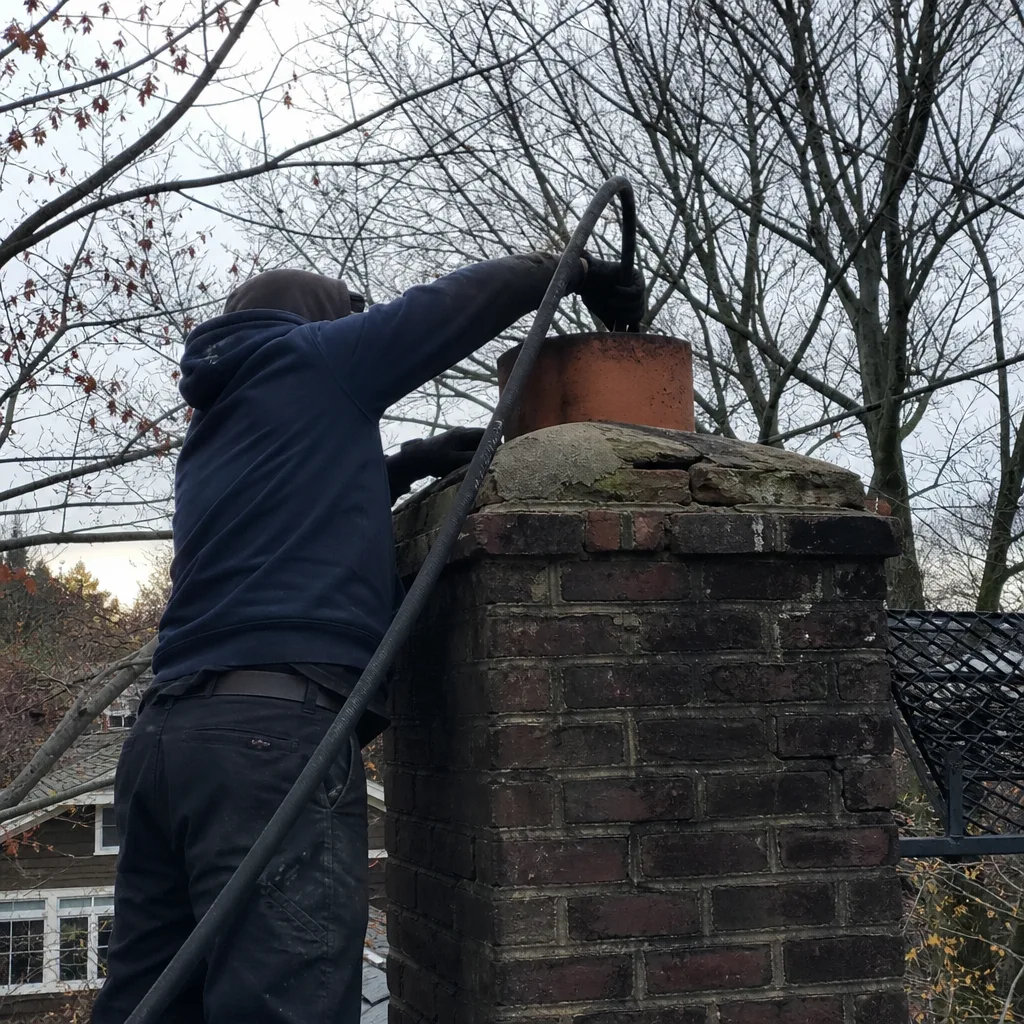 Before
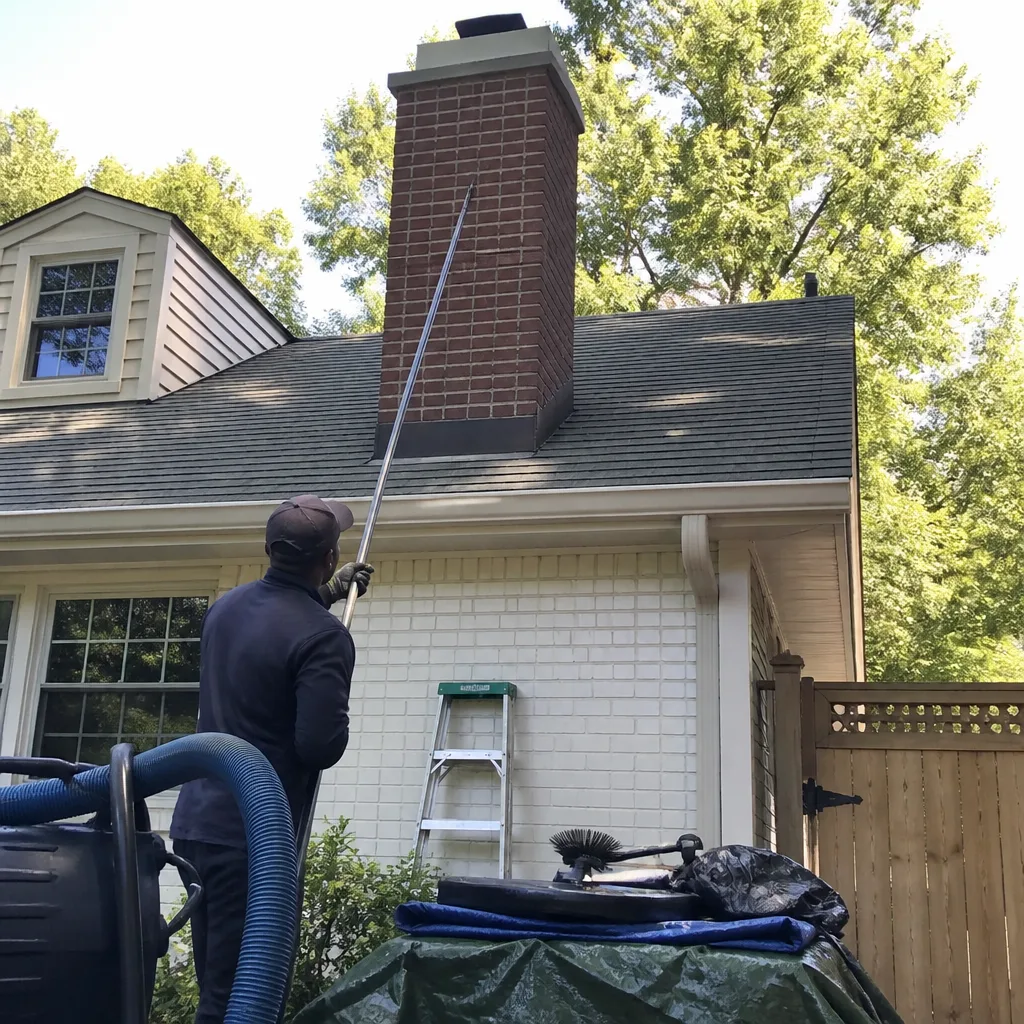 After
AfterHeatShield Flue Liner Replacement: The Washington Owner’s Guide
HeatShield flue liner replacement in Washington typically runs $2,800 to $5,400 installed, depending on flue length, access, and whether the existing liner needs full removal or can be prepped for a poured or joint-repaired system. We stock HeatShield Cerfractory and joint-repair materials on our trucks, and our crews can usually complete the replacement in a single visit. Most Washington homeowners discover the problem the same way: a camera inspection shows gaps at the mortar joints, cracked flue tiles, or a liner that’s spalled to the point where the flue gases have a direct path into the chimney chase.
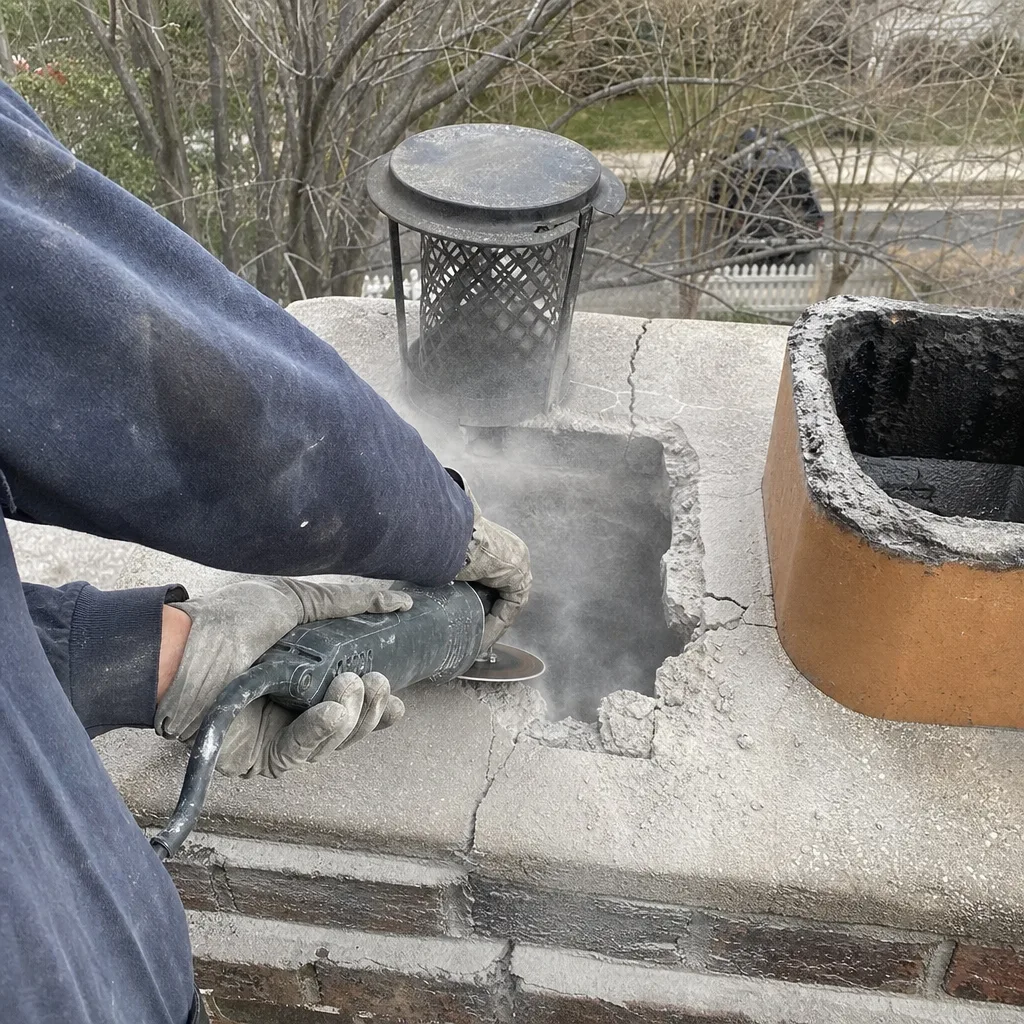
The camera doesn’t lie, and neither does the written price. If you’re here because someone showed you footage of a failed liner, you’re in the right place to understand exactly what comes next and what it costs.
Key Takeaways
- HeatShield flue liner replacement in Washington costs $2,800-$5,400 installed on average
- We stock HeatShield Cerfractory materials and can usually complete the job same-day
- Every replacement includes a camera-scan before and after, plus a written photo record
- HeatShield repairs can preserve the original flue in many cases, but full replacement is sometimes the only safe option
Which HeatShield Models This Applies To
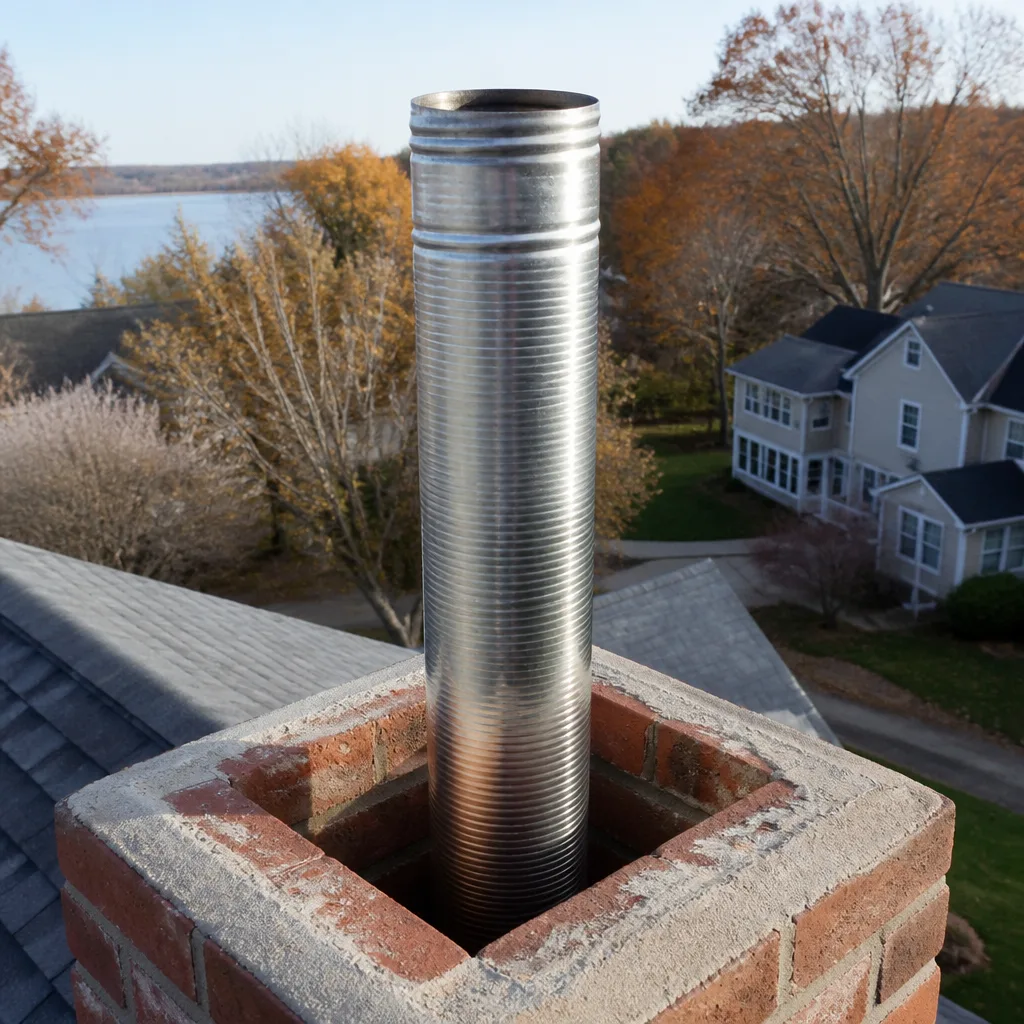
HeatShield isn’t a liner brand in the way DuraFlex or Gelco are. HeatShield is a resurfacing system: a Cerfractory cement material applied to the inside of an existing clay tile or masonry flue. It’s specified for flues that have lost structural integrity at the joints or have minor surface spalling but retain enough overall shape to hold the resurfacing coat. The system comes in two forms: the CeCure joint repair and the full resurfacing application, which are matched to the flue’s diameter and length during the pre-application camera work.
The compatibility question owners ask most often is whether a HeatShield repair makes a new liner unnecessary. The answer depends on the flue’s cross-section and the depth of the damage. In Washington’s rowhouse stock, particularly the wood-framed homes near Capitol Hill and Shaw, we see clay tile liners from the 1920s through 1960s that have shifted at the mortar joints. HeatShield works well there. But when the tile is cracked through in multiple places or the flue has lost its round shape entirely, a HeatShield coat won’t restore the structural requirement under NFPA 211. That’s when we recommend a full liner replacement using DuraFlex or Gelco stainless instead.
Level Two Chimney Washington is an independent service provider, not affiliated with HeatShield. We stock and install the product because it’s the right tool for a specific failure pattern, not because the brand pays us to say so.
Signs Your HeatShield Flue Liner Replacement Is Failing
- White flaking or powder at the cleanout door. Cerfractory material that’s been exposed to repeated thermal cycling or moisture will delaminate and shed. If you see chalky residue at the base of the chimney, the resurfacing coat is breaking down and the flue is no longer sealed. The underlying flue gases are now moving through gaps the HeatShield was meant to close.
- Water streaks or efflorescence on the interior flue wall during a camera scan. HeatShield is a cementitious material. Water intrusion through a cracked crown or missing rain cap will soften it from the inside out. Washington’s freeze-thaw winters accelerate this; water gets in, freezes, and expands inside the material’s pores.
- Smoke smell in the house that appears only when the fireplace is in use. When the resurfacing coat fails at a mortar joint, flue gases escape into the chase or wall cavity. You smell it before you see it. This is the failure point where you should stop using the fireplace until the flue is camera-inspected.
- Visible gaps at the mortar joints on a reopened inspection. The whole point of HeatShield joint repair is to bridge the cracks between clay tiles. When those bridges fail, the original gaps are back. A camera scan will show the contrast: smooth cerfractory surface with a dark seam at every joint that failed.
- A loose or shifting flue tile the previous repair was meant to stabilize. If the underlying flue tile itself has moved, no coating will hold. This is the failure Corrine Halstead and our crews watch for most closely in DC’s older rowhouses, where the flue stacks sit inside wood framing and any lateral movement can open a direct path for heat and gases.
BeforeAfterReplacement Cost & What’s Included
Installed HeatShield flue liner replacement in Washington runs $2,800 to $5,400, based on what we see most weeks. The range is driven by four factors: flue height (a three-story rowhouse flue costs more than a one-story addition fireplace), access (roof pitch, chimney location, whether staging is needed), prep work (old resurfacing material removal versus a clean substrate), and whether the application is joint-only or full resurfacing.
Every quote we write in Washington includes the line items separately: labor, HeatShield Cerfractory material, setup and staging if needed, and the before-and-after camera scan. That camera work is Clause 4 of the Haven Standard: every job gets a documented photo record, archived since 2009. You don’t pay extra for it and you don’t have to ask for it.
| Service | Typical Installed Price in Washington |
|---|---|
| HeatShield CeCure joint repair (partial flue) | $1,200 - $2,100 |
| HeatShield full resurfacing (single flue up to 25 ft) | $2,800 - $4,200 |
| HeatShield full resurfacing + crown repair + rain cap | $3,600 - $5,400 |
The 365-Day Done Right Promise applies to every HeatShield replacement we install. If the resurfacing doesn’t hold, we’re back to make it right at no charge. We also offer a Free Second Opinion on any written estimate: bring us a competitor’s quote and we’ll show you line-by-line what you’re paying for.
DIY or Call Us?
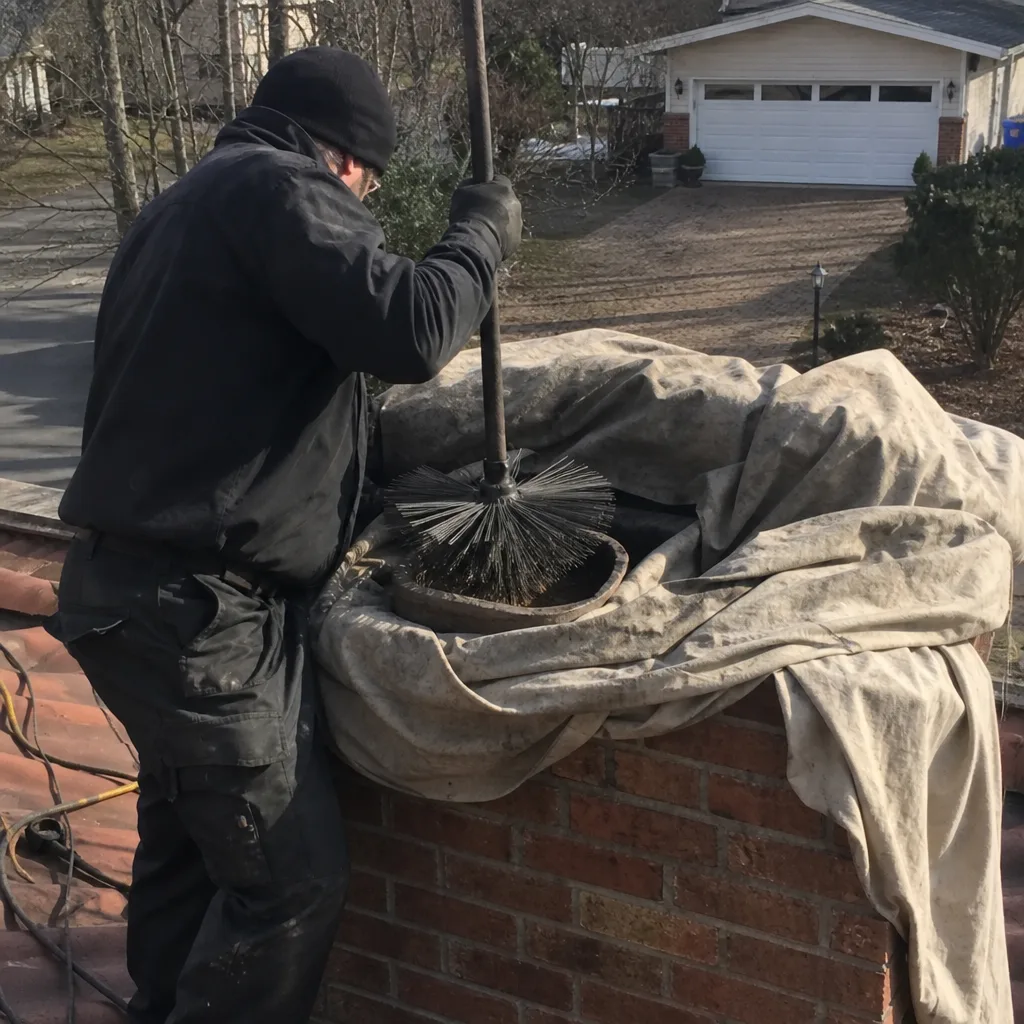
You can safely check a few things yourself: look at the cleanout door for white powder, note any smoke smell during use, and check whether the rain cap is still seated on the crown. You should not attempt to apply HeatShield material, inspect a flue from the roof, or run a camera into your own chimney without training. Working on a roof in Washington means dealing with steep pitches, wet slate, and brick parapets that give underfoot. And a camera inspection without the training to interpret what you’re seeing will miss the cracks that matter.
Corrine started with a rotary brush through a trade program at Apex Technical School before the camera was standard equipment, and the lesson stuck: the tool is only as good as the person reading the footage. If your liner is showing signs of failure, call (240) 621-1264 and our crew will camera-scan the flue, show you the footage, and hand you a written price before anything gets touched.
FAQs
A properly applied HeatShield full resurfacing typically lasts 15 to 25 years in Washington’s climate, assuming the crown and rain cap are intact to keep water out. Water is the single biggest killer of cementitious flue coatings in this region; the freeze-thaw cycles work through any porosity and split the material from inside. Call (240) 621-1264 and we’ll camera-scan your flue to see how much life the current coating has left.
Yes, if only a section of the coating has failed at the joints and the underlying flue tile is intact, a CeCure joint repair is a realistic option in the $1,200 to $2,100 range depending on flue height. If the coating is delaminating across multiple surfaces or the flue tile itself has shifted, repair will fail again quickly and full resurfacing or a stainless liner replacement is the honest recommendation. We’ll show you the camera footage that supports the recommendation.
Most HeatShield flue liner replacement jobs in Washington are completed in a single visit: usually 4 to 6 hours for a standard one-story to three-story flue with prep, application, and a final camera verification scan. Complex access or extensive prep work can push it to a second day, and we’ll tell you that on the written estimate before you commit.
We keep HeatShield Cerfractory and joint-repair materials on our trucks along with DuraFlex and Gelco stainless liners and components, so there’s no order delay on the day we arrive. Once the camera scan confirms the scope, we can typically start the work same-day if you approve the written price on site.
Get a Written Price for Your HeatShield Flue Liner Replacement in Washington
Call (240) 621-1264 for a free estimate on HeatShield flue liner replacement. A live person answers 24 hours a day, 7 days a week. We’ll schedule the camera-scan inspection, show you exactly what’s happening in your flue, and hand you a written price, written scope, and written warranty before any work begins. That’s Clause 1 of the Haven Standard: have it in writing. Every time, no exceptions.
Written by Corrine Halstead, Owner, Level Two Chimney Washington at Level Two Chimney Washington, serving Washington and nearby areas.