
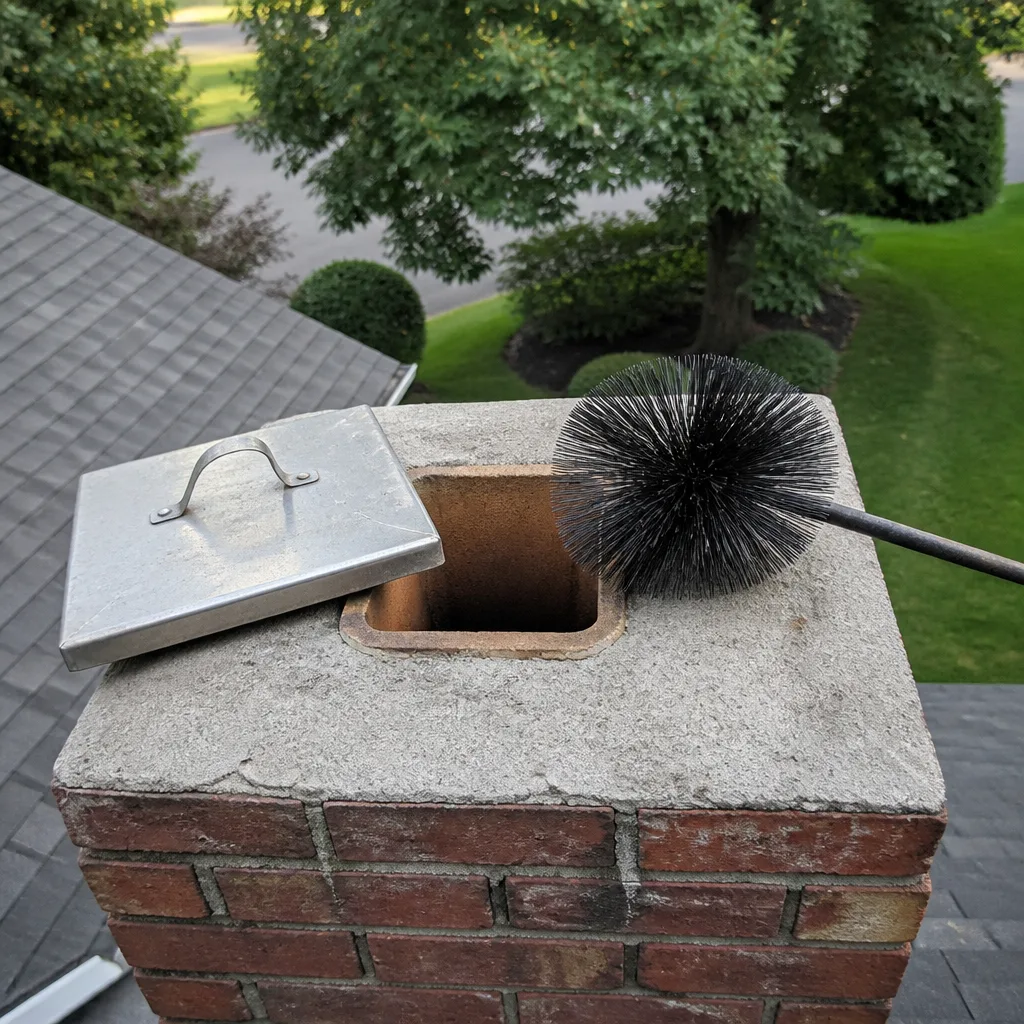
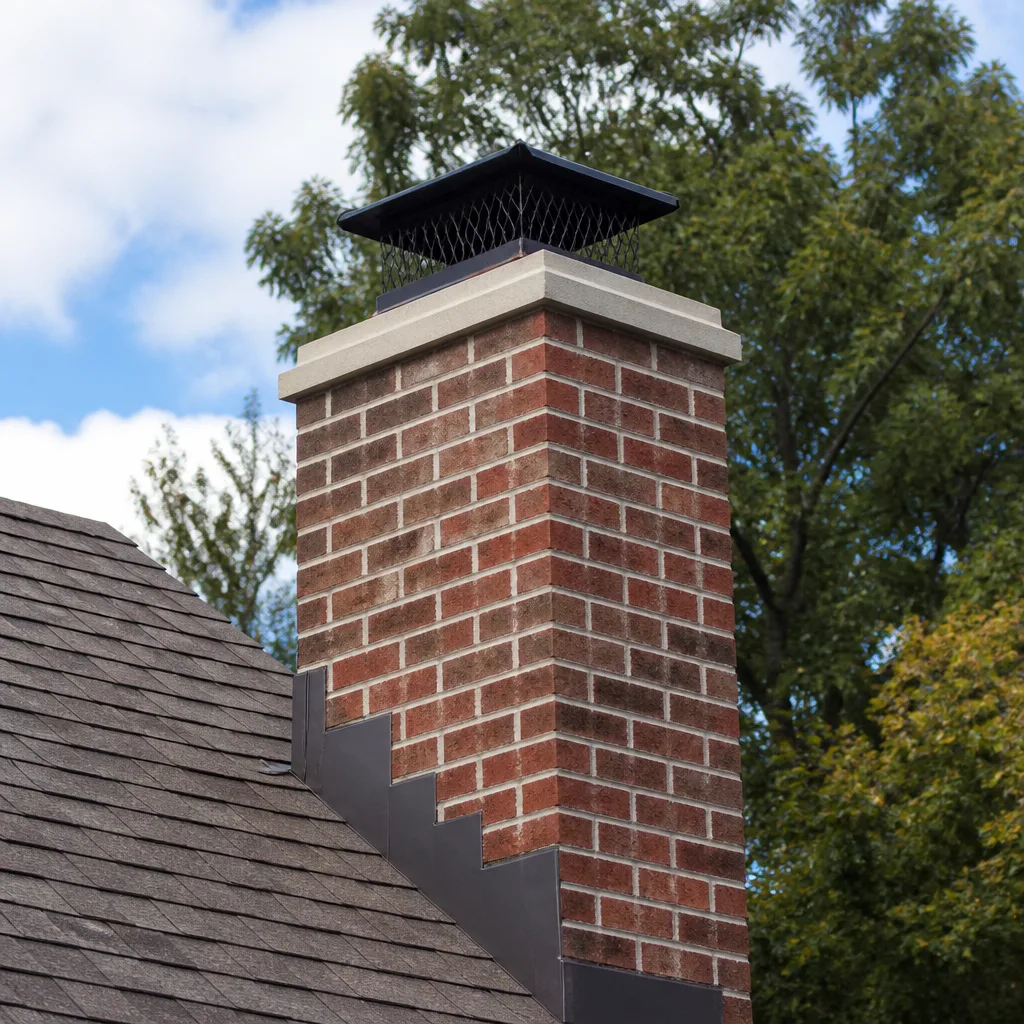
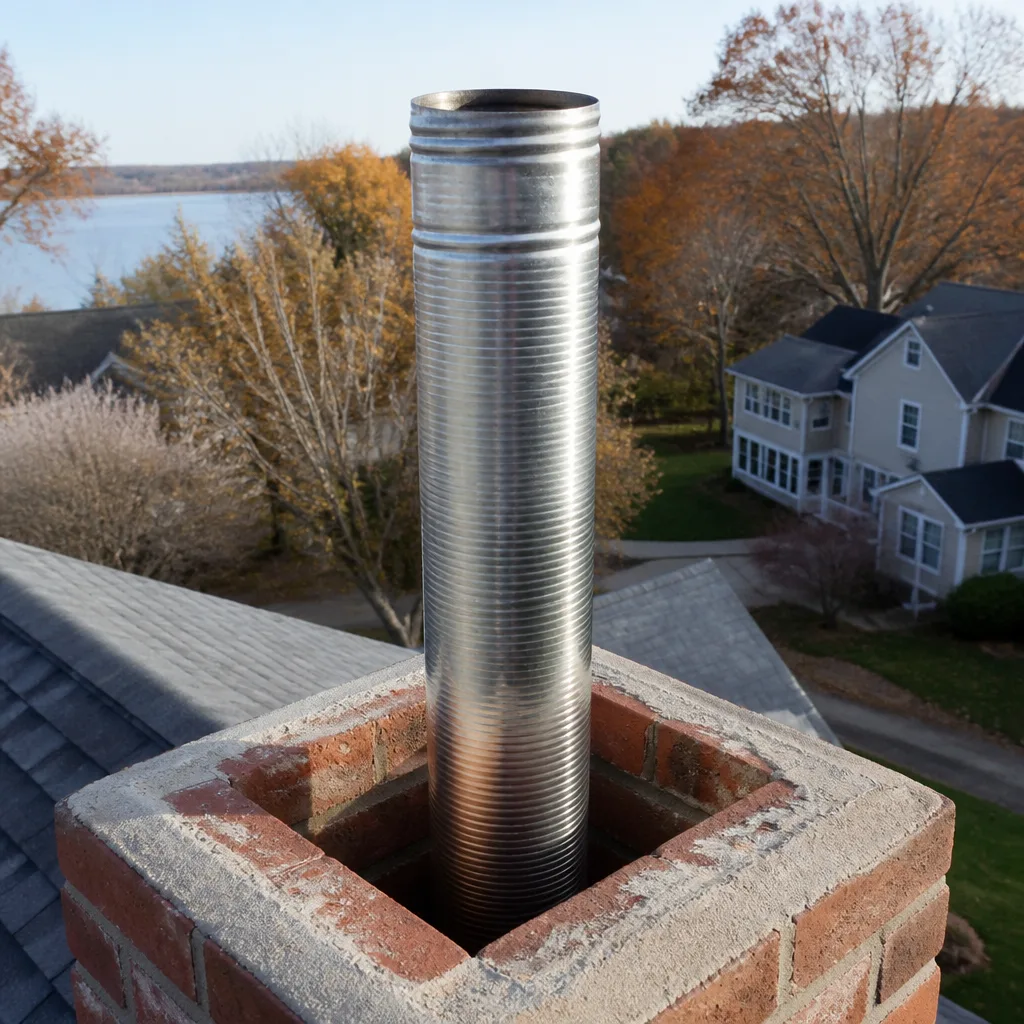
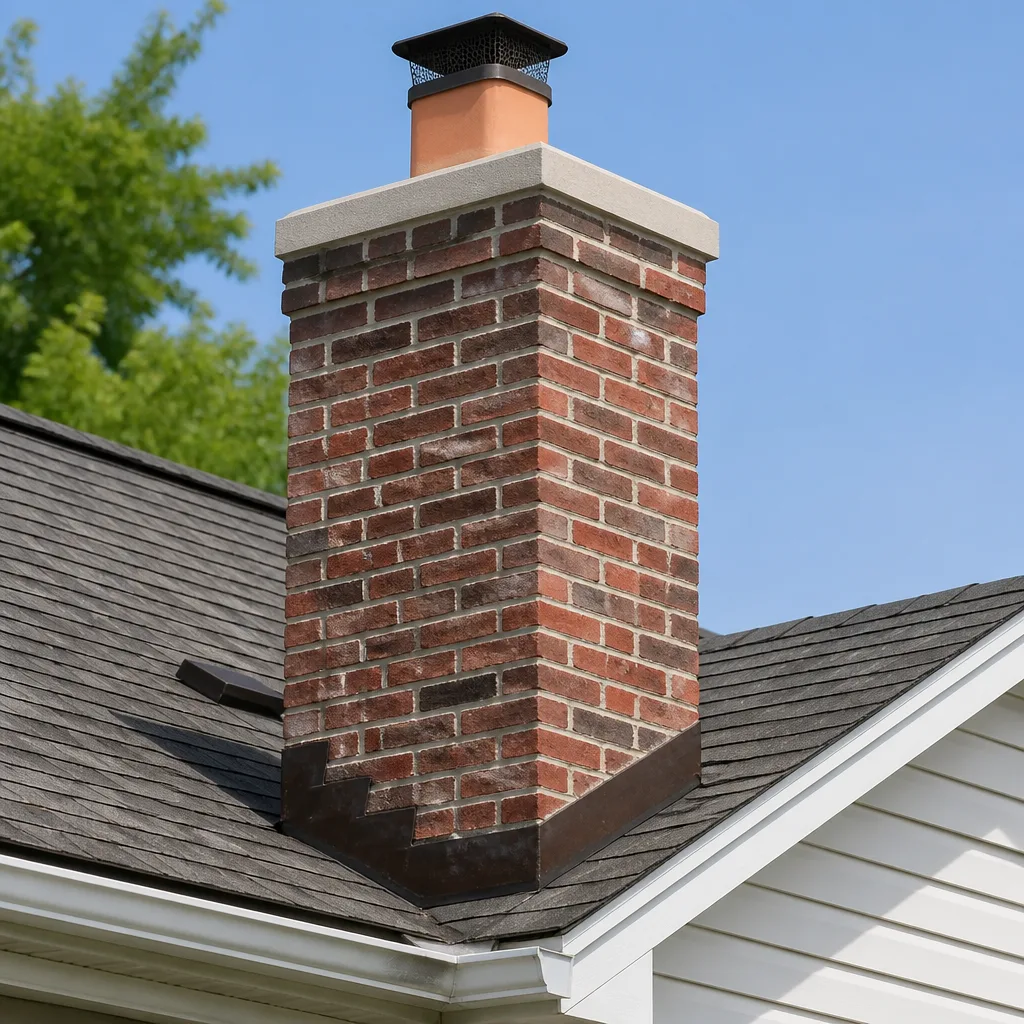
Level 1 sweep and inspection to the NFPA 211 annual standard - flue, crown, cap, and flashing checked and photographed
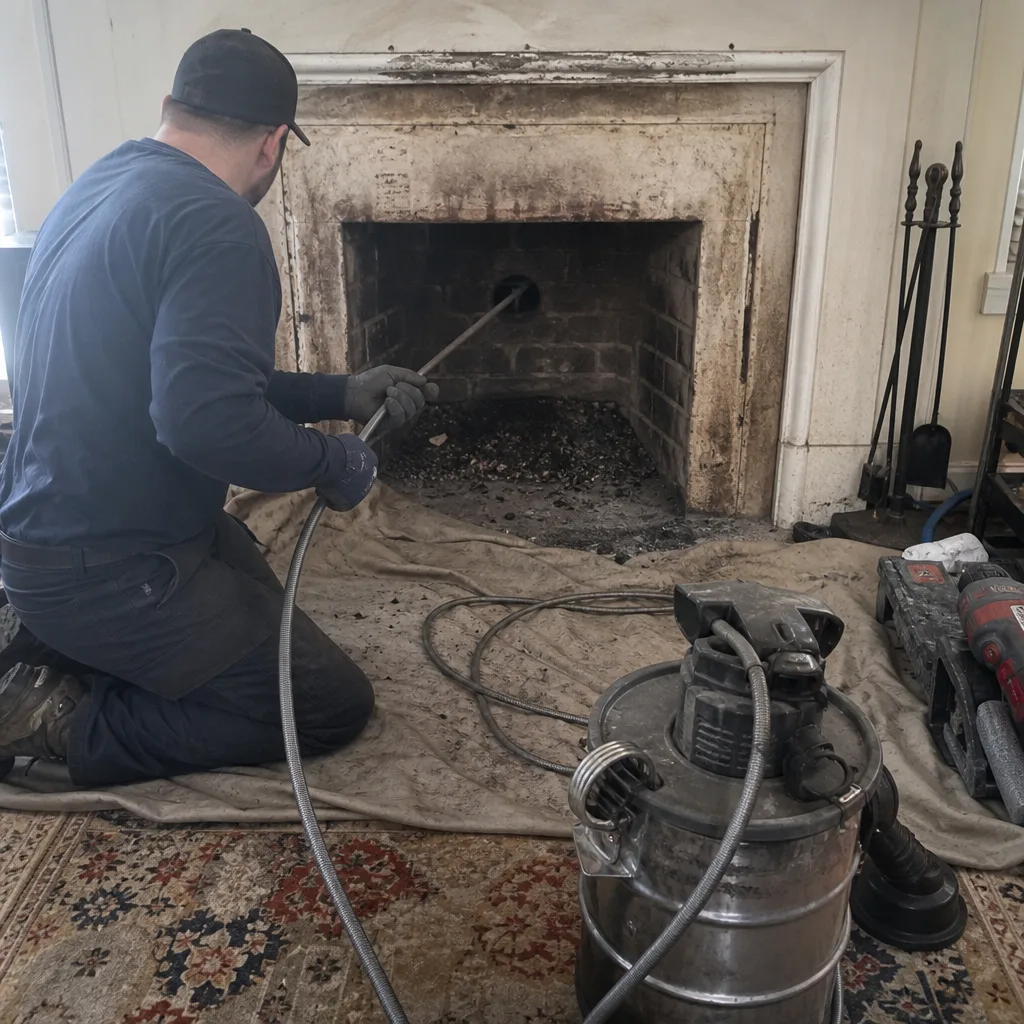
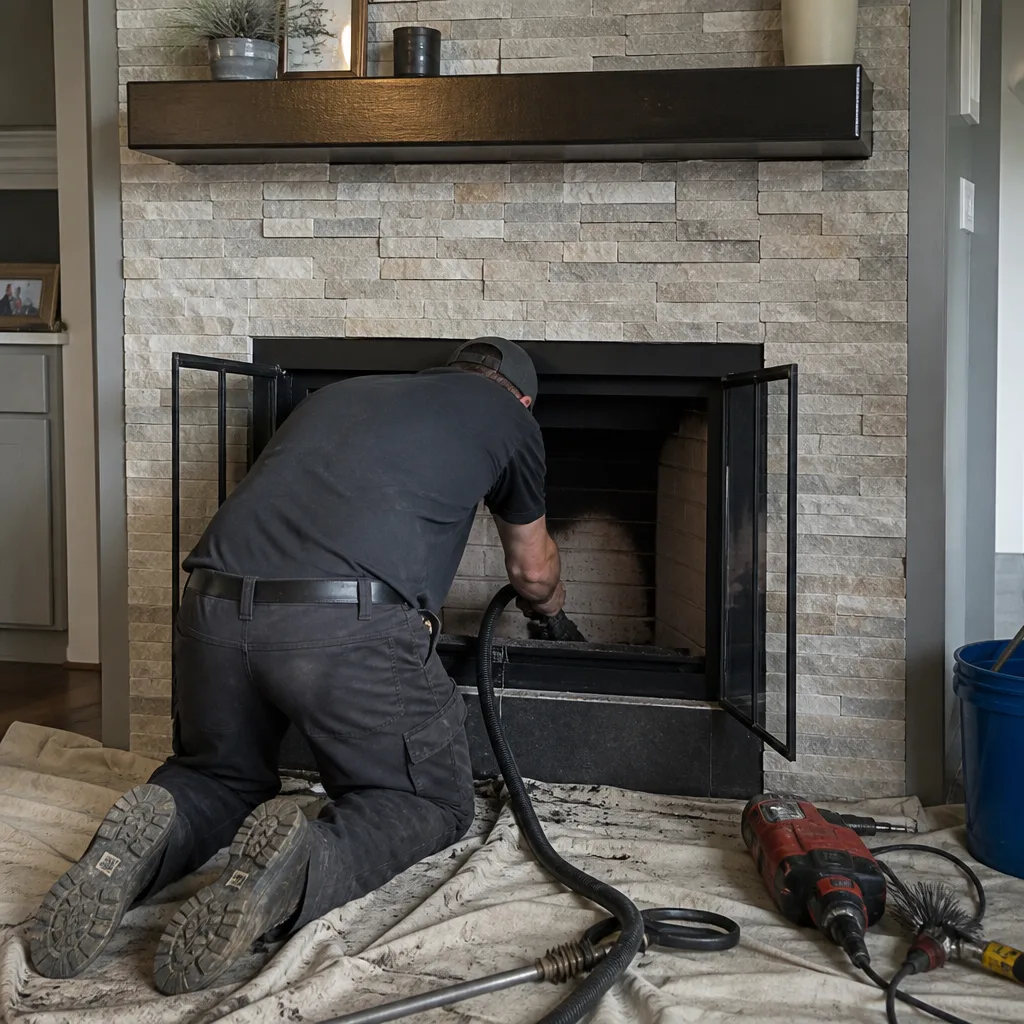
Chimney sweep logs do not sweep chimneys. They loosen some creosote - which then falls where a brush and vacuum still have to collect it.
 Before
 After
After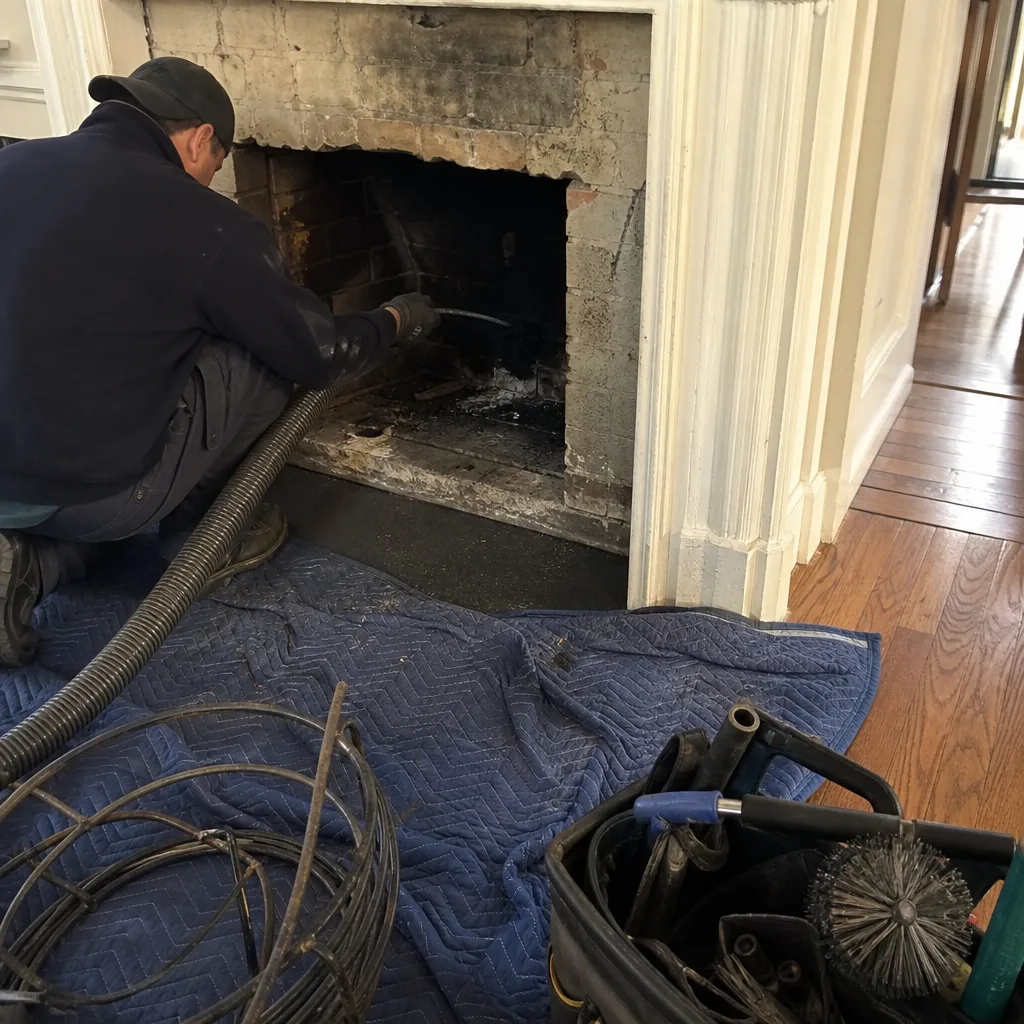 Before
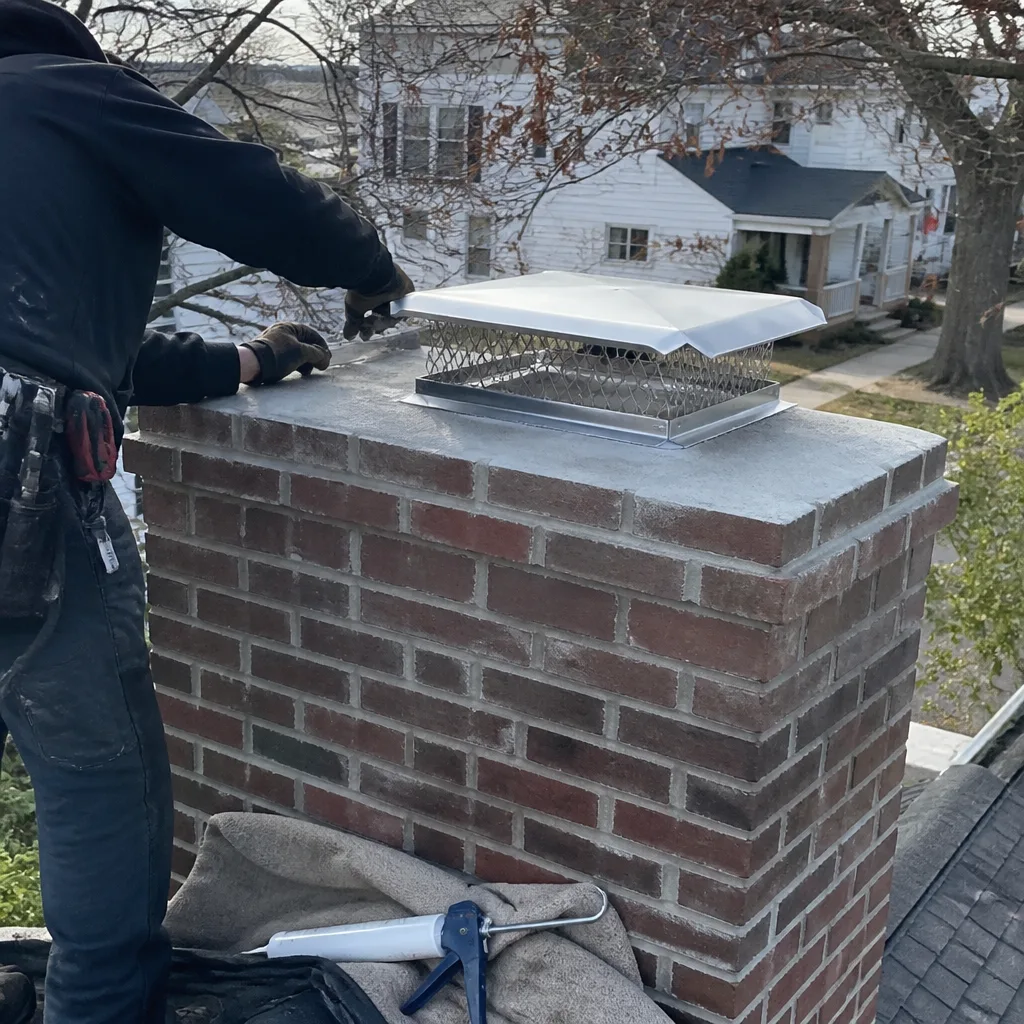 After
After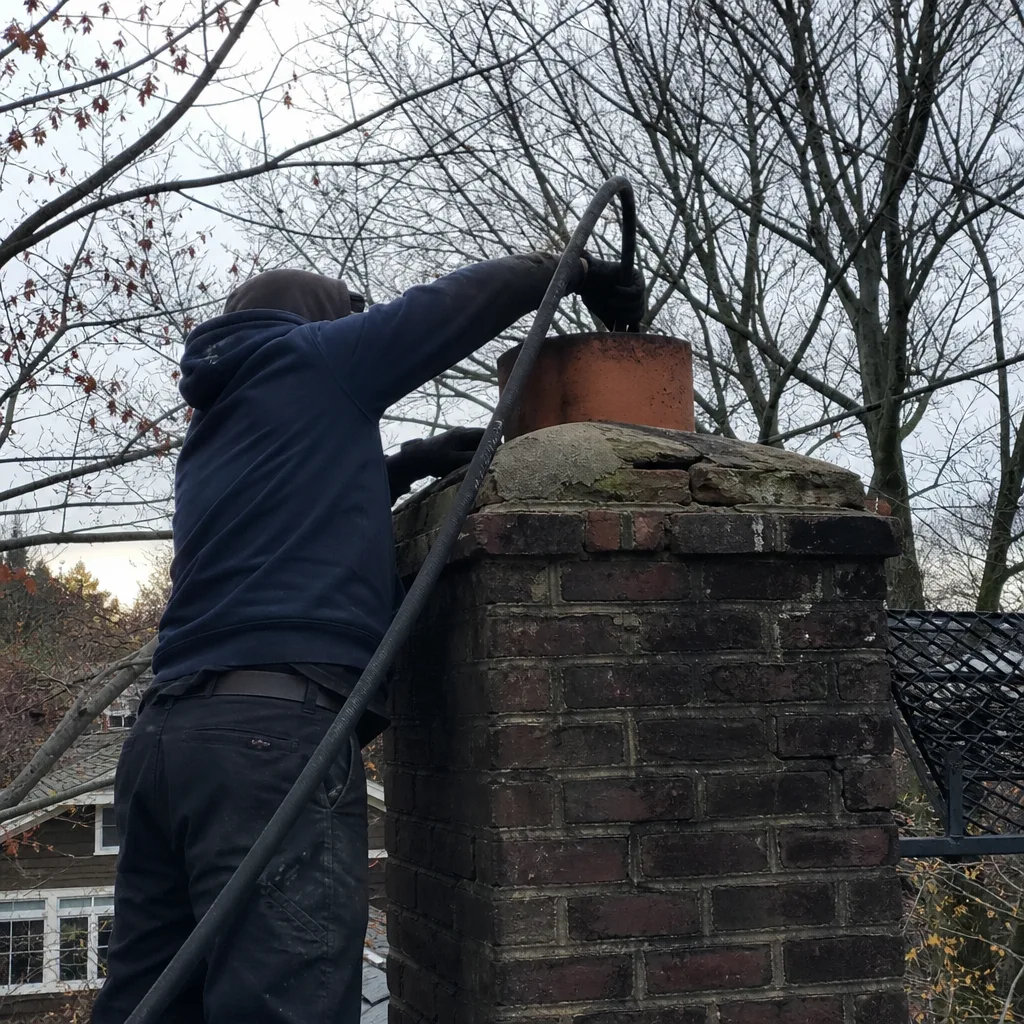 Before
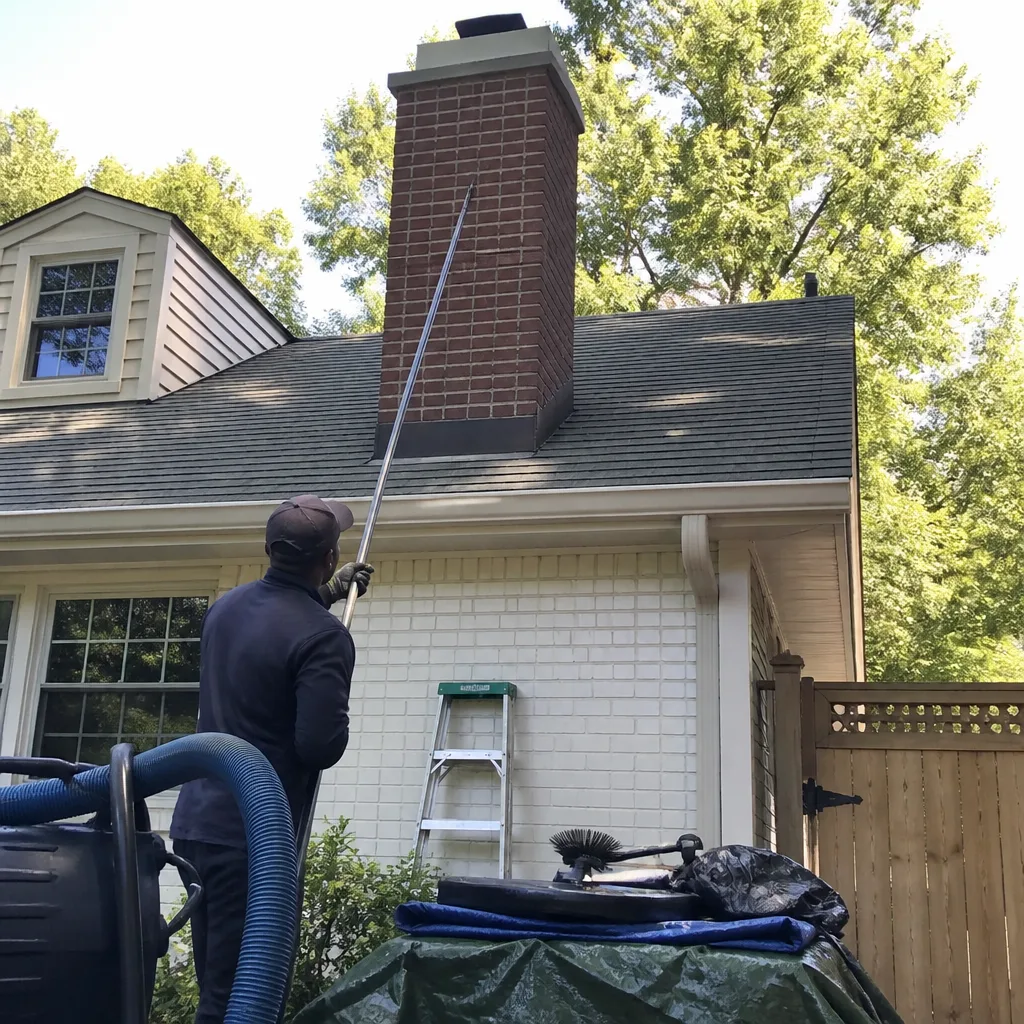 After
AfterHeatShield Crown Repair: The Washington Owner’s Guide
We stock and install HeatShield-compatible crown repair materials throughout Washington, with most crown seal jobs running $450 to $900 installed, depending on crown size and how much surface prep the existing concrete needs first. If the crown is cracked through or actively spalling, we typically quote the full repair in writing before we touch anything, and most Washington jobs are completed in a single visit. Homeowners usually find us after a rainy season: water staining on the ceiling near the fireplace, crumbling mortar on the chimney top, or a sweep from another company flagging crown damage during a routine cleaning.
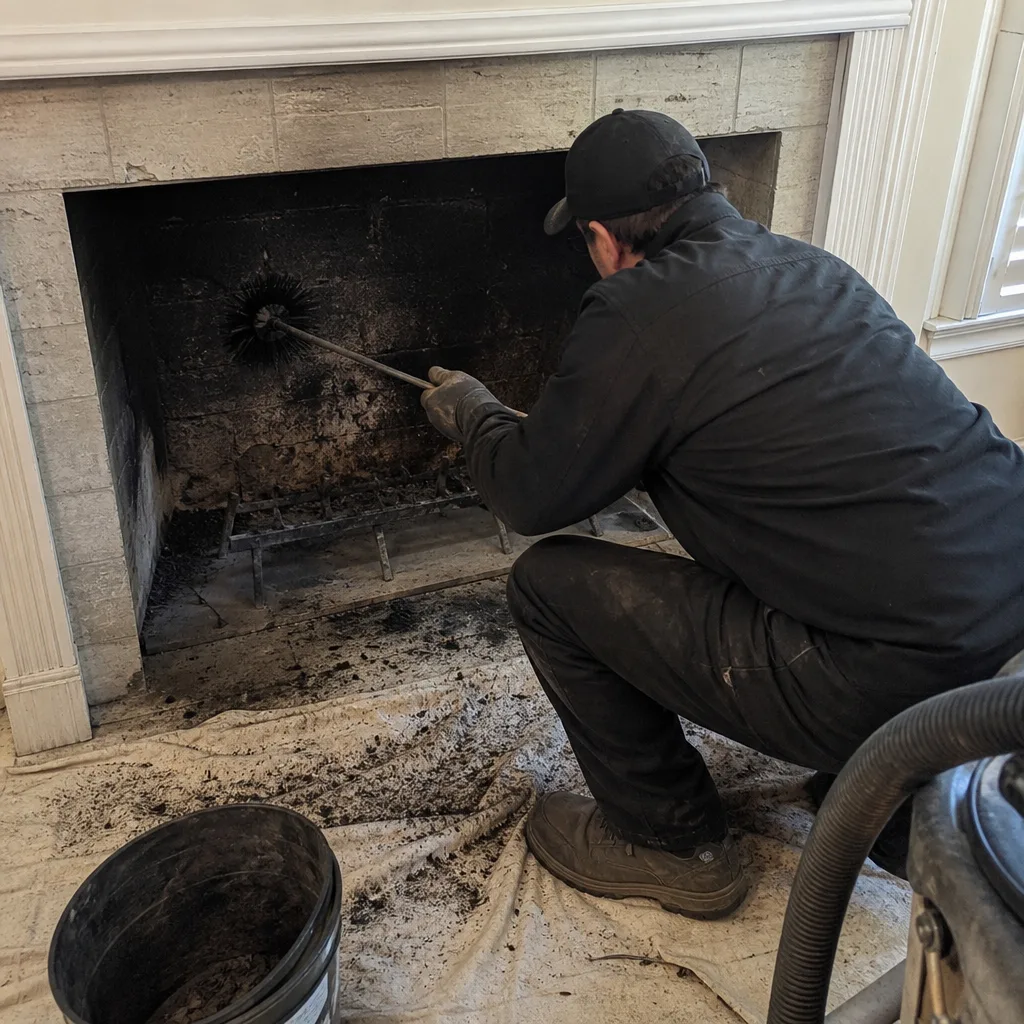
The crown is the concrete slab that caps the chimney chase and sheds water away from the flue. HeatShield’s crown repair line is a flexible, water-resistant sealant system designed to bridge hairline cracks and resurface aging concrete without a full crown tear-out. When it fails, it’s almost always because the original crown pour had no expansion joint between the concrete and the flue tile. DC’s freeze-thaw cycles do the rest. Water gets into that joint, freezes, and pries the crown apart from the inside. We see it on rowhouses in Capitol Hill and detached homes in Chevy Chase equally, though the rowhouses tend to hide it longer because the damage shows up on an interior wall rather than an exterior chimney face.
Which HeatShield Models This Applies To
HeatShield’s crown repair system works with any masonry chimney, but the compatibility question matters if you already have a HeatShield liner or crown installed and need to match the existing work. HeatShield uses two primary crown products: the Joint Repair Sealant, which is a high-flexibility elastomeric for the gap between flue tile and concrete, and the Crown Coating, a trowel-grade resurfacer for the top slab. Both are single-component, water-based products that bond to the same HeatShield chemistry. If your crown was coated with HeatShield Crown Coating within the last eight years and is now cracking through the coating itself, the failure is usually substrate movement underneath, not the product. You can sand and recoat a surface crack. You cannot recoat a crown that has shifted or separated at the flue joint.
Our technicians check the original crown pour, measure the flue-tile exposure, and confirm whether the existing HeatShield material is still bonded before recommending a repair versus a full recast. Here’s the compatibility gotcha we run into in Washington: flue tiles in pre-1970 homes are frequently not centered in the chase, and the crown thickness varies by an inch or more across the slab. HeatShield’s Crown Coating is rated for uniform application at a specific wet-film thickness. On a badly sloped or uneven older crown, you can’t achieve that thickness without first leveling the surface with a concrete patch. Skip the patch and the coating won’t cure evenly, and you’ll be back in the same place in two to three seasons. We level as part of the prep when the crown requires it, and it’s written into the scope before work starts.
As an independent service provider, we’re not affiliated with HeatShield. We stock their crown products because they hold up in DC weather when applied correctly, and because we can source them through the Haven buying network at honest prices. We also keep DuraFlex and Gelco equivalents on the truck for jobs where the substrate calls for a different chemistry.
Signs Your HeatShield Crown Repair Is Failing
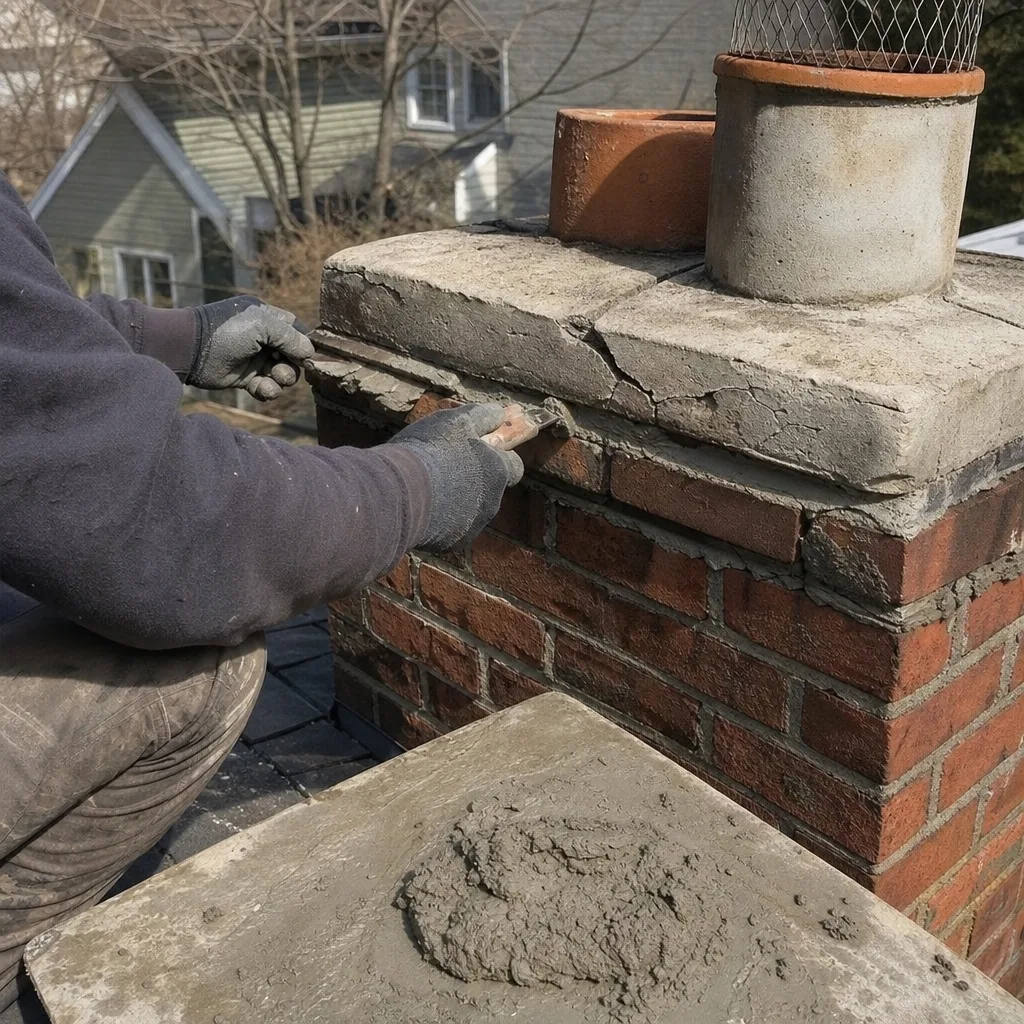
- Hairline cracks that reappear within 12 months of coating. This usually means the underlying concrete is still moving, and no surface coating will fix it. We check for a missing or failed expansion joint at the flue tile before recoating anything.
- Efflorescence or white mineral staining on the chimney exterior below the crown. Water is getting into the top slab and carrying salts out through the brick face. In Washington’s humid spring and saturated fall, this shows up within weeks of crown failure.
- Spalling concrete on the crown surface – small pieces of the crown breaking away and landing in the gutter or on the roof. This is the freeze-thaw cycle working, and it accelerates once the surface is compromised. The crown loses its slope, water pools, and the damage compounds.
- Water staining on the ceiling near the fireplace, especially after wind-driven rain. A cracked crown lets water into the chase cavity, and that water travels down inside the structure before it finds a path out through drywall. By the time the stain shows, the crown has usually been leaking for a while.
- Damp, musty smell from the fireplace in summer. Water trapped in the chase and flue creates the humid conditions. It’s not always a failed crown – it can also be a failed cap or flashing – but a camera scan will show the water entry point while we’re up there.
BeforeAfterReplacement Cost & What’s Included
In Washington, a HeatShield crown repair typically runs $450 to $900 installed. The range is driven by crown size (a standard single-flue runs lower, a double or triple-flue on an older brick chase runs higher), the amount of surface prep required, and whether the flue-tile joint needs a full expansion-joint rebuild before the coating goes on. Here’s the honest breakdown:
- Inspection and water-entry assessment: included with the repair. We don’t charge separately to tell you if the crown is actually the problem.
- Surface prep: cleaning, crack chasing, joint repair, leveling patch. $150 to $300, depending on crown condition. This is the part of the job that determines whether the coating will last.
- HeatShield Crown Coating and Joint Repair Sealant. Materials are typically $180 to $320 for a standard single-flue Washington chimney.
- Labor and equipment: $250 to $400. Includes roof access, setup, application, and cleanup.
Every quote is written before work starts, with the parts, prep, and coating named specifically – a written price, written scope, and written warranty per Clause 1 of the Haven Standard. The work itself is covered by our 365-Day Done Right Promise: if it’s not done right, we make it right. We also include a documented photo record on every visit, showing the crown before, during, and after. If you have a written estimate from another Washington chimney company, bring it to us. We’ll give you a free second opinion on it.
DIY or Call Us?
Working on a chimney crown means working at height on a roof slope, and in Washington that often means navigating a ladder against a rowhouse party wall or a three-story cap. If you’re not comfortable with that, stop there and call a pro. The safest thing you can do from the ground is check your gutters and the ground near the chimney for small concrete chips, which tells you the crown is spalling. You can also look for visible cracks from an upstairs window across from the chimney, but don’t trust a bare-eye look from ground level to rule out damage.
Where DIY goes wrong on this part is the substrate assessment. A crown that looks intact from a selfie stick still has to be checked with a moisture meter and a close inspection of the flue-tile joint. We’ve followed plenty of homeowner-applied coatings in DC that looked fine until the first hard freeze, when the trapped moisture under the coating blew it off in sheets. The product isn’t the variable. The prep is. If you want a camera scan and a written price before committing, call us at (240) 621-1264. Corrine Halstead sets the scope, and the camera doesn’t lie, and neither does the written price.
FAQs
In DC’s freeze-thaw climate, a properly prepped and applied HeatShield crown coating typically lasts eight to twelve years before it needs recoating. The application surface matters more than the product. We see the same product fail in three years on crowns that weren’t properly cleaned and leveled, and hold for a decade more on crowns that were. The photo record we give you on install day becomes your baseline for comparison down the road.
Yes, if the crown is still structurally sound – hairline surface cracks and minor spalling can be chased, filled, and coated. If the crown has separated from the flue tile, has a visible gap, or the concrete is crumbled through more than half its thickness, a repair coat will not bond reliably, and a recast is the honest recommendation. We’ll show you the camera footage that supports whichever call we make. The camera doesn’t lie.
Most single-flue crown repairs in Washington are completed in one visit, typically two to four hours depending on prep work. If the crown needs a leveling patch, that patch must cure before the coating goes on, which sometimes pushes completion to a second short visit. We’ll tell you before we start which scenario applies to your chimney. Call (240) 621-1264 for a written quote.
Yes. Our Washington trucks carry HeatShield Crown Coating and Joint Repair Sealant as standard stock, not a special-order item. We also carry compatible crown products from DuraFlex and Gelco when the substrate calls for a different chemistry. That means no week-long wait for materials once the repair scope is agreed.
Call for a Written Crown Repair Quote
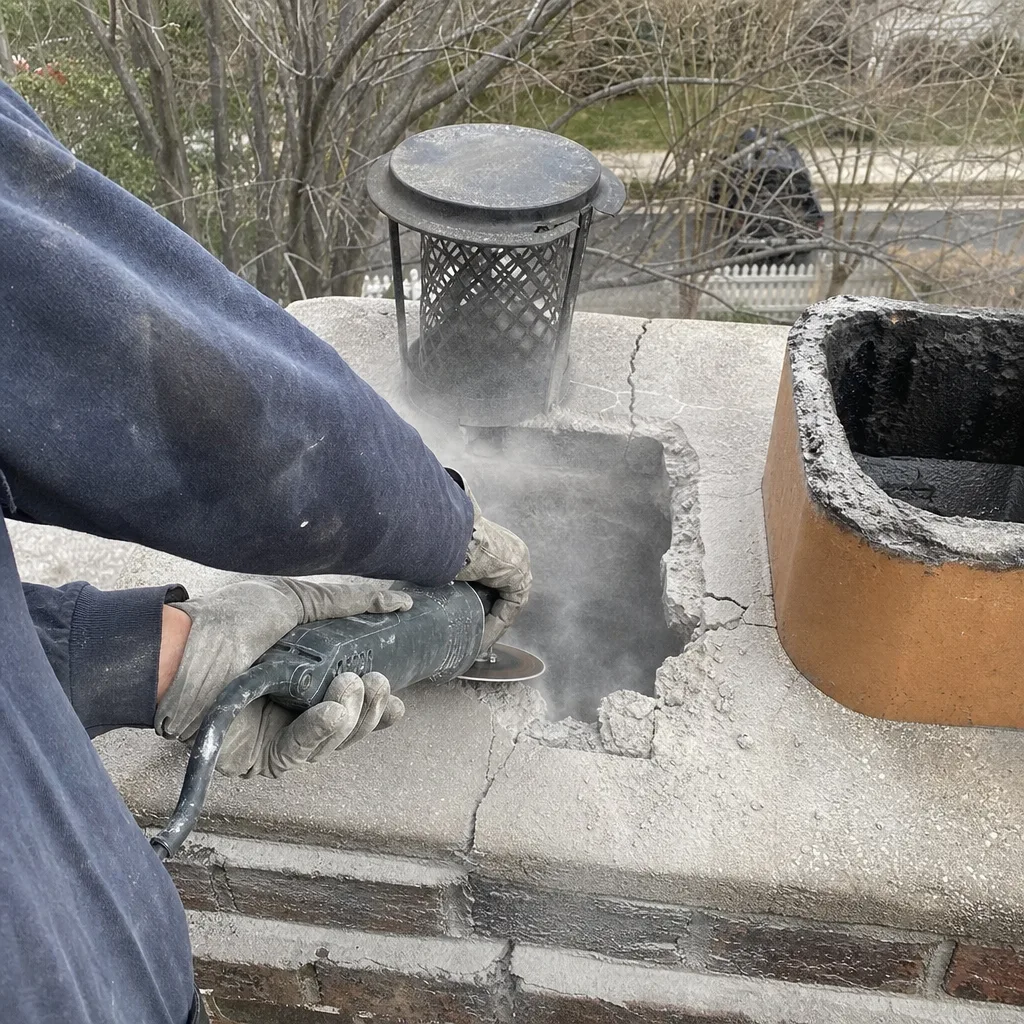
If you have a failing crown or a HeatShield coating that needs attention, call (240) 621-1264. We’ll schedule an inspection, put a camera on the crown, and give you a written price before any work starts – every time, no exceptions. We answer the phone 24/7, and the named tech on your job will text when they’re on the way. Written scope. Written warranty. Photo record on completion. That’s a Level Two chimney in Washington.
Written by Corrine Halstead, Owner, Level Two Chimney Washington at Level Two Chimney Washington, serving Washington and nearby areas.